Tajweed Rules: All 14 Types + Examples

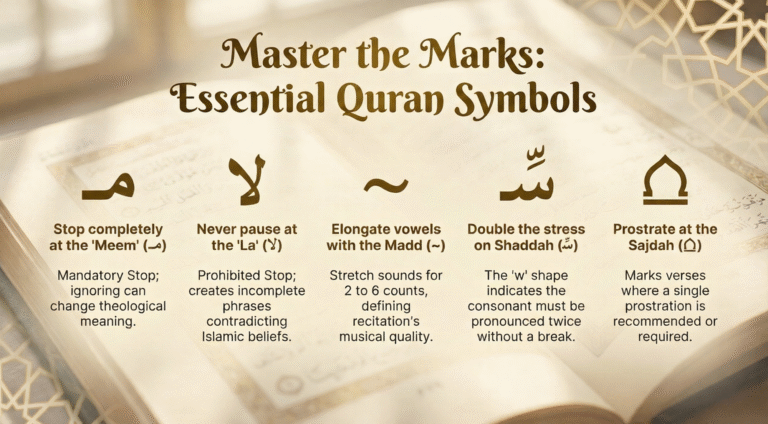
Learning Quran symbols is essential for proper recitation and understanding. These specialized marks, developed by Islamic scholars over centuries, guide readers in pronunciation, pausing, and maintaining the correct meaning of verses. This comprehensive guide covers the 15 most important symbols…
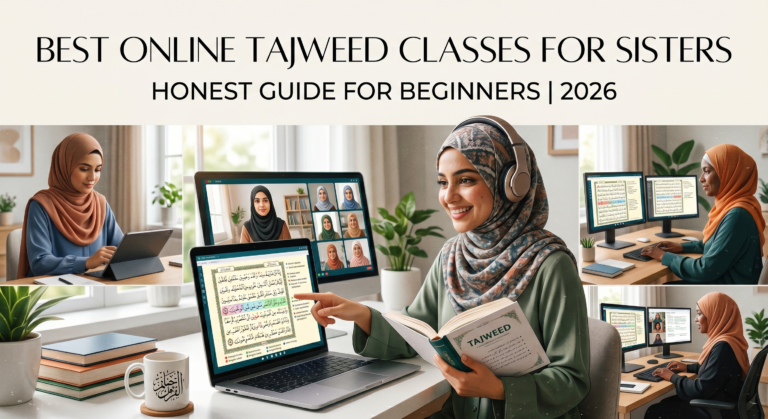
If you have been searching for online Tajweed classes for sisters that are private, structured, and taught by qualified teachers, you are in exactly the right place. Did you know that 65% of all online learners today are women? Sisters…
The rules of madd in tajweed govern how and when to elongate vowel sounds during Quran recitation. This guide explains each type clearly so beginners and parents can apply them with confidence from day one. What Is Madd in Tajweed?…
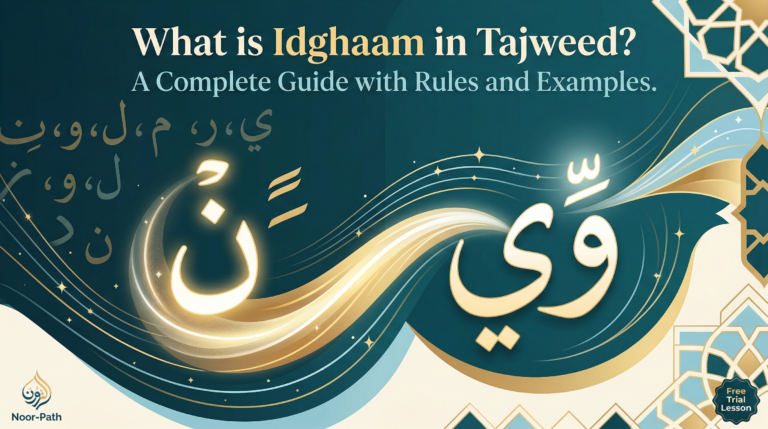
Idghaam in Tajweed is the rule of merging a non-voweled letter into a voweled letter so they become a single stressed sound. This merging occurs when a Noon Sakinah or Tanween is followed by any of the six specific letters…
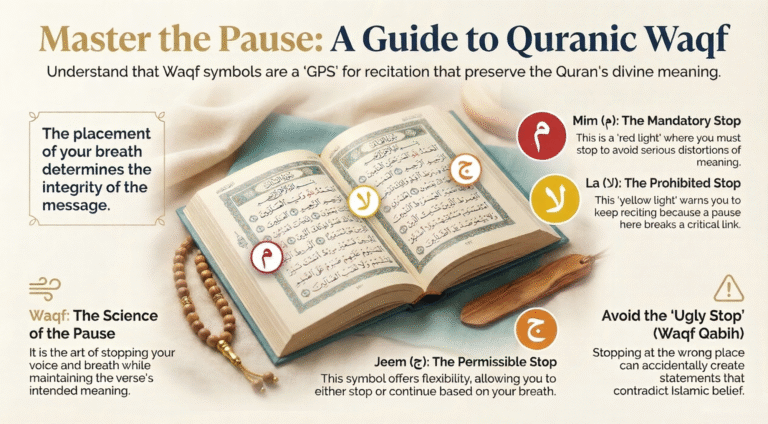
Waqf in the Quran refers to the art of pausing at specific points during recitation to preserve the correct meaning of Allah’s words. These pause rules, marked by symbols in your Mushaf, prevent misunderstandings and ensure you recite with proper…
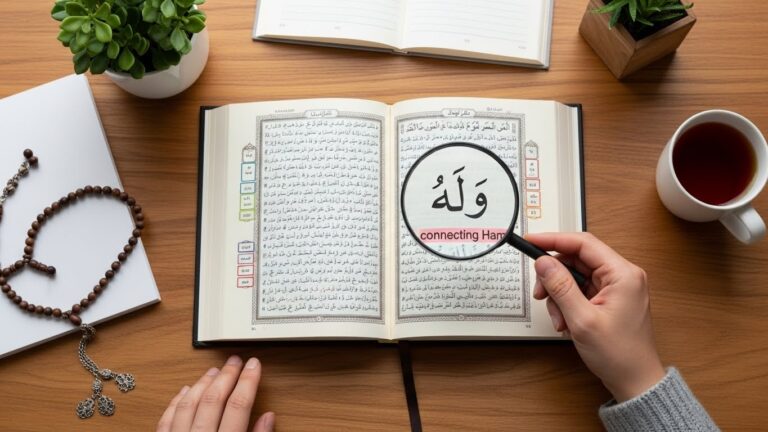
Hamzatul Wasl is a special connecting hamza that appears at the beginning of certain Arabic words, is pronounced only when starting a new utterance, and drops silently in continuous speech to keep recitation smooth and flowing. This fundamental Tajweed rule…

You hear it. That moment when your child is reciting a surah they just learned.
At NoorPath Academy, we've worked with hundreds of students, from young children to adults, and we see the same initial struggles.
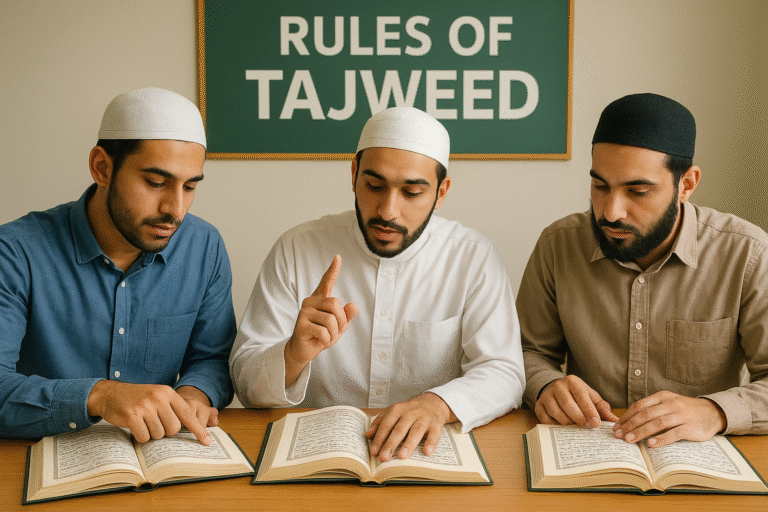
what is Idgham in Tajweed? In the simplest terms, Idgham means "to merge" or "to assimilate." It's the process of merging the sound of one letter into the next letter, so they are pronounced as a single, intensified letter.