As parents, we dream of our children not just reading the Quran, but connecting with it. We want to hear the beauty of its verses flow from their lips, resonating with the same perfection with which it was revealed. But let’s be honest, navigating the world of Quranic education, especially from the West, can feel overwhelming. Juggling work, school runs, and household duties leaves little time to decipher complex Arabic terms. You hear words like “Tajweed,” “Makharij,” and “Idgham,” and it’s easy to feel like you’re falling behind.
We get it. Many parents in our community have shared the same concerns. You want the best for your child’s Islamic education, but you need a path that’s clear, supportive, and fits into your busy life. That’s why we’re here. At NoorPath Academy, we believe that understanding the Quran’s beauty shouldn’t be a stressful endeavor. It’s a journey of discovery, for both you and your child.
Today, we’re going to demystify one of the most fundamental and beautiful rules of Tajweed: Idgham. Think of this as a friendly conversation, where we’ll break down exactly what is Idgham in Tajweed, why it matters, and how your child can master it with confidence. You’ll see that it’s not as complicated as it sounds. In fact, it’s a rule that adds a seamless, melodic flow to recitation, turning reading into a truly spiritual experience.
What is Idgham in Tajweed?
So, let’s start with the big question: what is Idgham in Tajweed? In the simplest terms, Idgham means “to merge” or “to assimilate.” It’s the process of merging the sound of one letter into the next letter, so they are pronounced as a single, intensified letter.
Imagine you have two different colors of play-doh. If you press them together, they merge into one. Idgham is similar, but with sounds. It happens specifically when a non-voweled Noon (نْ), known as Noon Saakin, or the ‘n’ sound from Tanween (ـًـــٍـــٌ), is followed by one of six specific letters. Instead of pronouncing the ‘n’ sound distinctly, it melts into the following letter, creating a smooth, uninterrupted flow.
This isn’t just a grammatical quirk; it’s an essential part of the art of recitation. The purpose of Idgham is to make the recitation easier, more fluid, and more beautiful to the ear. It avoids a choppy or abrupt stop-and-start sound, allowing the words of Allah to flow with the grace they deserve. Understanding what is Idgham in Tajweed is a key step in moving from basic reading to beautiful, correct recitation.
The Importance of Tajweed in Quran Recitation
Before we dive deeper into the types of Idgham, it’s helpful to take a step back and appreciate why we’re even discussing this. Why is Tajweed so important? The benefits of Tajweed are immense, both spiritually and technically. Tajweed is the science of perfecting the pronunciation of Quranic words. It’s about giving every letter its due right, articulating it from its correct point of origin (Makhraj) with its specific characteristics (Sifaat).
The Quran itself tells us to recite it with measure: “and recite the Qur’an with measured recitation” (Surah Al-Muzzammil, 73:4). The companions of the Prophet Muhammad (peace be upon him) understood this as reciting with clarity and precision, just as it was revealed. This is the core of Tajweed.
There is a clear Distinction Between Recitation and Tajweed. Anyone can recite the words, but reciting with Tajweed is an act of reverence. It’s a way of honoring the divine text and striving to emulate the recitation of the Prophet (PBUH). For our children, learning Quran Tajweed is not just about avoiding mistakes; it’s about building a deeper, more respectful relationship with the Book of Allah. It transforms the act of reading from a mere academic exercise into a heartfelt form of worship. This is why at NoorPath Academy, we emphasize learn Quran with Tajweed online from the very beginning.
What are the 7 heavy letters in Tajweed?
The seven heavy letters, also known as “full-mouth” letters , are letters that are pronounced with the back of the tongue raised, giving them a thick, heavy sound. They are:
خ “Kha”, ص “Saad”, ض “Daad”, غ “Ghayn”, ط “Taa”, ق “Qaaf”, ظ “Dhaa”.
They are collected in the phrase: خُصَّ ضَغْطٍ قِظْ “Khussa Dhaghtin Qidh”. Correctly pronouncing these letters is one of the important tips for learning proper tajweed.
Types of Idgham in Tajweed
Now that we have a clearer picture of the “why,” let’s return to the “how.” The rule of Idgham isn’t a one-size-fits-all concept. It’s divided into two main categories, based on whether a nasal sound (called Ghunnah) is present during the merge. This distinction is crucial for understanding what is Idgham in Tajweed in its entirety.
Idgham with Ghunnah (nasal sound)
This is the most common type of Idgham. It occurs when Noon Saakin (نْ) or Tanween is followed by one of four specific letters. The ‘n’ sound merges into the following letter, and the merge is accompanied by a beautiful, resonant nasal sound (Ghunnah) that is held for about two counts.
Letters: ي، ن، م، و (Ya, Nun, Meem, Waw)
These four letters are collectively remembered by the acronym يَنْمُو (Yanmu), which means “it grows.” When you see a Noon Saakin or Tanween followed by any of these letters, you know that Idgham with Ghunnah is required.
Explanation and examples from the Quran
Let’s look at some real examples. We’ve found that seeing the rule in action is one of the most Effective Methods To Learn Quran Online.
Example with ي (Ya):
مَن يَعْمَلْ
Transliteration: Man ya’mal
How it’s pronounced: Instead of “Man-ya’mal,” the ‘n’ sound of مَن merges into the ي. It becomes “May-ya’mal,” with a nasal sound held on the ‘y’. It’s a subtle but beautiful shift that connects the two words seamlessly.
Example with ن (Noon):
عَن نَّفْسٍ
Transliteration: ‘An nafsin
How it’s pronounced: Here, the Noon Saakin merges into the following Noon. It’s pronounced as one intensified Noon with a Ghunnah: “‘An-nafsin.” This is often called “Idgham Kamil” or complete merging.
Example with م (Meem):
مِن مَّالٍ
Transliteration: Min maalin
How it’s pronounced: The ‘n’ sound of مِن merges completely into the م. It becomes “Mim-maalin,” with the Ghunnah held on the ‘m’. You essentially pronounce a doubled ‘m’ sound.
Example with و (Waw):
مِن وَلِيٍّ
Transliteration: Min waliyyin
How it’s pronounced: The ‘n’ sound merges into the و, creating a sound like “Miw-waliyyin.” The nasalization (Ghunnah) is produced as the sound flows from the nose while the lips are shaped for the ‘w’ sound.
Mastering this type of Idgham is a core part of any Tajweed Online for beginners, as it appears so frequently throughout the Quran.
Idgham without Ghunnah (no nasal sound)
The second category of Idgham is simpler. It involves a complete merging of the Noon Saakin or Tanween sound into the following letter, but without holding any nasal sound (Ghunnah). This is a full and quick merge.
Letters: ل، ر (Lam, Ra)
This rule applies to only two letters: Lam (ل) and Ra (ر). When Noon Saakin or Tanween is followed by either of these, the ‘n’ sound is completely skipped, and you pronounce the Lam or Ra with emphasis (as if it has a Shaddah/doubling sign on it).
Explanation and examples from the Quran
Let’s see how this works. It’s a very distinct sound that, once learned, is easy to spot.
Example with ل (Lam):
مِّن لَّدُنْهُ
Transliteration: Min ladunhu
How it’s pronounced: The ‘n’ sound of مِن is completely assimilated into the ل. You don’t say “Min-ladunhu.” Instead, you pronounce it as “Mil-ladunhu.” The tongue moves directly to the point of articulation for ‘L’ without making any ‘n’ or nasal sound.
Example with ر (Ra):
مِّن رَّبِّهِمْ
Transliteration: Min rabbihim
How it’s pronounced: Similarly, the ‘n’ sound of مِن merges fully into the ر. It is pronounced “Mir-rabbihim,” with a distinct, rolled ‘r’ sound, and absolutely no Ghunnah. This is another key element when you learn Tajweed online.
Understanding these two types is the foundation of understanding what is Idgham in Tajweed. It’s about knowing which letters trigger the merge and whether or not to produce that gentle, humming Ghunnah.
Conditions for Idgham to Occur
Like any rule, Idgham has specific conditions. It doesn’t just happen anytime. In our experience teaching hundreds of children in our online tajweed classes, we’ve found that clarifying these conditions is the ‘aha!’ moment for many students.
When Noon Saakin or Tanween is followed by Idgham letters?
The primary condition is straightforward: Idgham occurs when a Noon Saakin (نْ) or a Tanween (ـًـــٍـــٌ) is immediately followed by one of the six Idgham letters (ي, ن, م, و, ل, ر). The letters must be in two separate words. Idgham does not occur within a single word.
For example, in the word الدُّنْيَا (ad-dunya), you have a Noon Saakin followed by a Ya. However, because they are in the same word, the rule of Idgham does not apply. Instead, the Noon is pronounced clearly. This is called Izhar Mutlaq (Absolute Clarity), and it’s an important exception to remember.
Rules for proper pronunciation and merging sounds
Proper pronunciation is key. It’s not just about knowing the rule, but about executing it correctly. Here are some pointers we emphasize in our quran recitation online course for kids:
- For Idgham with Ghunnah: The merge should be smooth. The sound should feel like it’s flowing from the nasal passage for about two beats before you fully pronounce the next letter. It’s a hum, not a hard stop.
- For Idgham without Ghunnah: The merge should be quick and complete. The tip of the tongue, which produces the ‘n’ sound, should move directly to the articulation point of the ‘L’ or ‘R’. There should be no trace of the ‘n’ sound or any nasalization.
This level of detail is what makes learning with a qualified teacher so valuable. It’s one of the most important tips for learning proper tajweed: you need a guide who can listen and provide real-time feedback.
Common Mistakes When Applying Idgham
As with any new skill, mistakes are part of the learning process. It’s completely normal! Acknowledging these common hurdles is the first step to overcoming them. From our experience with students in our learn quran reading basics online course, here are a few things we often see.
Overemphasizing or skipping Ghunnah
This is the most frequent issue. For Idgham with Ghunnah, students might either rush through it, not holding the nasal sound long enough, or skip it entirely. Conversely, when they encounter Idgham without Ghunnah (with ل or ر), they might accidentally add a nasal sound out of habit. The key is to listen carefully to examples from a qualified reciter and practice distinguishing between the two sounds.
Merging letters incorrectly
Sometimes, the merge itself can be incomplete. For example, when merging Noon into Waw (و), a student might still pronounce a faint ‘n’ sound before the ‘w’, resulting in “Min-waliyyin” instead of the smooth “Miw-waliyyin.” This often happens because the mouth isn’t fully prepared to produce the next letter’s sound as the merge begins. This is a subtle point, but it’s what separates good recitation from excellent recitation. This is a core focus when you Learn Tajweed Online For beginners.
Confusing Idgham with other Tajweed rules (like Ikhfa or Iqlab)
The rules of Noon Saakin and Tanween are a family of four: Izhar (clarity), Idgham (merging), Iqlab (flipping), and Ikhfa (hiding). It’s common for beginners to mix them up. For instance, a student might see a Noon Saakin followed by a Baa (ب) and try to apply Idgham, when the correct rule is Iqlab (flipping the ‘n’ sound to an ‘m’). This is why a systematic approach, like that in a structured tajweed rules online course for beginners, is so crucial. It introduces rules in a logical order to prevent confusion.
Knowing what is Idgham in Tajweed is one thing, but applying it correctly amidst other rules requires practice and guidance.
Tips for Mastering Idgham
So, how can your child—and even you—master this beautiful rule? The journey is one of patience and consistent practice. Here are some essential tips for improving your tajweed that we’ve seen work wonders for families in our community.
- Listen, Listen, Listen: Before you even try to recite, listen to a qualified Qari (reciter) like Sheikh Al-Husary or Sheikh Al-Minshawi. Use a Quran app or website that highlights the words as they are recited. Pay close attention to the places where Idgham occurs. Can you hear the merge? Can you distinguish between Idgham with and without Ghunnah? This passive listening builds an auditory memory of the correct sound.
- Practice with a Mirror: Especially for Idgham with Ghunnah, watch your mouth in a mirror. For a letter like Waw (و), your lips should be rounded as you produce the nasal sound, preparing for the ‘w’ sound. This visual feedback can be very helpful.
- Record Yourself: This is a game-changer. Record your child (or yourself) reciting a few verses. Then, play it back and compare it to the recording of a professional Qari. This is often where you’ll catch mistakes you didn’t realize you were making. It’s a powerful tool for self-correction.
- Focus on One Rule at a Time: Don’t try to learn all of Tajweed at once. Dedicate a week just to identifying and practicing Idgham. Use a Mushaf (Quran copy) and a highlighter to mark every instance of Idgham you find in a page. This active engagement reinforces the rule.
- Seek Expert Guidance: Honestly, this is the most important tip. While self-study is valuable, nothing can replace a qualified teacher who can provide personalized feedback. A teacher can hear the subtle inaccuracies in pronunciation that a recording might miss. This is the core philosophy behind our online tajweed classes at NoorPath Academy. We provide a supportive, interactive environment where students get the individual attention they need. Our flexible schedules, including weekend options, are designed to fit into the busy lives of Western families.
By combining these methods, mastering what is Idgham in Tajweed becomes an achievable and rewarding goal. It’s not about rote memorization, but about training the ear, the mouth, and the heart.
What are the 6 letters of Idgham?
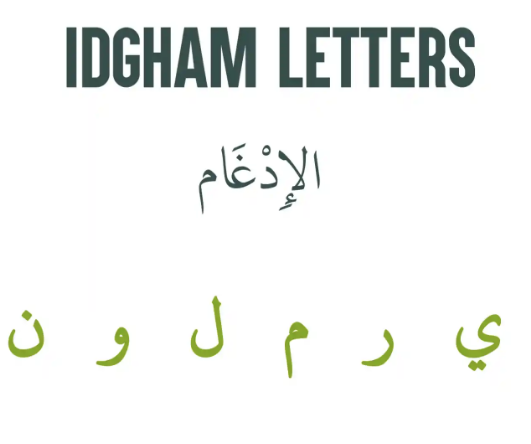
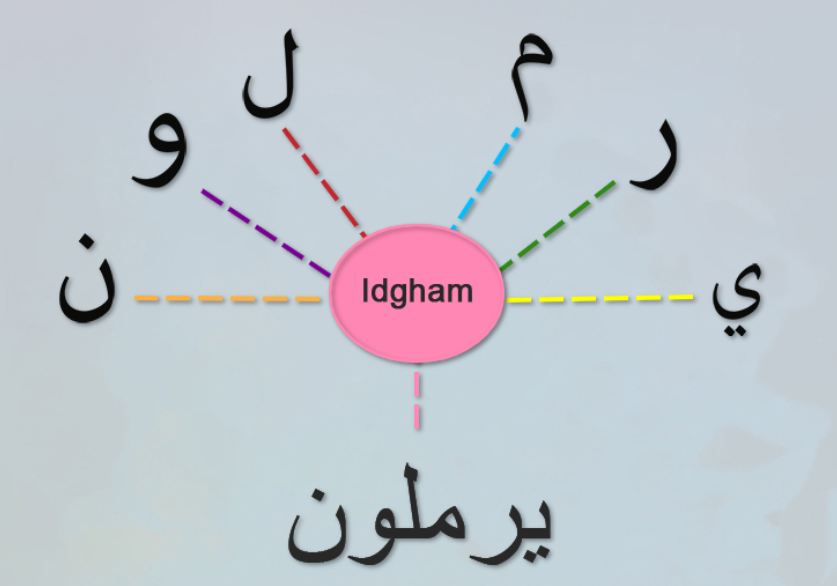
There are six letters of Idgham, which are collected in the phrase يَرْمَلُون “Yarmaloon”. They are: ي “Ya”, ر “Ra”, م “Meem”, ل “Lam”, و “Waw”, and ن “Noon”. These six letters are further divided into two groups:
- Idgham with Ghunnah “nasal sound”: ي, ن, م, و “grouped as يَنْمُو – Yanmu”
- Idgham without Ghunnah “no nasal sound”: ل, ر “Lam and Ra”
the 7 Qirat in the Quran?
The 7 qirat of the Quran refers to seven distinct, authentic methods of Quranic recitation, each named after a prominent reciter. These Qirat differ in phonetics, grammar, and pronunciation, and the most widely used today is Asim al-Kufi, transmitted through Hafs. The seven are: Nafi’ al-Madani, Ibn Kathir al-Makki, Abu Amr al-Basri, Ibn Amir ash-Shami, Asim al-Kufi, Hamzah al-Kufi, and Al-Kisa’i.
Learning about them shows the richness and preservation of the Quranic text. Our focus in our quran recitation online course for kids is on the recitation of Hafs an ‘Asim, which is the most widely used.
In Conclusion
The journey of learning Quran Tajweed is a beautiful and noble one. It’s a path that connects us more deeply to the words of our Creator. Understanding a rule like what is Idgham in Tajweed is more than just learning a technicality; it’s about unlocking a new layer of beauty in the Quran’s recitation. It’s about appreciating the divine wisdom in how these sounds were designed to flow together in perfect harmony.
We know that as a parent, you carry the immense responsibility and honor of guiding your children on this path. It can feel daunting, but you are not alone. At NoorPath Academy, our entire mission is to support families like yours. We provide expert, compassionate guidance in a way that is engaging for children and convenient for parents. Our quran reading online course for kids and specialized Tajweed programs are designed to build a strong and loving foundation with the Quran.
FAQs
What is the meaning of Idgham in Tajweed?
The meaning of Idgham is to merge or to assimilate.. In the context of Tajweed, it refers to the rule where the sound of Noon Saakin or Tanween is merged into the next letter when it is one of the six specific Idgham letters. This creates a smoother, more connected recitation. Understanding what is Idgham in Tajweed is fundamental to proper Quranic pronunciation.
What are What are the 12 Tajweed rules?
The 12 main Tajweed rules are not always listed in the same way, but they typically include rules for Noon Sakinah and Tanween, Meem Sakinah, Idgham, Iqlab, Ikhfa, Qalqalah, Al-Madd, Ghunnah, Tarqeeq and Tafkheem , and Noon and Meem Mushaddad. These rules ensure the correct, beautiful, and precise recitation of the Quran. Mastering these forms the core of learning Quran Tajweed and is essential for beautiful and accurate recitation.