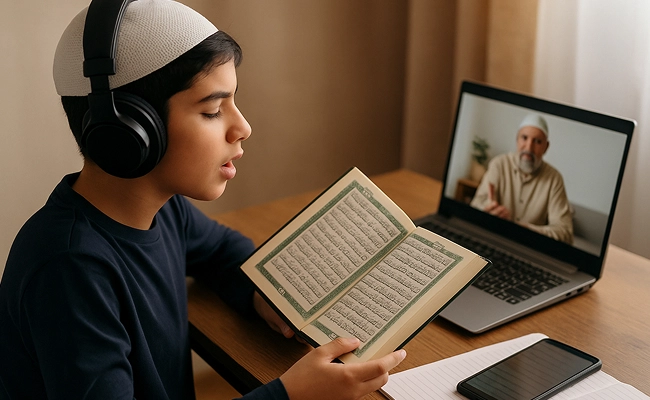
Waqf in the Quran refers to the art of pausing at specific points during recitation to preserve the correct meaning of Allah’s words. These pause rules, marked by symbols in your Mushaf, prevent misunderstandings and ensure you recite with proper Tajweed. Mastering waqf transforms your recitation from simply reading words to truly conveying the divine message.
What Is Waqf in the Quran?
When you open your Mushaf, you might notice small symbols above certain words. These aren’t decoration. They’re your roadmap to meaningful recitation.
Waqf comes from the Arabic root word meaning “to stop” or “to pause.” In Quranic recitation, it’s the science of knowing where to pause your voice and breath while maintaining the intended meaning of the verse. Think of it as the punctuation system of the Quran, but far more sophisticated.
The Two Meanings of Waqf
The term “waqf” appears in two distinct Islamic contexts, and understanding both enriches your knowledge:
1. Waqf in Tajweed
is your focus when reciting the Quran. It teaches you exactly where stopping is safe, recommended, or completely forbidden. Research from Islamic universities shows that improper pausing can create what scholars call “Jaliyy errors” that explicitly change the meaning of Allah’s words.
2. Waqf in Islamic Law
refers to charitable endowments, where property is dedicated permanently for good causes. While this meaning doesn’t appear as a literal term in the Quran, its foundation comes from verses like Surah Ali ‘Imran (3:92): “Never will you attain the good until you spend from that which you love.” This article focuses on the recitation meaning, but knowing both contexts helps you appreciate the depth of Islamic knowledge.
Why Waqf Matters in Quranic Recitation?
Imagine reading the sentence “Let’s eat, Grandma” versus “Let’s eat Grandma.” The comma changes everything. Waqf works the same way in Quranic recitation.
Stopping at the wrong place can accidentally create statements that contradict Islamic belief. The most famous example is stopping after “There is no god” without completing “but Allah.” A pause there creates the opposite of what Allah intended.
For parents teaching children to recite, waqf knowledge ensures your child learns correctly from the start. For adults learning Tajweed, it’s the difference between reciting words and understanding their flow. And in prayer, while basic waqf rules aren’t obligatory for validity, they dramatically improve your connection with the verses you’re reciting.
The Four Main Types of Waqf in Tajweed
Scholars categorize pauses based on how complete the meaning is when you stop. Each type serves a specific purpose in preserving the Quran’s message.
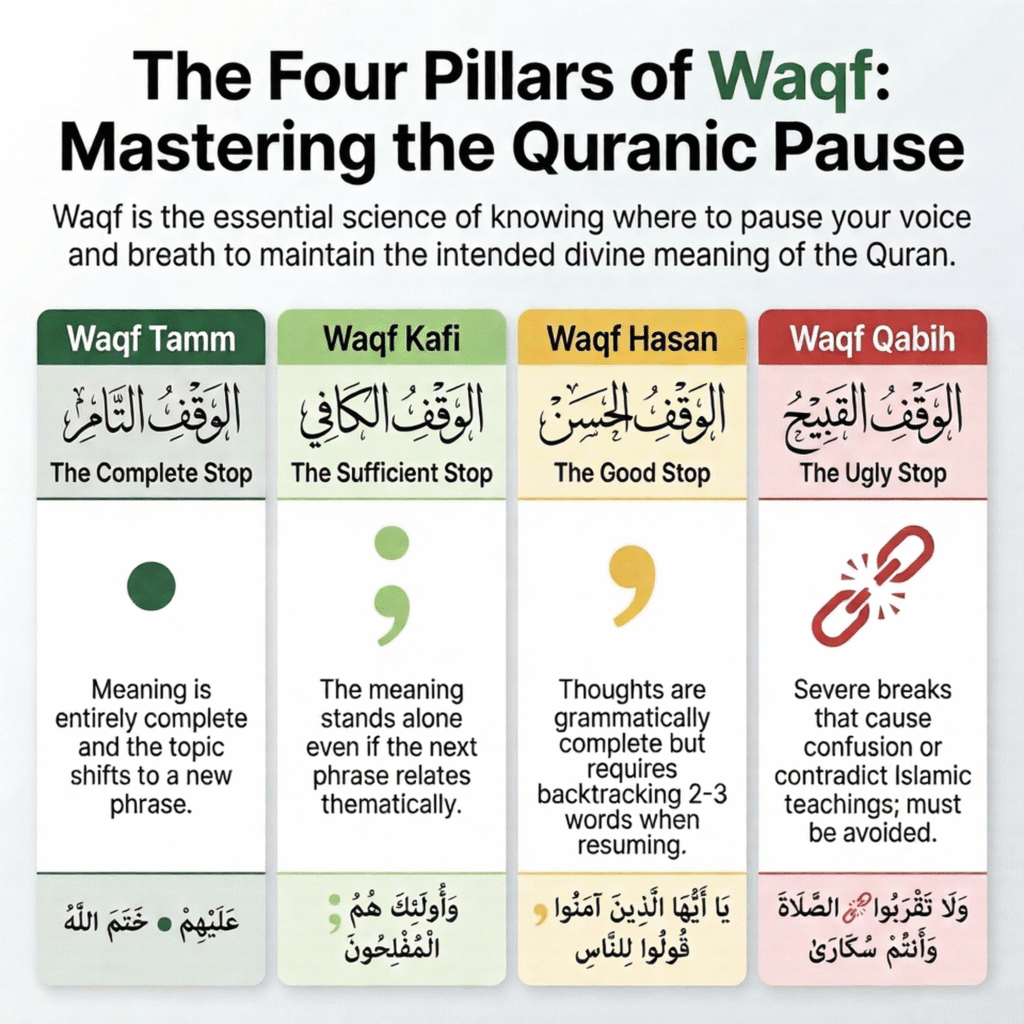
1. Waqf Tamm (Complete Stop)
This is the gold standard of pausing. When you stop at a Waqf Tamm, the meaning is entirely complete, and the topic shifts to something new in the next phrase.
Example from Surah Al-Baqarah: “Alif-Lam-Mim. [STOP] That is the Book about which there is no doubt.”
The first verse ends completely. The second verse starts a new statement. There’s no grammatical or semantic connection requiring them to flow together. When you see this type of stop available, you can pause comfortably, take a breath, and know you haven’t left anything incomplete.
2. Waqf Kafi (Sufficient Stop)
This pause type means the meaning is sufficient to stand alone, even though the next phrase might relate to the same topic or theme. The connection is thematic rather than grammatical.
Example from Surah Al-Ikhlas: “Say, He is Allah, [the] One. [PAUSE] Allah, the Eternal Refuge.”
You can stop after “One” because it completes a statement about Allah’s oneness. But the next verse continues describing Allah’s attributes, so there’s a thematic connection. The pause works, but the ideas flow together naturally.
3. Waqf Hasan (Good Stop)
Here’s where it gets nuanced. A Waqf Hasan completes a thought grammatically, but the next part is still tied to what you just said. If you stop here, you should backtrack slightly when resuming.
Example: If you pause mid-verse in Ayat al-Kursi due to breath, you’d want to repeat the last few words when continuing. This helps listeners (and yourself) maintain the grammatical connection.
The key insight: Hasan stops are “good” for emergencies (like running out of breath), but they’re not ideal stopping points for teaching or memorization.
4. Waqf Qabih (Ugly Stop)
This is the pause you must avoid. Stopping here breaks the meaning so severely that it creates confusion or even contradicts Islamic teachings.
The Classic Example: Stopping after “do not approach prayer” without completing “when you are intoxicated” (Surah An-Nisa 4:43). The first part alone suggests prayer is forbidden, which is obviously wrong.
Academic studies on recitation errors consistently identify Waqf Qabih as the most serious category of mistakes. The good news? Your Mushaf actively warns you against these stops with special symbols.
Waqf Symbols and Signs in Quran
Modern Qurans use a standardized system of symbols to guide you. Learning these marks is like getting a GPS for your recitation.
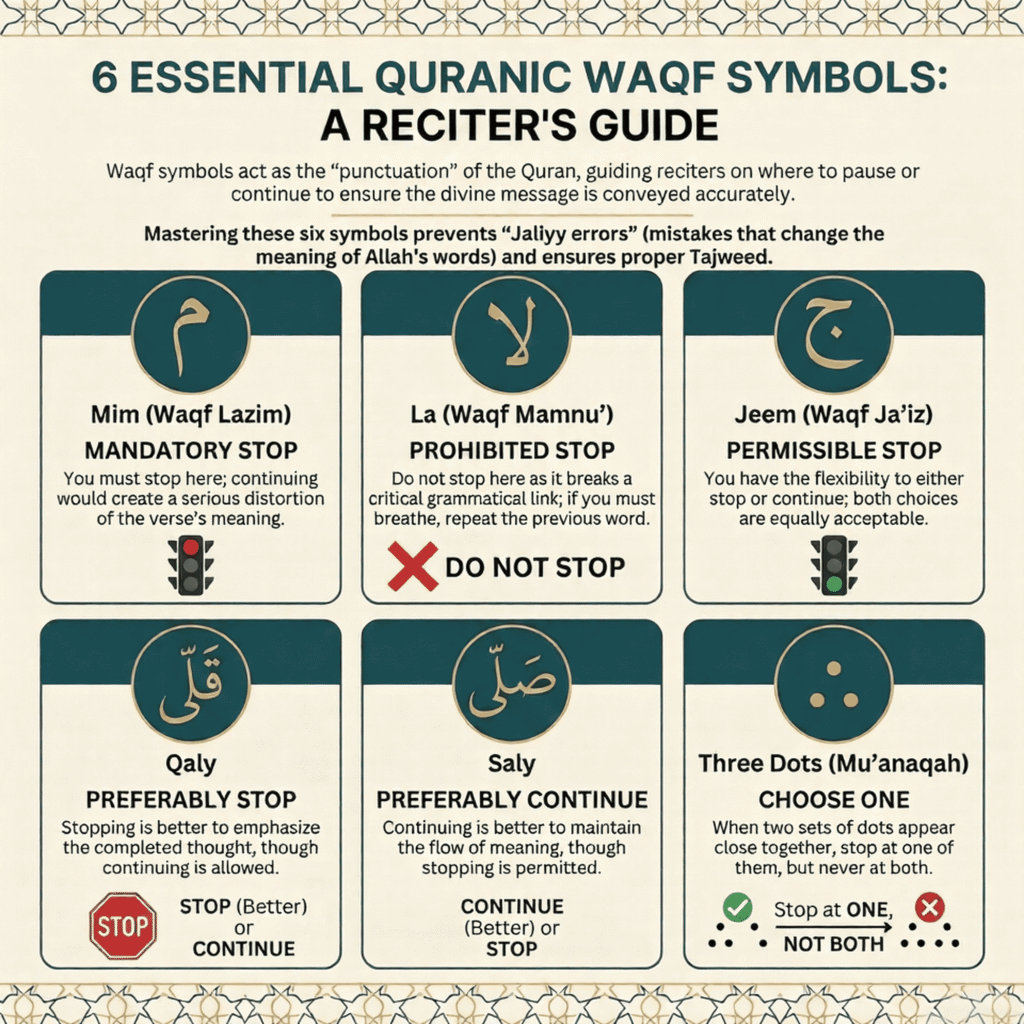
Mim (م) – The Mandatory Stop
When you see the Arabic letter Mim (م) above a word, stop there. No exceptions.
This symbol appears where continuing would create a serious distortion of meaning. For Western learners, think of it as a red traffic light. You don’t have a choice. Research comparing different Mushaf editions shows that while other symbols might vary slightly, the placement of Mim stops remains remarkably consistent because the theological stakes are so high.
La (لا) – The Prohibited Stop
The Arabic letters “La” (لا) mean “no” in this context: don’t stop here.
These marks appear where pausing would break a critical grammatical or semantic link. It’s your yellow light that says “keep going, even if you need breath.” If you absolutely must breathe at a La mark, scholars recommend taking the quickest possible breath and continuing immediately.
Jeem (ج) – The Permissible Stop
The letter Jeem (ج) gives you flexibility. You can stop, or you can continue. Both choices are acceptable.
These symbols typically appear where the meaning is complete enough that pausing doesn’t cause confusion, but continuing flows naturally too. For parents teaching children, these are great practice points. Let your child experiment with pausing and continuing to hear the difference.
Advanced Waqf Symbols
Your Mushaf contains other helpful markers:
| Symbol | Name | Meaning | When to Use |
| قلى (Qaly) | Preferably Stop | Stopping is better, but continuing is allowed | When you want to emphasize the completed thought |
| صلى (Saly) | Preferably Continue | Continuing is better, but stopping is allowed | When the flow of meaning benefits from connection |
| ∴ (Three Dots) | Choose One | Stop at one of two nearby marks, but not both | When two pauses are too close together |
The three-dot symbol deserves special attention. It’s called “Mu’anaqah” and appears when two good stopping points sit close to each other. The rule: pick one, not both. Stopping at both creates choppy, unnatural recitation.
Practical Examples of Waqf from the Quran
Theory becomes real when you see it in action. Let’s walk through verses you likely recite regularly.
Example 1: Surah Al-Fatiha
Verse 1-2: “In the name of Allah, the Entirely Merciful, the Especially Merciful. [WAQF TAMM] All praise is due to Allah, Lord of the worlds.”
Notice the complete stop after the Bismillah. The first verse is a complete invocation. The second verse starts a new statement of praise. This Waqf Tamm allows you to pause, reflect on Allah’s names, then begin praising Him with renewed focus.
Verse 6-7: “Guide us to the straight path. [WAQF KAFI] The path of those upon whom You have bestowed favor, not of those who have evoked Your anger or of those who are astray.”
You can pause after “straight path” because the meaning is complete. But the next verse immediately defines which path you’re asking for, so there’s a strong connection. This demonstrates Waqf Kafi perfectly.
Example 2: Ayat al-Kursi
This verse contains several instructive examples:
“Allah, there is no deity except Him, the Ever-Living, the Sustainer of existence. [WAQF TAMM]”
Complete stop. The declaration of Tawheed (oneness) stands alone powerfully.
“Neither drowsiness overtakes Him nor sleep. [WAQF KAFI] To Him belongs whatever is in the heavens and whatever is on the earth.”
You can pause after describing Allah’s attributes of being free from sleep, but the next phrase continues describing His dominion. The connection is thematic (both describe Allah’s nature), making this a sufficient stop rather than a complete one.
Example 3: Common Mistakes to Avoid
Mistake 1: The Breath Stop New learners often stop wherever they run out of breath, ignoring the symbols. This leads to Waqf Qabih. Solution: Plan your breathing based on upcoming symbols, not lung capacity alone.
Mistake 2: Stopping at Line Breaks Your Mushaf’s line endings don’t always align with good stopping points. A verse might end mid-line, or a prohibited stop might fall at a line break. Always check for symbols, not visual layout.
Mistake 3: Ignoring the “La” Symbol Students sometimes think “La” is just a suggestion. According to research from Islamic studies programs, treating prohibited stops as optional is one of the top three Tajweed errors in beginner recitation.
How to Apply Waqf Rules When Reciting
Knowledge transforms into skill through practice. Here’s how to integrate waqf into your daily recitation.
Planning Your Pauses
Before you begin reciting a new Surah or section, scan ahead for symbols. This is especially important for longer verses.
The Two-Step Method:
- Identify all Mim (mandatory) and La (prohibited) marks first. These are non-negotiable.
- Look for Jeem (permissible) or Kafi stops as your “breath stations” if the verse is long.
Think of it like planning a road trip. You note the required stops (gas stations, rest areas) before you start driving. Similarly, know your required and safe pause points before you begin reciting.
When to Resume After Stopping
The rule for resuming depends on where you stopped:
After Waqf Tamm or Kafi: Start fresh from the next word. No need to repeat anything.
After Waqf Hasan: Backtrack 2-3 words before the stop, then continue. This maintains the grammatical connection for anyone listening (or for your own understanding).
Emergency Stops: If you absolutely had to stop at a bad place (illness, interruption, breath), go back to the last good stopping point and resume from there.
Waqf in Prayer (Salah)
While precise waqf isn’t required for your prayer’s validity, it enhances your focus and understanding tremendously.
In Fatiha: The natural Waqf Tamm marks between verses already create perfect pauses for reflection. Use them to absorb each statement before moving to the next.
In Long Surahs: If you’re reciting Surah Al-Baqarah or similar lengthy chapters, respect at least the major Waqf Tamm stops. This prevents mental fatigue and maintains your presence in prayer.
Teaching Children: When practicing with your child before prayer, emphasize that while they’re learning waqf, their Salah is still valid even with mistakes. This reduces performance anxiety while building good habits.
Taking Your Next Step
Understanding waqf intellectually is just the beginning. The real transformation happens when you apply these rules in your daily recitation, feeling how proper pauses enhance your comprehension and spiritual connection with Allah’s words.
If you’re ready to move from theory to practice, consider exploring structured Tajweed resources that provide audio examples and personalized feedback. The difference between knowing about waqf and actually implementing it correctly often requires guidance from qualified instructors who can hear your recitation and offer specific corrections.
For parents seeking to give their children a strong foundation in Quranic recitation, teaching waqf alongside basic reading creates confident young reciters who understand what they’re reading, not just pronouncing sounds. This early investment pays lifelong dividends in their relationship with the Quran.
The beauty of waqf is that it’s simultaneously simple and profound. The symbols are straightforward. The impact on meaning is revolutionary. Whether you’re a beginner taking your first steps in Tajweed or an advanced student refining your recitation, returning to these fundamental pause rules always reveals new layers of wisdom in how Allah chose to preserve His final message to humanity.
Common Questions About Waqf
Do I need to memorize every symbol before I can recite properly?
No. Start with the big three: Mim (must stop), La (must continue), and Jeem (your choice). As you recite regularly, you’ll naturally learn where the other symbols appear in verses you know well. Many successful Quran students at online academies report that symbol recognition becomes intuitive after 3-4 months of consistent practice.
What if my Mushaf doesn’t have these symbols?
Some older or decorative Qurans omit waqf marks. If you’re learning Tajweed, invest in a standard edition with full symbols. The Madinah Mushaf is widely available and includes comprehensive waqf guidance. For those beginning their Tajweed journey, pairing your beautiful decorative Quran with a learning edition makes practical sense.
Can waqf rules change the meaning of a verse?
Absolutely. This is precisely why they exist. Linguistic studies on Quranic Arabic show that pause placement can shift emphasis, change subject-object relationships, and even alter legal interpretations derived from verses. This isn’t a flaw; it’s a feature that preserves the precision of divine revelation.
How do I practice waqf if I don’t read Arabic fluently yet?
Start by following along with qualified reciters who respect waqf rules. Apps and websites often highlight text as it’s recited, and you can observe where natural pauses occur. As your Arabic reading improves, you’ll begin recognizing the symbols yourself. Consider enrolling in a structured Tajweed course where instructors can provide personalized feedback on your pause placement.