Embarking on the journey of memorizing the Holy Quran (Hifz) is one of the most profound and rewarding spiritual endeavors a Muslim can undertake. It is a path of discipline, devotion, and deep connection with the words of Allah (SWT). The rewards are immense, not only in the Hereafter—where a Hafiz is promised great honor and the ability to intercede for family members—but also in this life. Scientific studies and personal testaments alike confirm that memorizing the Quran enhances cognitive functions, improves mental health, reduces stress, and brings an unparalleled sense of peace and contentment. However, this noble path is not without its challenges. Many aspiring Huffaz grapple with finding the time, maintaining consistency, and choosing the right method, especially in our fast-paced modern world. This article is designed to be your comprehensive roadmap, exploring the best way to memorize Quran by blending timeless traditional wisdom with the flexibility and power of modern techniques. Whether you are a child, a busy professional, or an elder seeking to connect with the Divine Word, NoorPath academy is here to illuminate your way.
Starting with specific Surah because they make memorising the Qur’ān easier
The sheer volume of the Quran can feel daunting for a beginner. A strategic starting point can make all the difference, building momentum and instilling confidence. Rather than starting from the very beginning with Surah Al-Baqarah, which is long and complex, many scholars and experienced teachers recommend a more gradual approach. The goal is to secure early victories that motivate you to continue.
A highly recommended starting point is Juz’ Amma (the 30th and final part of the Quran). The Surahs in this section are generally short, rhythmic, and frequently recited in daily prayers. This familiarity provides a significant advantage, as you may already know some of them. Mastering these shorter chapters provides a quick sense of accomplishment and lays a strong foundation in Tajweed and recitation flow. Another effective strategy is to begin with Surahs that are rich in stories, such as Surah Yusuf, Surah Al-Kahf, or Surah Taha. The narrative structure of these chapters makes them more engaging and easier to follow, helping the mind to create a mental map of the events and, consequently, the verses. Connecting with the stories and lessons within the verses transforms memorization from a rote task into a meaningful experience, which is a cornerstone of the best way to memorize Quran.
3 Surah of the Qur’ān that stimulates memory and treats forgetfulness
In the rich tradition of Islamic scholarship, certain practices are held to have specific spiritual and mental benefits. While the entire Quran is a source of healing and guidance, some scholars have noted that the regular recitation and memorization of particular Surahs can have a remarkable effect on one’s memory. It is believed that focusing on these specific chapters can help stimulate cognitive function, sharpen recall, and serve as a spiritual remedy for forgetfulness. This belief underscores a profound principle: the words of the Quran are not merely text to be learned, but a living source of Barakah (blessing) that can transform the heart and mind. While specific names of these Surahs vary among scholarly opinions, the underlying principle is consistent—engaging deeply with certain parts of the Quran can unlock enhanced mental and spiritual capabilities, making the overall Hifz journey smoother and more fruitful.

Two Main Schedules for Memorizing the Entire Qur’an
Consistency is the engine of Hifz. Without a structured plan, even the most sincere intentions can falter. A well-defined schedule provides a clear roadmap, turning the monumental goal of memorizing over 600 pages into a series of achievable daily tasks. There are two primary approaches to scheduling your memorization, each catering to different learning styles and lifestyles. Choosing the right one is a critical step in finding the best way to memorize Quran for you.
Daily Memorization by Verse Count
This method offers flexibility and is ideal for those whose schedules may vary. Instead of committing to a fixed page amount, you commit to a certain number of verses (Ayat) each day. This allows you to personalize your pace based on the complexity of the verses and your available time. A beginner might start with just 1-2 verses a day, while someone with more time could aim for 10 or even 20. This approach emphasizes steady, sustainable progress over speed.
- 1 verse per day: A highly dedicated path that would take approximately 17 years, 7 months, and 9 days to complete the entire Quran.
- 2-5 verses per day: A more common pace for busy individuals, leading to completion in roughly 3.5 to 8.9 years.
- 10-20 verses per day: An ambitious pace, often adopted by more dedicated students, which can lead to completion in approximately 10 months to 1.7 years.
This method is excellent for building a lasting habit without feeling overwhelmed.
Structured 1000-Day Memorization Plan
For those who thrive on structure and clear targets, the 1000-day (approximately 2.7 years) plan offers a regimented and highly effective path. This plan is built on a balanced system of new memorization and rigorous, scheduled review.
- Daily Memorization: The core task is to memorize one new page of the Quran each day (based on the 15-line Mus’haf).
- Immediate Review: After memorizing five new pages (over five days), the sixth day is dedicated exclusively to reviewing those five pages. This cycle repeats continuously.
- Sectional Review: Upon completing an entire Juz’ (section), you allocate four full days to comprehensively review that Juz’ before starting the next one.
- Progressive Review Periods: As your memorized portion grows, the review time increases proportionally to ensure long-term retention. For example, after memorizing five Juz’, you dedicate ten days to review all five. This scales up: 15 days for 10 Juz’, 25 days for 15 Juz’, and so on.
- Final Comprehensive Review: After completing the entire Quran, a significant period of 45 days is allocated for a thorough and final review of all 30 Juz’.
This structured approach ensures that revision is never neglected, which is crucial for making the memorization stick for life.
The Science Behind Memorization: How Your Brain Actually Learns
The traditional methods of Quran memorization, passed down through generations, are not just spiritually profound; they are also remarkably aligned with modern principles of cognitive science. Understanding how your brain learns can empower you to optimize your Hifz techniques. The best way to memorize Quran often involves a blend of these timeless practices and a conscious application of brain-friendly learning strategies.
Spaced Repetition
Have you ever memorized a page only to find it has vanished from your memory a day later? This is explained by the “Ebbinghaus Forgetting Curve,” a psychological model showing how information is lost over time when there is no attempt to retain it. Spaced Repetition is the antidote. It is a learning technique where you review information at increasingly longer intervals—just before your brain is about to forget it.
Traditional Hifz schools have intuitively used this for centuries with the three-part system:
- Sabaq (New Lesson): The new portion you memorize each day.
- Sabqi (Recent Revision): Reviewing the lessons from the past several days.
- Manzil/Dawr (Old Revision): Reviewing a much larger, older portion of your memorized text (e.g., a full Juz’).
This system is a perfect real-world application of spaced repetition. By revisiting your lessons at these specific intervals, you force your brain to strengthen the neural pathways associated with that memory, transferring it from short-term to long-term storage. Platforms like NoorPath academy incorporate memorization revision online tools that can help you schedule these reviews systematically.
Active Recall
Active recall is the process of actively stimulating your memory to retrieve information, rather than passively re-reading or listening to it. It’s the difference between reading a map and trying to draw it from memory. This effortful retrieval is one of the most efficient ways to build strong, lasting memories.
Techniques that utilize active recall include:
- Reciting from Memory: After reading a verse a few times, close the Mus’haf and try to recite it. This is the most fundamental form of active recall.
- Writing It Out: In many traditional Quran schools, students write the verses on a slate (luwh) from memory. This engages kinesthetic learning and forces your brain to recall every letter and vowel.
- The 6446 Method: A specific repetition pattern that combines looking and reciting from memory. For a single verse, you might: recite it 6 times while looking, 4 times from memory, 4 times while looking again, and finally 6 times from memory.
Engaging in active recall is a powerful strategy, and many consider it the best way to memorize Quran for deep, solid retention.
What’s the best way to memorize quran?
While schedules and scientific techniques provide a framework, the truly best way to memorize Quran is a personalized approach that combines structure with spiritual connection and realistic expectations. It’s a holistic process that involves your heart, mind, and daily habits. Here are the foundational principles to build your personal Hifz plan.
Start with What Feels Personal
Your connection to the Quran is a personal relationship. To foster this bond, begin your memorization with verses or Surahs that resonate with you. Before memorizing a passage, take time to read its translation and Tafsir (interpretation). Understanding the context, the story, and the divine message behind the words transforms the process from a mechanical exercise into a deeply meaningful act of worship. When you understand what you are memorizing, the words embed themselves not just in your mind, but in your heart. This connection makes recall more natural and the journey infinitely more rewarding.
Set Realistic Goals
One of the most common reasons people abandon their Hifz journey is burnout from setting unrealistic goals. It is far better to memorize two verses perfectly and consistently every day than to struggle through a whole page and retain nothing. Be honest with yourself about your capacity and the time you can realistically commit. Your goal should be challenging enough to ensure progress but manageable enough to be sustainable. Remember, Hifz is a marathon, not a sprint. The key is to build a gentle, consistent habit that you can maintain for years to come. This sustainable approach is the best way to memorize Quran without becoming discouraged.
Stick to a Routine
The human brain loves routine. By creating a consistent Hifz schedule, you signal to your brain that this activity is a priority.
- Pick a Golden Time: The period after Fajr prayer is widely considered the most blessed and effective time for memorization. The mind is fresh, clear, and receptive, and the world is quiet. If that’s not possible, find another time when you are at your peak focus and least likely to be distracted.
- Create a Dedicated Space: Designate a clean, quiet, and comfortable corner in your home for your Quran sessions. This physical space will become mentally associated with Hifz, helping you get into a focused state more quickly.
- Make it a Non-Negotiable: Treat your Hifz time with the same importance as a work meeting or a meal. Building this discipline is crucial for long-term success.
Online Quran Memorization Options
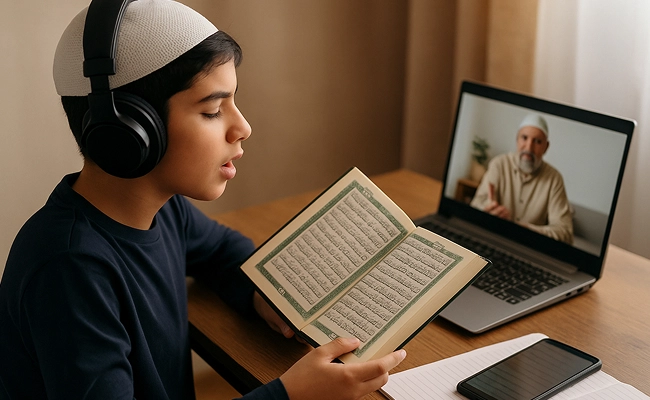
In today’s digital age, the pursuit of sacred knowledge is no longer confined by geography. Online Quran memorization has emerged as a powerful and convenient solution, making Hifz accessible to millions around the globe. For many, it represents the best way to memorize Quran by offering a perfect blend of traditional guidance and modern flexibility.
Advantages of learning online for flexibility and guidance
Learning online with a platform like NoorPath academy breaks down the traditional barriers to Hifz. The benefits are numerous:
- Unmatched Flexibility: You can schedule your classes at times that fit your life, whether you’re a student, a working professional, or a parent. This adaptability is crucial for maintaining consistency.
- Access to Expert Tutors: Online platforms connect you with qualified, Ijazah-certified Hifz tutors from around the world. You can learn from an experienced Shaykh or Shaykha without leaving your home.
- Personalized One-on-One Attention: Unlike a large group class, one-on-one sessions ensure that the teacher’s focus is entirely on you. They can correct your Tajweed, tailor the pace to your ability, and provide targeted feedback.
- Structured Learning: A Best Quran Memorization Online Course provides a structured curriculum, progress tracking, and regular assessments to keep you on track and motivated.
Recommended platforms and apps for beginners and adults
The digital landscape is rich with tools to aid your Hifz journey. While choosing a comprehensive platform like NoorPath academy for guided learning is paramount, many apps can supplement your efforts. The best tools often include features like:
- AI-Powered Mistake Detection: Advanced apps can listen to your recitation and highlight incorrect pronunciation, missed words, or Tajweed errors in real-time.
- Customizable Repetition: Looping features that allow you to listen to a specific verse or group of verses multiple times are invaluable for auditory learning.
- Memorization Planning & Tracking: Tools that help you set goals, track your daily progress, and schedule your revisions based on spaced repetition principles.
- Gamification: Features like streaks, points, and badges can make the process more engaging and fun, especially for younger learners.
NoorPath academy integrates these modern technological aids into its teaching methodology, offering a holistic online quran memorization course that is both effective and engaging. It’s a fantastic way to learn Quran online for beginners step by step.
Hifz Courses for Different Age Groups
The journey of Hifz is unique for every individual, and age plays a significant role in shaping the learning experience. The best way to memorize Quran for a child is vastly different from the optimal approach for an adult. Recognizing these differences is key to designing effective and compassionate teaching strategies.
Hifz courses for children vs adults
For Children: A child’s mind is often compared to a sponge—pure, absorbent, and free from the distractions of adult life. Effective Hifz courses for children, like a quran reading online course for kids, leverage their natural abilities:
- Imitation and Listening: Children excel at mimicking what they hear. Having them listen repeatedly to a Qari with perfect Tajweed is a cornerstone of their learning.
- Storytelling: The Quran is filled with captivating stories. Connecting the verses to these narratives helps children understand the meaning and retain the words more easily.
- Fun and Engagement: Incorporating games, quizzes, stickers, and rewards makes the learning process enjoyable and prevents it from feeling like a chore.
- Short, Frequent Sessions: A child’s attention span is shorter, so brief but regular sessions are more effective than long, infrequent ones.
For Adults: Adults bring a different set of strengths to Hifz, including discipline, a deeper capacity for understanding, and strong motivation. However, they may also face challenges like a busier schedule and a memory that is less pliable than a child’s. A hifz course for adults must account for this:
- Focus on Understanding (Tafsir): Adults can grasp complex meanings, which serves as a powerful memory aid.
- Structured and Flexible Scheduling: Courses must be adaptable to work and family commitments.
- Emphasis on Review: Adult learners need a more conscious and rigorous review system to combat forgetfulness.
- Peer Support: Learning with a group of like-minded adults provides encouragement and accountability.
Structure of adult-friendly Hifz courses
An effective hifz course for adults, especially for those wondering how to memorize Quran in old age, is built on realism and support. At NoorPath academy, our adult courses are designed with these principles in mind:
- Personalized Pace: The plan is tailored to your individual ability. Whether it’s two lines or a full page a day, the goal is sustainable progress.
- Integrated Tajweed: For those who need it, the course begins with a learn quran reading basics online course to ensure the foundation is solid. Mastering pronunciation from the start prevents the need to unlearn mistakes later. We provide essential tips for improving your tajweed throughout the journey.
- Heavy Emphasis on Revision: More time is allocated to reviewing old lessons than learning new ones, using spaced repetition and active recall techniques.
- Practical Application: Students are encouraged to recite their memorized portions in their daily Salah, solidifying the verses in a real-world context.
- Supportive Community: Joining a community of fellow adult learners creates a network of encouragement to help you through challenging moments.
Tips and Techniques for Effective Memorization
Beyond schedules and courses, your daily habits and techniques are what truly drive progress. Integrating these practices into your routine will create a powerful synergy, making your memorization stronger, faster, and more meaningful. This is the practical side of the best way to memorize Quran.
Consistency and daily practice schedule
As emphasized before, consistency is paramount. A daily appointment with the Quran, even if brief, is more effective than long, sporadic sessions. Make Hifz a non-negotiable part of your day. Link it to an existing habit, like your morning prayer. This habit-stacking makes it easier to stay on track. Use a planner or an app to track your progress. Seeing how far you’ve come is a powerful motivator to keep going.
Using repetition, listening, and writing methods
Engage multiple senses to create stronger memory traces. This multi-modal approach is a highly effective way to learn.
- Repetition (Reciting): This is the foundation. Recite the new verse or line repeatedly—some methods suggest 20, 30, or even more times—until it flows effortlessly from your tongue. Recite it while looking, then recite it from memory.
- Listening: Download recordings of a Qari whose recitation you admire (like Mahmoud Khalil al-Hussary, known for his clear and slow pace). Listen to the portion you are memorizing on a loop—while commuting, doing chores, or exercising. This embeds the sound and rhythm in your subconscious.
- Writing: This is a powerful but often underutilized technique. Writing out the verses by hand forces you to pay attention to every detail—the spelling, the diacritics, the shape of the words. This kinesthetic engagement solidifies the memory in a unique way.
Making dua for ease and focus in memorization
Ultimately, Hifz is a spiritual journey, and success is granted by Allah (SWT) alone. Never underestimate the power of Dua. Before each session, renew your intention (Niyyah), ensuring you are memorizing solely for the pleasure of Allah. Ask Him to open your heart, grant you understanding, ease the task for you, and help you retain what you learn. A beautiful and commonly recited dua for this purpose is:
“Rabbi zidni ‘ilma” (My Lord, increase me in knowledge.) [Quran 20:114]
Another powerful supplication is:
“Allahumma la sahla illa ma ja’altahu sahla, wa ‘anta taj-alul hazna idha shi’ta sahla” (O Allah, there is no ease except in that which You make easy, and You make the difficult, if You wish, easy.)
Combining sincere effort with heartfelt supplication is the ultimate formula for success and the spiritual core of the best way to memorize Quran.
What is the Average Time to Memorize the Qur’an?
This is a common question, but the answer varies greatly from person to person. There is no single “average” time, as the journey is influenced by numerous factors. Typically, memorizing the entire Quran can take anywhere from 1 to 5 years. Some exceptional individuals, often full-time students, may complete it in under a year, while for others, it is a more extended, lifelong journey.
Factors that influence the timeline include:
- Time Dedicated Daily: The more time you can consistently dedicate to both new memorization and revision, the faster you will progress.
- Age: Children and young adults often memorize faster due to having more pliable memories and fewer life distractions. However, adults can succeed with discipline and effective techniques.
- Arabic Fluency: A person who already understands Arabic will find it easier to memorize, as they can connect with the meaning of the words directly.
- Chosen Method: A structured, intensive plan will naturally lead to faster completion than a slow-and-steady approach.
- Consistency: Regular, uninterrupted practice is crucial for retention and steady progress.
A realistic timeframe for most dedicated individuals with other commitments is often around 2-3 years. However, it’s vital not to get fixated on speed. The goal is not just to finish, but to memorize with perfection (Itqan) and to let the Quran transform your life. Quality over quantity is the guiding principle.
In Conclusion
The path to becoming a Hafiz of the Quran is a blessed, transformative, and deeply personal journey. While it demands dedication, discipline, and perseverance, it is an achievable goal for anyone with a sincere intention, regardless of age or background. The best way to memorize Quran is not a one-size-fits-all formula, but a balanced and personalized approach. It involves setting a realistic schedule, leveraging the science of learning through spaced repetition and active recall, and engaging multiple senses through reciting, listening, and writing. It requires finding the right guidance, whether through a structured online quran memorization course or a local teacher, and tailoring the methods to your unique learning style.
Most importantly, this journey is a spiritual one, fueled by a pure intention and constant Dua. By combining sincere effort with unwavering reliance on Allah (SWT), the seemingly monumental task of memorizing the Divine Word becomes a beautiful and manageable path. Let NoorPath academy be your companion on this noble quest, providing the tools, support, and expert guidance you need to carry the words of Allah in your heart for a lifetime.
FAQs
Is it okay to read the Quran in English first?
Yes, reading a translation of the Quran in English is a wonderful way to connect with its message and understand its guidance. However, this should be seen as a complement to, not a replacement for, learning to recite it in Arabic. The recitation itself is an act of worship with its own unique rewards and spiritual benefits.
How long does it take to read the entire Quran?
This varies greatly depending on your reading speed and how much time you dedicate daily. A common goal is to complete a full reading during Ramadan, which requires reading one Juz’ per day. For beginners, the focus should be on accuracy, not speed. A slow, correct recitation is better than a fast, incorrect one. There are many reading plans available online to help you read it in a year, six months, or any pace that suits you.
What if I make mistakes in recitation?
Making mistakes is a natural and expected part of learning. Remember the beautiful hadith: the one who struggles with recitation but keeps trying gets a double reward—one for reciting and one for the effort. Don’t let the fear of mistakes stop you. A good teacher will create a supportive environment where you can learn and grow without fear. Every mistake is a learning opportunity.
How can I improve my Quran recitation at home?
Consistency is key. Set aside a specific time for practice each day. Use technology to your advantage: listen to renowned Qaris, record yourself to check for errors, and use apps that highlight Tajweed rules. Most importantly, review what you learned in your online class and apply the teacher’s feedback. And always make dua to Allah to make the journey easy for you.