You hear it. That moment when your child is reciting a surah they just learned. Their small voice, full of sincerity, trying to shape the words of Allah. It’s a sound that makes a parent’s heart swell with a unique mix of pride and hope. You think, “Mashallah,” and you pray that this connection they’re building with the Quran lasts a lifetime. But then, a little worry creeps in. Are they pronouncing the words correctly? Is the beauty of the revelation truly coming through?
Let’s be honest. As parents in the West, we’re juggling a million things. Between school runs, homework, and our own responsibilities, ensuring our kids get a proper Islamic education can feel like a monumental task. We want them to not just read the Quran, but to recite it beautifully, the way it was meant to be heard. We want them to feel the rhythm and power in every verse. This is the art of Tajweed. But the thought of adding another structured, potentially “boring” class to their schedule is daunting. We worry it might turn their natural love for the Quran into a chore.
What if there was a way to teach them this sacred science that felt less like a class and more like a joyful discovery? What if they could learn from expert teachers without leaving the comfort and safety of home? This is the promise of high-quality Tajweed Classes for Kids Online. It’s about transforming a complex subject into an engaging, interactive adventure that builds skill, confidence, and most importantly, a deeper
What if there was a way to teach them this sacred science that felt less like a class and more like a joyful discovery? What if they could learn from expert teachers without leaving the comfort and safety of home? This is the promise of high-quality Tajweed Classes for Kids Online. It’s about transforming a complex subject into an engaging, interactive adventure that builds skill, confidence, and most importantly, a deeper love for Allah’s words.
What does Tajweed mean?
Now, you might be wondering, “What exactly is Tajweed?” We hear the word a lot, but the concept can feel a bit academic. The truth is, it’s beautifully simple. The word ‘Tajweed’ in Arabic literally means ‘to make better’ or ‘to improve.’ In the context of the Quran, it is the science of perfecting the recitation. It’s a set of rules that dictates how each letter should be pronounced from its correct point of articulation (the makhraj), with its specific qualities (sifaat), and in harmony with the letters around it.
Think of it like this: The Quran is a divine message, and Tajweed is the beautiful wrapping and ribbon that presents it. You can have a precious gift, but if it’s presented carelessly, its value might not be fully appreciated. Tajweed ensures that the gift of the Quran is delivered with the elegance and precision it deserves. It’s about giving every single letter its due right.
This brings us to the crucial Distinction Between Recitation and Tajweed. Simple recitation (qira’ah) is the act of reading the words. Tajweed is the art of reciting them correctly and beautifully. It’s the difference between reading a sheet of music and a skilled musician playing it with perfect timing, pitch, and emotion. The Prophet Muhammad (peace be upon him) recited the Quran with Tajweed, and he instructed us to “beautify the Quran with your voices.” Learning Tajweed is a direct fulfillment of that instruction, connecting our children to the very sound of revelation as it was first heard.
The value of teaching Tajweed from a young age
Many parents ask us, “Isn’t my child too young for something so complex?” In our experience teaching hundreds of children, we’ve found the opposite to be true. A child’s mind is like a sponge, and their ears and tongues are incredibly flexible. When they start learning quran tajweed from a young age, the correct pronunciation becomes second nature. They don’t have to “unlearn” years of habitual mistakes, which is a much harder task for adults.
Starting early builds a foundation of excellence. It’s like learning to write with proper handwriting from the beginning. It sets a standard that stays with them for life. When a child can recite with confidence and beauty, it has a profound psychological effect. They feel a sense of accomplishment and a deeper personal connection to the words they are saying. This isn’t just about memorizing; it’s about internalizing. They begin to love the sound of the Quran, which is a powerful motivator for them to continue their journey as a learn Quran online for beginner student.
Imagine your child leading a prayer one day, or reciting a few verses at a family gathering. The confidence they’ll have, knowing they are reciting correctly, is priceless. It’s a skill that will benefit them every single day, from their morning prayers after fajr to their quiet moments of reflection. Teaching them Tajweed young is an investment in their spiritual identity and their lifelong relationship with the Book of Allah.
Benefits of Tajweed Classes for Kids Online
Here’s the thing: we know life is hectic. The traditional model of driving to a weekend or evening madrasah doesn’t work for many modern families. This is where Tajweed Classes for Kids Online truly shine, offering a solution that is both effective and practical.
First and foremost is the incredible flexibility. You can schedule sessions that fit around school, sports, and other activities. Whether it’s a weekend morning or a weekday evening, you can find a time that works for your family’s rhythm, regardless of your time zone. This removes a huge layer of stress for parents.
Second, the best online tajweed classes are designed to be fun. Let’s be honest, a dry, lecture-style class will lose a child’s attention in minutes. At NoorPath academy , our instructors use interactive whiteboards, colorful visuals, and even game-based learning to teach complex rules. When a child is having fun, they are far more receptive to learning. They look forward to their class instead of dreading it.
Third, you get access to a world of expertise. Your local community might have wonderful teachers, but online platforms connect you with certified tutors from esteemed institutions like Al-Azhar University. These are instructors who not only have deep knowledge but are also specially trained to teach children in a Western context. They are patient, encouraging, and skilled at making the lessons relatable.
Finally, the one-on-one format of many Tajweed Classes for Kids Online is a game-changer. In a group setting, a shy child might hesitate to practice, or their specific mistakes might be missed. In a private session, the teacher’s entire focus is on your child. They can patiently correct their pronunciation, provide instant feedback, and tailor the pace of the lesson to their individual needs. This personalized attention accelerates learning and builds confidence like nothing else.
Core Elements of Tajweed Taught in Classes
A good Learn online Quran with Tajweed course for kids will break down the science of Tajweed into manageable, bite-sized pieces. It’s not about overwhelming them with rules, but about building their skills step-by-step. Here are the foundational pillars they will learn.
Correct pronunciation of Arabic letters (Makharij)
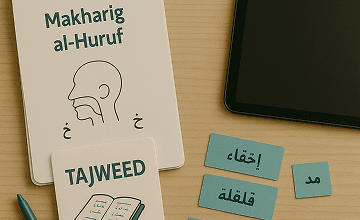
This is the absolute starting point. Makharij is the science of the “exit points” of the letters. Each of the 28 Arabic letters has a precise location in the mouth or throat from where it originates. For example, the letter ‘ح’ (Ha) comes from the middle of the throat, while ‘خ’ (Kha) comes from the top. For an English speaker, these distinctions are new. A skilled teacher will use diagrams, live demonstration, and repetition to help the child feel and produce these unique sounds correctly. It’s the foundation upon which all other benefits of tajweed are built.
Rules of Noon, Meem, and Tanween
Once the letters are mastered, the next step is learning how they interact. The rules surrounding the letter Noon (ن), Meem (م), and the ‘un’/’an’/’in’ sounds of Tanween are among the most frequent in the Quran. This is where concepts like Idgham, Iqlab, and Ikhfa come in. Now, you might be thinking those words sound complicated, but a good teacher makes it simple. For example, when explaining what is idgham in tajweed, they might use an analogy like “blending sounds.” They’ll explain that when a Noon Sakinah (نْ) is followed by certain letters, like ‘ya’ (ي), you merge the two sounds together smoothly. These rules add the flowing, melodic quality to the recitation.
Stretching and stopping rules (Madd and Waqf)
This is the art of rhythm and pausing. Madd refers to the elongation or stretching of vowel sounds. There are specific rules for how long to stretch a vowel depending on the letters that follow it. It’s the difference between a short ‘a’ and a long ‘aa’. Waqf is the science of where and how to pause. You can’t just stop anywhere in a verse! Learning the signs of Waqf is like learning punctuation in English. It ensures the meaning of the verse is preserved and the recitation is clear and coherent. Mastering these rules is one of the most essential tips for improving your tajweed and making the recitation truly captivating.
Recommended Age Groups and Learning Levels
One of the most common questions we get from parents is, “Is my child ready?” The beauty of a well-structured online program is that it meets your child exactly where they are. A one-size-fits-all approach simply doesn’t work. That’s why courses are differentiated by both level and age.
Beginner, intermediate, and advanced levels
Every child starts as a beginner. A tajweed rules online course for beginners focuses entirely on the fundamentals: mastering the alphabet (Makharij) and the most basic rules. The goal is accuracy over speed. As they build confidence, they move to an intermediate level, where they tackle more nuanced rules and begin to focus on fluency. At the advanced level, students refine their skills, study the finer points of the science, and may even work towards an Ijazah (a license to teach). This structured progression ensures that the learning is never overwhelming and always building on a solid base.
Tailored programs for different age groups
How you teach a 6-year-old is vastly different from how you teach a 12-year-old. For younger children (ages 5-8), the focus of Tajweed Classes for Kids Online is heavily on auditory learning and play. Teachers use songs, stories, and games to introduce letter sounds. The goal is recognition and imitation. For older children (ages 9-14+), the lessons can be more structured. They are capable of understanding the “why” behind the rules. They can use workbooks, study charts, and engage in more detailed discussions with their teacher. A great platform like NoorPath academy understands this and tailors its teaching methodology to be age-appropriate, ensuring maximum engagement and retention.

How Online Platforms Ensure Quality Learning?
It’s completely normal to worry about whether online learning will be as effective as in-person classes. We get it. You want to ensure your investment of time and money yields real results. Reputable online academies like NoorPath academy have built-in systems to guarantee a high-quality educational experience.
The cornerstone is the one-on-one instruction. This personalized attention is the single biggest advantage of online learning. The teacher can identify and correct your child’s specific mistakes in real-time—something that’s nearly impossible in a large group class. They can adjust the pace, spending more time on difficult concepts and moving faster through things your child grasps quickly.
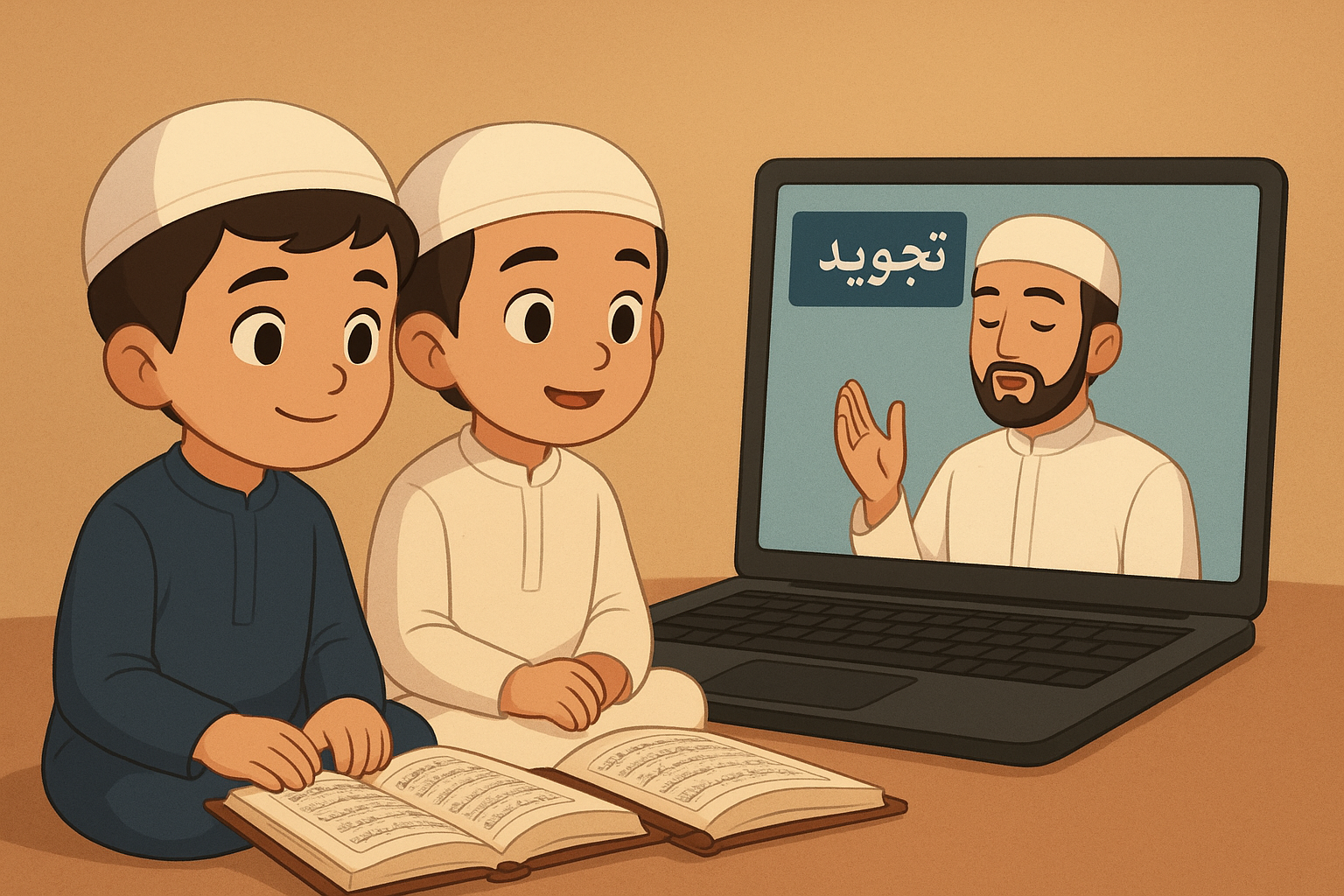
Furthermore, quality platforms use technology to their advantage. Interactive whiteboards allow teachers to write out examples, highlight text, and use visual aids to explain rules. They provide digital copies of the Qaida or Quran, so student and teacher are literally on the same page. Many platforms also have a parent portal, where you can see progress reports, review feedback from the teacher, and even watch recordings of the classes. This transparency gives you peace of mind and keeps you involved in the learning process.
Finally, the vetting process for teachers is rigorous. At NoorPath academy , our instructors are not just native Arabic speakers; they are certified professionals, often with degrees from world-renowned institutions, who have specific experience in teaching Tajweed to children. They are patient, encouraging, and passionate about the Quran. This combination of personalized attention, effective technology, and expert instruction is what makes a learn tajweed online course so successful.
Parental Involvement in the Learning Process
As educators, we can tell you with certainty: a parent’s involvement is the secret ingredient to a child’s success. Your role doesn’t end when you log them into their class. Your encouragement and support are what will turn their lessons into a lasting habit. And it doesn’t have to be complicated!
First, create a positive learning environment. This means having a dedicated, quiet space for their class, free from the distractions of TV or siblings playing nearby. Ensure their computer and internet are working before class starts to avoid technical frustrations. This simple act of preparation signals to your child that this time is important.
Second, be their biggest cheerleader. Praise their effort, not just their perfection. When you overhear them pronounce a difficult letter correctly, say “Mashallah, that sounded beautiful!” This positive reinforcement is incredibly motivating. After class, ask them, “What was the most interesting thing you learned today?” This shows you value their learning.
Third, integrate it into your daily life. The five minutes after they perform wudu for prayer is a perfect time to review a rule or recite a short verse together. Listen to professional Quran reciters in the car and point out the beautiful Tajweed. When you’re reading a bedtime story, you can talk about the importance of reading clearly, just like they’re learning to do with the Quran. You don’t have to be a Tajweed expert yourself; you just have to be an enthusiastic partner in their journey. Your support is one of the most important tips for learning proper tajweed.
Common Challenges and How to Overcome Them
The path to mastering Tajweed, like any valuable skill, will have its bumps. It’s completely normal. The key is to anticipate these challenges and have strategies to overcome them, turning potential frustrations into moments of growth.
A common hurdle is maintaining focus, especially for younger kids. A 30-minute session can feel long. The solution lies in the teaching method. Great Tajweed Classes for Kids Online are dynamic. The teacher will switch between activities—a few minutes of pronunciation drills, then a short game, then reciting a verse, then telling a related story. This variety keeps the child’s mind engaged.
Another challenge is the pronunciation of letters that don’t exist in English, like ‘ع’ (Ayn) or ‘ض’ (Dhad). This can be frustrating. The key here is patience and expert guidance. A good teacher will break down the mechanics of the sound and provide fun, repetitive drills. They’ll use positive language, saying “That’s close! Let’s try it this way,” instead of “That’s wrong.” As a parent, you can help by celebrating the small victories and reminding them that practice makes progress.
Finally, motivation can sometimes dip. The initial excitement might wear off. This is where connecting the “how” to the “why” is crucial. Remind them why they are learning Tajweed: to make their recitation beautiful for Allah, to sound like the Prophet (PBUH), to feel the words of the Quran in their heart. You can also set up small reward systems for consistent practice or mastering a new rule. Sometimes, just taking a night off to listen to their favorite reciter can reignite their passion.
In Conclusion
Teaching our children to recite the Quran with Tajweed is one of the most profound gifts we can give them. It’s more than just a skill; it’s a key that unlocks a deeper, more intimate, and lifelong relationship with the Book of Allah. It connects their hearts to the sound of revelation and builds a foundation of confidence in their Muslim identity that will serve them for the rest of their lives. Wallahi, it is a beautiful journey to witness.
In our busy, modern lives, the idea can seem daunting. But it doesn’t have to be. With engaging, flexible, and expertly taught Tajweed Classes for Kids Online, this beautiful science is more accessible than ever. It can be a source of joy and connection for your family, not another source of stress.
At NoorPath Academy, we are passionate about making this journey a beautiful one for your child. We invite you to book a free evaluation to see how our dedicated teachers can bring the art of Tajweed to life for your family. Let’s embark on this rewarding path together.
FAQs
What topics are covered in Tajweed lessons for kids?
A typical course starts with the absolute basics: the correct pronunciation of every Arabic letter from its articulation point . From there, it moves to the core rules, such as those for Noon, Meem, and Tanween , the rules of stretching vowels , and the rules for when and how to stop . The curriculum is structured to build skills progressively.
Are online Tajweed classes effective for young learners?
Yes, incredibly so! For many children, they are even more effective than traditional classes. The one-on-one attention from a private tutor ensures that their specific mistakes are caught and corrected immediately. Furthermore, the use of interactive tools, games, and visual aids in high-quality Tajweed Classes for Kids Online keeps them engaged and makes learning fun, which is key for retention in young learners.
What tools and materials are used in online Tajweed learning?
The primary tools are a computer or tablet with a stable internet connection, a headset with a microphone, and video conferencing software like Zoom. Teachers use virtual whiteboards to illustrate concepts, share their screens to show a digital Qaida or Quran, and utilize educational games and videos. Parents are usually provided with PDFs of lesson materials or workbooks for practice between classes.
How can parents support kids in learning Tajweed online?
Parental support is crucial. You can help by creating a quiet, dedicated learning space, ensuring they log in on time, and showing enthusiasm for their progress. Listen to them practice, offer praise for their efforts, and talk about what they’re learning. Playing recordings of beautiful Quran recitation in your home and car also helps attune their ears to proper Tajweed and provides inspiration.