NoorPath Academy Blog
Online Quran Reading in Arabic with Tajweed for All Levels
As Muslim parents in the West, we all share a deep, heartfelt desire: to see our children build a genuine, lifelong connection with the Quran.
December 02, 2025
NoorPath Academy Blog
Online Quran Reading in Arabic with Tajweed for All Levels
As Muslim parents in the West, we all share a deep, heartfelt desire: to see our children build a genuine, lifelong connection with the Quran.
December 02, 2025
As Muslim parents in the West, we all share a deep, heartfelt desire: to see our children build a genuine, lifelong connection with the Quran. We dream of them not just reading the words, but feeling their rhythm, understanding their message, and carrying their light in their hearts. Yet, we know the reality. Juggling school, extracurriculars, and the pressures of a non-Muslim society can make this feel like an uphill battle. The language barrier, in particular, can seem like a huge wall between our children and the divine words of Allah (SWT). But what if that wall could become a door? This guide is for you—the parent who believes that learning Quran reading in Arabic is not just a skill, but a spiritual inheritance we can give our children.
How to read the Quran in Arabic?

You might be looking at the beautiful, flowing script of the Mushaf and thinking, “Where do we even begin?” It can feel intimidating, especially if you’re not a native Arabic speaker yourself. Here’s the thing: learning to read the Quran is a journey, not a race. It’s a path that has been walked by millions of non-Arabs for over 1,400 years. The key is to start with a solid foundation and a structured approach.
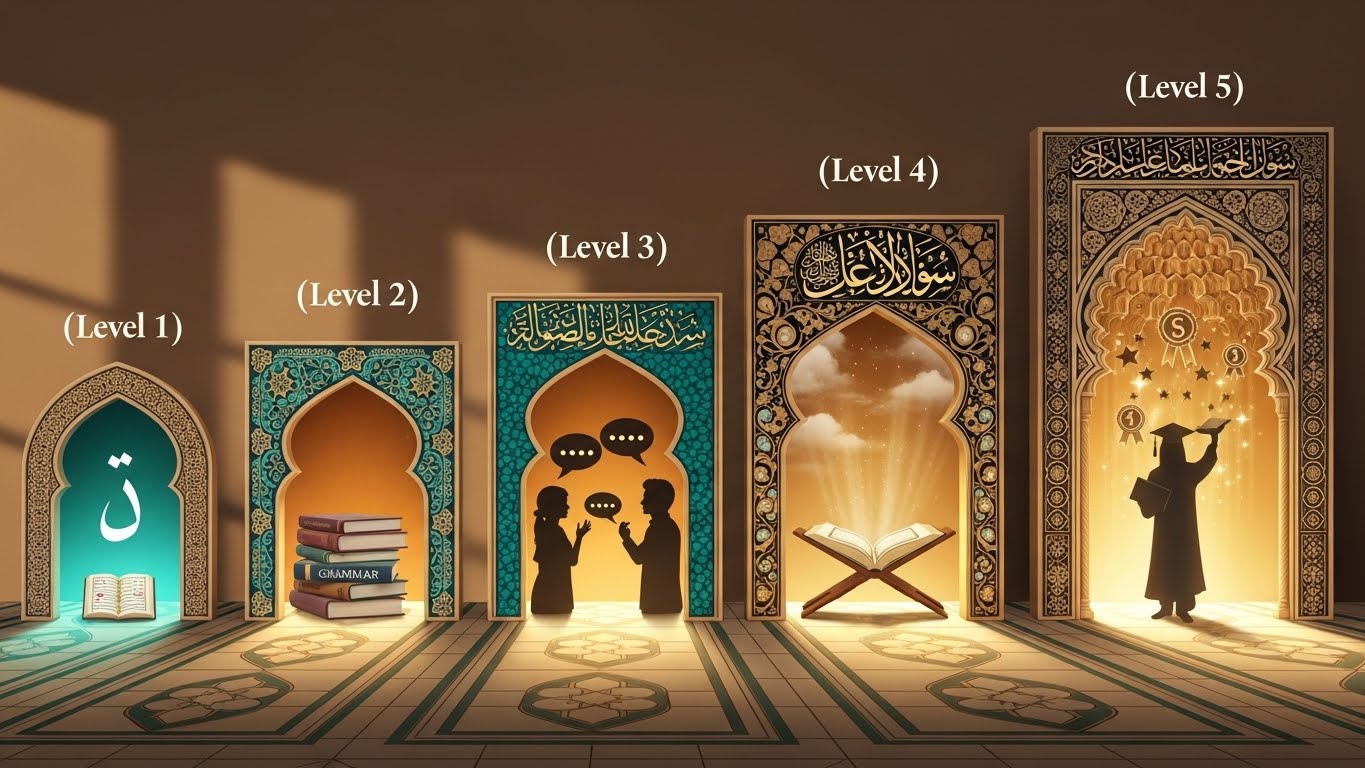
The journey of Quran reading in Arabic begins with the very building blocks of the language. Think of it like building a house. You wouldn’t start with the roof, right? You’d start with a strong foundation. In Quranic Arabic, that foundation is the alphabet and its correct pronunciation. This is where a method like the Noorani Qaida comes in. It’s a time-tested system that introduces letters, vowel sounds, and basic joining rules in a step-by-step manner. It’s designed to build confidence from day one.
But learning the letters is only half the story. The real magic happens when you learn to pronounce them as they were revealed. This is the science of Tajweed. Tajweed isn’t just about making your recitation sound beautiful; it’s about giving every letter its due right, preserving the meaning intended by Allah (SWT). A small mistake in pronunciation can change a word’s meaning entirely—turning “heart” (qalb) into “dog” (kalb), for example. This is why having a qualified teacher is non-negotiable. They are your guide, correcting the subtle mistakes that apps and videos can’t catch, ensuring your child’s foundation is flawless.
Simple Steps to learning Arabic Quran
Embarking on the journey of Quran reading in Arabic can feel like a monumental task, but breaking it down into simple, manageable steps makes it achievable for anyone, child or adult. At NoorPath Academy, we’ve seen countless students, many from Western backgrounds with no prior Arabic knowledge, blossom into confident reciters. It all comes down to following a clear, supportive path.
1. Start with the Arabic Alphabet and Pronunciation
Everything begins here. Before you can read words, you must master the 29 letters of the Arabic alphabet. But it’s more than just memorizing shapes. Each letter has a specific point of articulation (Makhraj) in the mouth or throat and unique characteristics (Sifat) that define its sound. For example, some letters are “heavy” (like ق, ص, ط) and require a fuller sound from the back of the mouth, while others are “light” (like ت, س, ك) and are pronounced from the front.
This is where a qualified teacher is indispensable. They can physically show you how to position your tongue and lips, and provide real-time feedback. For instance, distinguishing between the throat sounds of ‘ح’ (Haa) and ‘ه’ (ha) is something you can only perfect with a trained ear guiding you. Using printable worksheets with tracing exercises can build muscle memory for writing, but the sound must be learned from a human guide. This foundational step ensures you avoid common pronunciation pitfalls that are hard to unlearn later.
2. Use the Quran Learning Applications.
In our digital age, we’re blessed with an abundance of tools to support our learning. Quran learning apps can be fantastic supplements to your studies. Many apps offer features like gamified lessons, flashcards for vocabulary, and audio recitations from famous Qaris. Some even use AI-powered speech recognition to offer feedback on your recitation. For example, apps like Tarteel allow you to recite and will highlight mistakes at the word level.
However, it’s crucial to see these apps for what they are: powerful practice tools, not replacements for a teacher. An app can tell you if you missed a word, but it can’t (yet) correct the subtle nuances of Tajweed, like the precise length of a Madd (elongation) or the correct application of Ghunnah (nasalization). They are excellent for reinforcing what you learn in class, tracking your progress, and building a consistent daily habit. We encourage our students at NoorPath Academy to use these tools for daily revision, turning commute times or quiet moments into productive practice sessions.
3. Learn to read the Quran in Arabic
Once you have a firm grasp of the individual letters and their sounds, the next step is to start connecting them to form words and then sentences. This is where you transition from the Qaida to the Mushaf itself. It’s an exciting moment! Start with the shorter Surahs at the end of the Quran (Juz Amma). These chapters are not only easier to memorize but are also frequently recited in Salah, making your learning immediately practical.
The key here is to learn with a structured approach. Don’t just jump from one verse to another. A good program, like an online arabic course, will guide you systematically. You’ll learn about the different forms of each letter (initial, medial, final, and isolated) and how they connect. You’ll also begin applying basic Tajweed rules you’ve learned, such as the rules of Noon Sakinah and Tanween (Izhar, Idgham, Iqlab, and Ikhfa). This methodical process of Quran reading in Arabic builds fluency and confidence, preventing you from feeling overwhelmed.
4. Listen to the Quran recitation
The Quran was revealed orally; it was heard before it was read. There is immense power in listening. Make it a daily habit to listen to the recitation of master Qaris like Sheikh Al-Husary, Sheikh Al-Minshawi, or Mishary Alafasy. This practice, known as auditory learning, does several things:
- Internalizes Rhythm and Flow: It trains your ear to the natural melody and rhythm of the Quran.
- Improves Pronunciation: By imitating the experts, you subconsciously correct your own pronunciation and Tajweed.
- Aids Memorization: The “listen-and-repeat” technique is one of the most effective ways to memorize verses, as the sound pattern gets embedded in your memory.
Start small. Pick one verse, listen to it 10-20 times, and then try to recite it yourself, mimicking the Qari’s tone and pauses. This active listening turns a passive activity into a powerful learning tool, beautifying your own recitation and deepening your connection to the words of Allah.

The Benefits of Quran Reading in Arabic
For many of us raising families in the West, the question naturally arises: “With so many excellent English translations available, why put so much emphasis on Quran reading in Arabic?” It’s a valid question, and the answer goes far beyond simple communication. Learning to read the Quran in its original language is an investment that pays spiritual, intellectual, and personal dividends for a lifetime.
First and foremost, it forges an unbreakable, direct link to the words of Allah (SWT). A translation is, by its very nature, an interpretation. It’s the translator’s best effort to convey the meaning, but it will always be a step removed from the original revelation. When you or your child can read the Arabic text, you are engaging with the Quran in its purest form. You experience the rhythm, the eloquence, and the divine power that has moved hearts for centuries. This direct engagement transforms prayer (Salah). Instead of reciting words from memory, you begin to connect with their meaning, which significantly enhances khushu’ (humble concentration).
Furthermore, learning Arabic strengthens Islamic identity, which is a major concern for parents in Western societies. When a child can read the Quran in Arabic, it gives them a sense of belonging to a global Ummah and a 1,400-year-old tradition. It becomes a part of who they are. This is not just about religious education; it’s about character development. As Umar (RA) is reported to have said, “Learn Arabic, for it strengthens the intelligence and increases one’s noble conduct (al-murūah).” The discipline and patience required for Quran reading in Arabic build valuable life skills.
Finally, the intellectual benefits are immense. Learning a new language, especially one as structured and logical as Arabic, has been shown to improve cognitive abilities like memory and critical thinking. It opens the door to a vast ocean of Islamic knowledge. Suddenly, classic texts on Tafsir, Hadith, and Fiqh become accessible. An online fiqh course or a hadith online course becomes far more profound when you can engage with the source texts. This journey empowers your child to become not just a follower, but a knowledgeable and confident Muslim.
Why Is Quran Reading in Arabic Is Essential?
While the benefits are many, the importance of Quran reading in Arabic runs even deeper. It is not merely a “nice-to-have” skill for a Muslim; many scholars have argued it is a fundamental part of our faith. The Quran itself emphasizes its Arabic nature over a dozen times. Allah (SWT) says, “Indeed, We have sent it down as an Arabic Qur’an that you might understand” (Surah Yusuf, 12:2). This highlights a divine wisdom in the choice of language—a wisdom we can only fully appreciate by engaging with it directly.
Spiritual benefits of reading the Quran in its original language
The spiritual connection forged through reading the Quran in Arabic is unparalleled. Every letter, every word, carries a spiritual resonance and light (noor) that cannot be replicated in another language. The very act of recitation is a form of worship, a conversation with our Creator. When you recite in Arabic, you are using the exact words Allah (SWT) chose. This creates a profound sense of intimacy and presence. It calms the heart, as Allah says, “Unquestionably, by the remembrance of Allah hearts are assured” (Surah Ar-Ra’d, 13:28). For many, the sound of the Quranic recitation itself is a healing and deeply moving experience, even before they grasp the full meaning of every word.
Understanding true meaning through Arabic
The Arabic language is known for its depth and precision. A single root can blossom into a family of words with interconnected, nuanced meanings. Translations, no matter how skilled, often have to choose one meaning over others, flattening the rich texture of the original text. For example, the word taqwa is often translated as “fear of God,” but it also carries connotations of mindfulness, consciousness, and protection. A person who understands Arabic can hold all these layers of meaning at once.
Moreover, the Quran is a literary miracle. Its structure, rhetoric, and sound patterns (saj’) are integral to its message and impact. This linguistic beauty, which serves as a proof of its divine origin, is completely lost in translation. Engaging in Quran reading in Arabic allows you to witness this miracle firsthand, strengthening your faith and awe in Allah’s revelation.
Rewards of proper Quran recitation
The act of reciting the Quran is laden with immense rewards. The Prophet Muhammad (ﷺ) said, “Whoever recites a letter from the Book of Allah, he will be credited with a good deed, and a good deed gets a tenfold reward. I do not say that Alif-Laam-Meem is one letter, but Alif is a letter, Laam is a letter and Meem is a letter.” (Tirmidhi).
This reward is not just for the fluent. The Prophet (ﷺ) also gave special encouragement to those who struggle, saying, “The one who is proficient in the recitation of the Qur’an will be with the honourable and obedient scribes (angels) and he who recites the Qur’an and finds it difficult to recite, doing his best to recite it in the best way possible, will have a double reward.” (Bukhari and Muslim). This beautiful hadith is a great comfort for us and our children as we embark on this journey. It tells us that Allah values our effort and sincerity above perfection. Every stumble, every repeated attempt, is seen and doubly rewarded. This makes the journey of learning to read quran tajweed online a beautiful struggle, filled with blessings at every step.
Common Mistakes in Quran Reading and How to Avoid Them
As non-Arabs, especially when we’re just starting out, making mistakes in our recitation is a natural part of the learning process. The key is to be aware of these common pitfalls and actively work to correct them with the right guidance. Ignoring them can lead to errors that become fossilized habits, and in some cases, can even alter the meaning of the verses. Here are some of the most frequent mistakes we see at NoorPath Academy and how to avoid them.
- Incorrect Articulation (Makharij): This is perhaps the most common challenge. Many Arabic letters don’t have an exact equivalent in English, leading learners to substitute them with the closest sound they know. For example, pronouncing the deep, throat-based ‘ع’ (Ayn) like a simple ‘A’ (Alif), or the heavy ‘ق’ (Qaaf) like a light ‘ك’ (Kaaf).
How to Avoid: There’s no substitute for a live teacher. A qualified instructor can demonstrate the correct mouth and throat positions and provide instant, personalized feedback. Practice with a mirror can also help you see what your mouth is doing. - Mixing Heavy and Light Letters (Tafkheem & Tarqiq): Arabic letters have distinct qualities of being either “heavy” (mufakham) or “light” (muraqqaq). A common mistake is to make a heavy letter sound light, or vice versa. For instance, pronouncing ‘ص’ (Saad) like ‘س’ (Seen) changes the word ‘عَصَىٰ’ (he disobeyed) to ‘عَسَىٰ’ (perhaps).
How to Avoid: Listen carefully to expert reciters and try to mimic the fullness or thinness of their sounds. A teacher will drill you on these pairs until your ear and tongue can distinguish them automatically. - Incorrect Vowel Lengths (Madd): Stretching a vowel for too long or not long enough is a frequent error. The natural stretch (Madd Tabee’i) is two counts, but certain rules require elongations of 4, 5, or even 6 counts. Cutting these short or over-stretching them disrupts the rhythm and can be a major mistake (Lahn Jali).
How to Avoid: Learn the rules of Madd step-by-step. A teacher will teach you how to count the “beats” (harakat) and apply them consistently. This is a core part of any good program to read quran online with tajweed. - Improper Pausing (Waqf): Knowing where to stop and where not to stop is crucial for preserving the meaning of a verse. Stopping in the middle of a connected phrase can completely change the intended message.
How to Avoid: Learn the waqf symbols in the Mushaf (e.g., مـ for a mandatory stop, لا for a forbidden stop). When in doubt, it’s often best to stop at the end of a verse. A teacher can explain the linguistic reasons behind these pauses. - Inconsistent Ghunnah (Nasalization): The nasal sound (ghunnah) on the letters ‘ن’ (Noon) and ‘م’ (Meem) has a specific two-beat duration in rules like Idgham and Ikhfa. Many beginners either skip it or don’t hold it for the correct length.
How to Avoid: Practice holding the sound in your nasal passage. A teacher can demonstrate the correct timing and sound quality, ensuring it’s not forced or exaggerated.
Avoiding these mistakes boils down to two things: knowledge and practice under supervision. This is why structured learning with a qualified guide is so much more effective than trying to figure it out alone from videos. It ensures your Quran reading in Arabic is built on a correct and solid foundation.
How to Choose the Best Online Quran Reading Program?
In today’s world, online learning has become a blessing for Muslim families in the West. It bridges the distance to qualified teachers and offers the flexibility our busy lives demand. But with so many options, how do you choose the right program for your family? It’s not just about finding someone to teach; it’s about finding a partner in your child’s spiritual education. Here are key factors to consider:
- Qualified and Certified Tutors: This is the most important factor. Look for teachers who are not just native Arabic speakers, but are certified in Tajweed and Quranic sciences, preferably with an Ijazah (a license to teach that connects back to the Prophet ﷺ). At NoorPath Academy, our instructors are vetted for their expertise and their ability to connect with students, especially children.
- Structured and Comprehensive Curriculum: A good program should offer more than just recitation practice. It should have a clear, step-by-step curriculum that takes a student from the alphabet (like Noorani Qaida) to fluent recitation with Tajweed. Furthermore, a truly holistic education integrates other Islamic sciences. Look for academies that also offer an online seerah course, an online Islamic History Course, or online fiqh courses to provide context and deeper understanding.
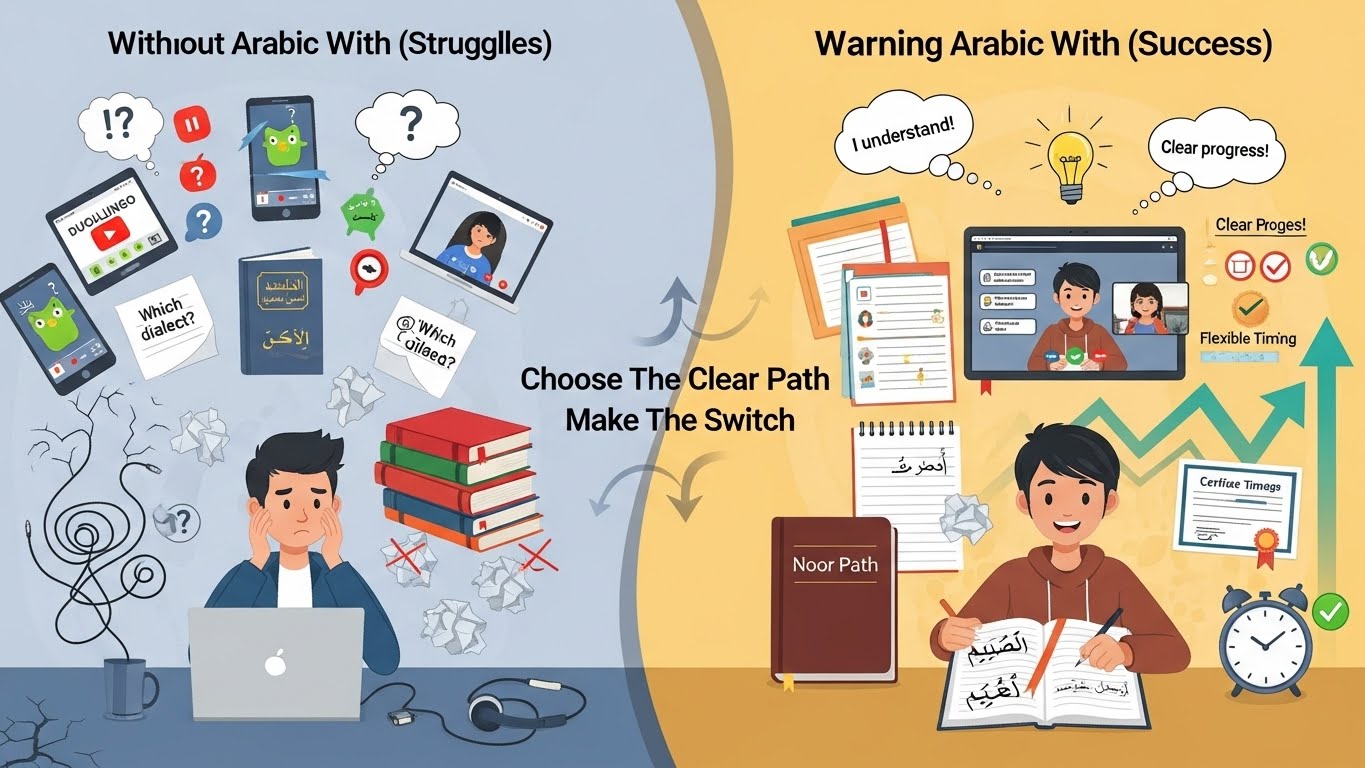
- Flexibility for Western Families: We know that life is hectic. A great online program understands the challenges of juggling school, work, and different time zones. Look for flexible scheduling, one-on-one classes that cater to your child’s individual pace, and a supportive administration that makes rescheduling easy. This is crucial for making learning sustainable.
- Focus on Both Recitation and Understanding: While beautiful recitation is a goal, it’s hollow without understanding. The best programs encourage a love for the Quran’s message. They might incorporate simple Tafsir (explanations) or word-for-word translations to help students connect with what they are reading. This is especially important for the Best online arabic course for adults who are seeking a deeper connection.
- A Supportive and Engaging Environment: Learning should be a joyful experience, not a chore. For children, this means teachers who are patient, encouraging, and use interactive methods. For adults, it means a non-judgmental space where you can ask questions and learn at your own pace. Look for programs that offer trial classes, so you can experience the teaching style before committing.
Choosing an online academy is a big decision. By focusing on these criteria, you can find a program that not only teaches the mechanics of Quran reading in Arabic but also nurtures a lifelong love for the Book of Allah in your family’s hearts.
Tips to Improve Your Quran Reading in Arabic Faster
Once you’ve started your journey with a good teacher and a structured program, how can you accelerate your progress? Mastering Quran reading in Arabic is about smart, consistent effort. It’s not about cramming for hours, but about building strong, daily habits. Here are some practical tips that have helped our students at NoorPath Academy see remarkable improvement.
- Consistency is King: 15-20 minutes of focused practice every day is far more effective than a two-hour session once a week. Consistency builds muscle memory for your tongue and embeds the rules of Tajweed into your long-term memory. Use a planner to schedule your “Quran time” and protect it like any other important appointment.
- Use a Single Mushaf: This might sound simple, but it’s incredibly powerful. Your brain creates a visual “picture” of the page as you read and memorize. Using the same copy of the Quran helps solidify this visual memory, making recall much faster and easier. Constantly switching between different layouts can confuse your brain.
- The Listen, Repeat, Record, and Compare Method: This is an active learning cycle. First, listen to a short verse from a master Qari. Then, repeat it, trying to imitate their pronunciation and flow. Next, record yourself reciting the same verse. Finally, compare your recording to the original. You’ll be amazed at the small mistakes you catch yourself.
- Incorporate Recitation into Your Salah: This is one of the best ways to strengthen your memorization and practice your recitation. Recite the new verses you’ve learned in your sunnah prayers. This constant repetition in a state of worship makes the verses stick and deepens their spiritual impact.
- Focus on One Rule at a Time: Don’t try to master all of Tajweed at once. Spend a week focusing solely on one rule, like Ikhfa. Look for it in your daily recitation and make a conscious effort to apply it perfectly every time. Once it becomes second nature, move on to the next. This layered approach prevents overwhelm and builds mastery.
- Understand the Meaning: You will remember what you understand far better than what you just memorize by rote. Before memorizing a new set of verses, read their translation and a simple Tafsir. Knowing the story or the message creates context and emotional hooks, making the Arabic words more memorable.
- Find a Quran Buddy: Partner up with a friend or family member who is also learning. You can recite to each other, hold each other accountable, and provide encouragement. The Learning Pyramid shows that you retain up to 90% of what you teach to others! Explaining a Tajweed rule to your buddy is one of the best ways to solidify it in your own mind.
By integrating these tips into your routine, you’ll find that your journey of Quran reading in Arabic becomes not only faster but also more enjoyable and spiritually fulfilling.
In Conclusion
For Muslim families in the West, guiding our children toward a meaningful connection with the Quran is one of our most important and rewarding responsibilities. The journey of learning Quran reading in Arabic is more than an academic exercise; it is a spiritual quest that unlocks a direct line to Allah’s divine message. It builds a strong Islamic identity, enhances our worship, and fills our homes with blessings. While the path may seem challenging, it is paved with immense reward for every effort made.
By starting with a solid foundation in the Arabic alphabet and Tajweed, leveraging modern tools wisely, and committing to consistent practice under the guidance of a qualified teacher, this beautiful goal is within reach for every family. Remember the Prophet’s (ﷺ) encouragement: the struggle itself is doubly rewarded. Let’s embrace this journey with patience and joy, knowing that we are investing in our children’s dunya and akhirah. At NoorPath Academy, we are honored to walk this path with you, providing the support and expertise your family needs to succeed.
FAQs
Can I learn Tajweed online as a beginner?
Absolutely! In fact, online learning can be an ideal way for beginners to learn Tajweed. Platforms like NoorPath Academy offer one-on-one classes, which means you get the undivided attention of a qualified teacher. This is crucial for correcting the subtle pronunciation mistakes that are common for beginners. A good online program will start with the very basics, like the points of articulation for each letter, and build your knowledge step-by-step. With flexible scheduling, you can learn at your own pace in a comfortable, pressure-free environment.
Is online Quran learning effective for adults?
Yes, it is highly effective. Many adults find online learning even more suitable than in-person classes due to its flexibility. Juggling work, family, and other commitments can make attending a local madrasa difficult. Online platforms offer the ability to schedule lessons at times that work for you, whether it’s early in the morning or late at night. Furthermore, reading arabic online for adults often involves a deeper desire for understanding, and a private tutor can tailor lessons to focus on Tafsir and the nuances of the language, in addition to recitation, providing a rich and personalized learning experience.
How much time should I practice daily?
Consistency is far more important than duration. We recommend starting with a manageable goal of 15–20 minutes of focused practice each day. This is enough time to review your previous lesson and practice a new verse or rule without feeling overwhelmed. A short, daily habit is much more effective for long-term retention than a long, infrequent session. As you build stamina and fall in love with the process, you can gradually increase your practice time. The key is to make it a non-negotiable part of your daily routine.
Start Today
Ready to speak Arabic that brings you closer to Allah? Join NoorPath Academy’s Quranic Arabic courses, start today and feel the difference in your faith journey.