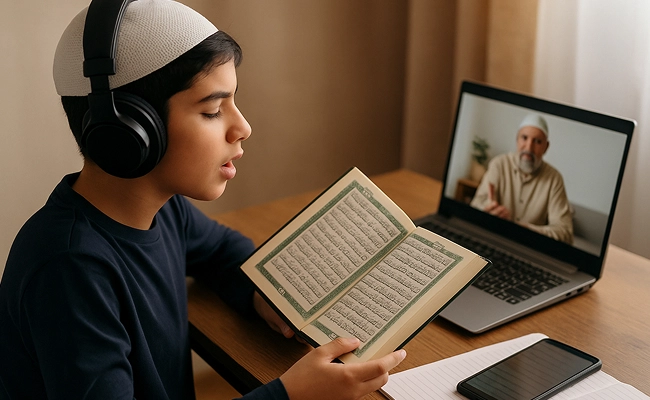
Embark on a beautiful journey to connect with Allah’s words, one letter at a time.
As a parent, there’s a special kind of peace that fills your heart when you hear the Quran being recited in your home. It’s a sound that brings tranquility and barakah (blessing). Many of us dream of our children—and even ourselves—being able to open the Holy Book and read its verses with confidence and beauty. But let’s be honest, for those of us living in the West, juggling busy schedules and not being native Arabic speakers, this dream can feel distant. You might wonder, “Where do we even start?” The answer is simpler and more accessible than ever: you can learn to recite Quran for beginners right from the comfort of your home.
Learning Quran for Beginners
The thought of learning to read a new script, especially one as rich and intricate as Arabic, can feel intimidating. Many adults who didn’t have the opportunity to learn as children feel like they’ve missed their chance. Parents worry about finding a qualified teacher who is patient and understands the unique challenges of non-Arabic speakers. These feelings are completely normal. The truth is, the journey to learn to recite Quran for beginners is not about reaching perfection overnight. It’s a beautiful, step-by-step process that Allah (SWT) rewards at every stage. The Prophet Muhammad (ﷺ) gave us incredible encouragement when he said: “The one who is proficient in the recitation of the Qur’an will be with the noble and obedient scribes (angels). And the one who recites the Qur’an and stumbles over it, finding it difficult, will have two rewards.” (Sahih al-Bukhari, Sahih Muslim). This hadith is one of the most important facts every Muslim should know—your effort is cherished by Allah, even when you make mistakes.
Easy Way to Learn Quran for Beginners
So, what is the easy way to learn Quran for beginners? It’s about breaking the process down into small, manageable steps. Instead of looking at the entire Mushaf and feeling overwhelmed, you start with a single letter. You learn its shape, its name, and its sound. Then you move to the next one. It’s like building a house: you don’t start with the roof; you start by laying a solid foundation, one brick at a time. This foundational approach is one of the most Effective Methods To Learn Quran Online. It builds confidence and ensures that you’re not just memorizing shapes but truly understanding the sounds they represent. This method removes the pressure and makes the learning process enjoyable and rewarding, which is crucial for both children and adults.

Learning How to Read Quran Karim Online Step by Step
Online learning has revolutionized how we access Islamic education. Here’s how a typical step-by-step journey to learn to recite Quran for beginners online with a platform like NoorPath Academy works:
- Free Trial and Assessment: It starts with a no-pressure trial class. A qualified teacher assesses your or your child’s current level—even if that level is zero. This helps create a personalized learning plan.
- Mastering the Foundation (Noorani Qaida): Your journey begins with the Noorani Qaida or a similar foundational guide. This is where you learn Arabic alphabets and pronunciation. Each lesson focuses on a few letters and sounds, with the teacher providing live feedback.
- Joining Letters and Forming Words: Once you’re comfortable with the individual letters, you learn how they connect to form words. You’ll start reading simple, one-syllable words and gradually move to more complex ones.
- Introducing Basic Tajweed: As you begin reading words and short phrases, your teacher will introduce basic Tajweed rules in a simple, practical way. You’ll learn as you go, applying the rules directly to your recitation.
- Reading Short Verses and Surahs: Before you know it, you’ll be reading your first verses from the Quran! Starting with short, familiar surahs like Al-Fatiha, Al-Ikhlas, and Al-Asr builds immense confidence.
This structured, one-on-one approach ensures you never feel lost or left behind. It’s a guided path where every step is celebrated.

Why Proper Quran Recitation Matters?
You might be wondering, “Why is there so much emphasis on pronunciation? Can’t I just read the meaning in English?” While translations are a great tool, the act of recitation itself is a profound form of worship. It’s about engaging with the Quran as it was revealed.
Spiritual and Religious Significance of Accurate Recitation
The Quran is not just a book; it is the literal word of Allah. Reciting it correctly is a way of honoring this divine revelation. The beautiful, rhythmic sound of Quranic recitation has a scientifically-proven calming effect on the heart and mind. It’s a spiritual healing that connects you directly to your Creator. When you strive to pronounce each letter correctly, your mind is focused, your heart is present, and your worship is elevated. This is why learning how to recite Quran beautifully is a goal for so many Muslims. It transforms your Salah from a ritual into a heartfelt conversation with Allah.
Improving Pronunciation and Understanding of Arabic
Arabic is a very precise language, and a small change in pronunciation can completely alter the meaning of a word. For example, the difference between ‘ق’ (Qaaf) and ‘ك’ (Kaaf) can change a word’s entire definition. By learning proper recitation, you are not just making beautiful sounds; you are preserving the meaning of Allah’s message. This is the first and most crucial step toward understanding the Quran in its original language, which highlights the importance of learning arabic in islam. A solid foundation in recitation makes the future journey of learning Arabic grammar and vocabulary much smoother.
Steps to Learn to Recite Quran for Beginners
The path to confident recitation is built on two fundamental pillars: mastering the alphabet and understanding the basic rules of Tajweed. This is the core of any program designed to learn to recite Quran for beginners.
Learning Arabic Alphabets and Pronunciation
Everything starts here. The first step is to familiarize yourself with the 28 letters of the Arabic alphabet. This involves learning their names, shapes (which can change depending on their position in a word), and, most importantly, their sounds. Online tutors use proven methods like the Noorani Qaida, which systematically introduces each letter and its variations. They provide live feedback, correcting your pronunciation of tricky letters like ‘ع’ (Ayn) and ‘ح’ (Haa) that don’t have English equivalents. This one-on-one attention is something you simply can’t get from a pre-recorded video or app.
Introduction to Basic Tajweed Rules
Tajweed literally means “to make beautiful” or “to improve.” Think of it as the set of rules that governs Quranic recitation. It ensures that every letter is pronounced correctly from its specific point of articulation (makhraj) with its proper qualities (sifaat). For a beginner, this doesn’t mean memorizing a complex rulebook. A good teacher introduces Tajweed rules gradually and practically. You’ll learn about the different vowel sounds, how to lengthen certain sounds (Madd), and when to pronounce the letter ‘noon’ clearly or with a nasal sound (Ghunna). These rules are the key to unlocking the melody and rhythm of the Quran and learning how to recite Quran beautifully.
Learning to Read the Quran in English (for Non-Arabic Speakers)
For many non-Arabic speakers, the question of using English transliteration is a common one. It seems like a helpful shortcut, but it’s important to understand its role and limitations.
Transliteration Guides and Beginner-Friendly Resources
Transliteration is the process of writing Arabic words using the Latin (English) alphabet. For example, “ٱلْحَمْدُ لِلَّٰهِ” might be written as “Al-hamdu lillah.” This can be a useful tool for someone who is just starting and wants to follow along in prayer or memorize a short dua, like the dua e qunoot. It acts as a temporary bridge. However, the English alphabet is not equipped to represent all the unique sounds of Arabic. This is why relying solely on transliteration is a major pitfall when you want to learn to recite Quran for beginners correctly.
Tips for Reading the Quran in English While Maintaining Correct Recitation
If you must use transliteration, think of it as a set of training wheels. It can help you get started, but the goal is to take them off as soon as possible. Here’s how to use it effectively:
- Always Use It with Audio: Never read transliteration without listening to a correct recitation by a qualified Qari. Mimic the sounds you hear, not the letters you see in English.
- Focus on Learning the Script: Dedicate time each day to learning the Arabic script itself. Even 15 minutes a day will help you transition away from transliteration much faster.
- Find a Teacher: The best way to ensure you’re not developing bad pronunciation habits is to have a live teacher listen to you and correct your mistakes. This is where quran recitation classes online become invaluable.
Joining Online Quran Recitation Classes
In today’s digital world, you don’t need to find a local madrasah with a schedule that fits your life. High-quality, personalized Quranic education is available right at your fingertips. This is especially true when you want to learn how to read Quran for free initially through trial classes to find the right fit.
How Do Online Classes Work for Beginners?
It’s surprisingly simple and effective. You connect with a dedicated, one-on-one tutor through a video platform like Zoom. The teacher can share their screen to show you the Noorani Qaida or verses from the Quran. They listen to you recite, provide immediate feedback, and can even use digital whiteboards to illustrate how letters are formed and connected. For children, these quran recitation online course for kids are often made interactive and engaging with games and rewards. The entire lesson is tailored to your pace and learning style.
Benefits of Learning from a Teacher via Zoom or Other Platforms
The benefits of live online learning are immense, especially for beginners:
- Personalized Attention: In a group class, it’s easy to get lost. In a one-on-one session, the focus is entirely on you. The teacher can pinpoint your specific mistakes and help you correct them before they become habits.
- Flexibility and Convenience: You can schedule classes at times that work for your family, whether it’s early in the morning before school, during a lunch break, or on a relaxed weekend. This consistency is key to making progress.
- Safe and Comfortable Environment: Learning from home provides a safe space where you or your child can feel comfortable making mistakes without fear of judgment. This builds confidence and encourages active participation.
- Access to Expert Tutors: You’re no longer limited by geography. Online platforms like NoorPath Academy connect you with certified tutors from around the world, including those who are native Arabic speakers and graduates of esteemed Islamic universities.
Tips for Practicing Quran Recitation at Home
Your online class is just one part of the journey. Consistent practice at home is what will truly solidify your learning and help you progress. Here are some practical tips:
Daily Practice Schedule and Consistency
Consistency is more important than duration. A focused 15-minute practice session every day is far more effective than a two-hour session once a week. Try to anchor your practice to an existing habit. For example, practice for 10 minutes right after the Fajr prayer or before bed. Make it a non-negotiable part of your daily routine. This is a key tip to successfully learn to recite Quran for beginners.
Recording Your Recitation for Self-Assessment
This is a powerful and simple technique. Use your phone’s voice recorder to record yourself reciting a few verses. Then, play it back and compare it to a recitation by a professional Qari like Sheikh Mishary Rashid Alafasy or Sheikh Abdul Rahman Al-Sudais. You’ll be surprised at the small mistakes you can catch and correct on your own. This builds self-awareness and accelerates your learning.
Using Audio Recitations to Improve
Immerse yourself in the sounds of the Quran. Listen to beautiful recitations while you’re driving, doing chores, or just relaxing. This trains your ear to recognize the correct pronunciation, rhythm, and melody. It’s a passive form of learning that complements your active practice and helps you internalize the beauty of the Quran. Many apps allow you to listen verse by verse, which is perfect for beginners.
Your Beautiful Journey Begins Now
The path to reciting the Quran with clarity and beauty is one of the most rewarding journeys a Muslim can undertake. It’s a journey that deepens your faith, enriches your prayers, and fills your home with peace. It’s not a race, and you don’t have to do it alone. With the right guidance and a little consistency, anyone can learn to recite Quran for beginners.
At NoorPath Academy, we are dedicated to providing that guidance. Our expert tutors, personalized approach, and flexible scheduling are designed to help you and your family connect with the Book of Allah. You have the sincere intention; let us provide the tools and support to learn to recite Quran for beginners.
FAQs
Is it okay to read the Quran in English first?
Yes, reading a translation of the Quran in English is a wonderful way to connect with its message and understand its guidance. However, this should be seen as a complement to, not a replacement for, learning to recite it in Arabic. The recitation itself is an act of worship with its own unique rewards and spiritual benefits.
How long does it take to read the entire Quran?
This varies greatly depending on your reading speed and how much time you dedicate daily. A common goal is to complete a full reading during Ramadan, which requires reading one Juz’ per day. For beginners, the focus should be on accuracy, not speed. A slow, correct recitation is better than a fast, incorrect one. There are many reading plans available online to help you read it in a year, six months, or any pace that suits you.
What if I make mistakes in recitation?
Making mistakes is a natural and expected part of learning. Remember the beautiful hadith: the one who struggles with recitation but keeps trying gets a double reward—one for reciting and one for the effort. Don’t let the fear of mistakes stop you. A good teacher will create a supportive environment where you can learn and grow without fear. Every mistake is a learning opportunity.
How can I improve my Quran recitation at home?
Consistency is key. Set aside a specific time for practice each day. Use technology to your advantage: listen to renowned Qaris, record yourself to check for errors, and use apps that highlight Tajweed rules. Most importantly, review what you learned in your online class and apply the teacher’s feedback. And always make dua to Allah to make the journey easy for you.