As a parent in a bustling Western city, you’re likely juggling a thousand things. School runs, soccer practice, work deadlines, and somewhere in between, you’re trying to nurture your child’s connection to their faith. You hear them recite Surahs in their prayers, and your heart swells with pride. But then a thought might cross your mind: do they truly understand the words they’re speaking to Allah? Does the beauty of the Quran’s message resonate in their hearts, or is it just memorized sounds?
We get it. Many parents in our community share this quiet concern. They want more for their children than just rote memorization. They dream of a future where their kids can open the Quran and feel the power of Allah’s words directly, without a translation barrier. It’s a beautiful, profound goal, and it feels like a monumental task. But the truth is, this incredible journey doesn’t start with complex grammar or deep theological study. It starts with the very first, most fundamental step: the Arabic alphabet.
The thing is, learning the alphabet is the key that unlocks everything else. It’s the foundation upon which a lifelong love and understanding of the Quran is built. In this article, we’re going to walk you through why it’s so important and how you can help your child learn Arabic alphabet and pronunciation online in a way that’s engaging, effective, and fits into your busy family life. This isn’t just about learning a new language; it’s about opening a direct line to the heart of Islam for your child.
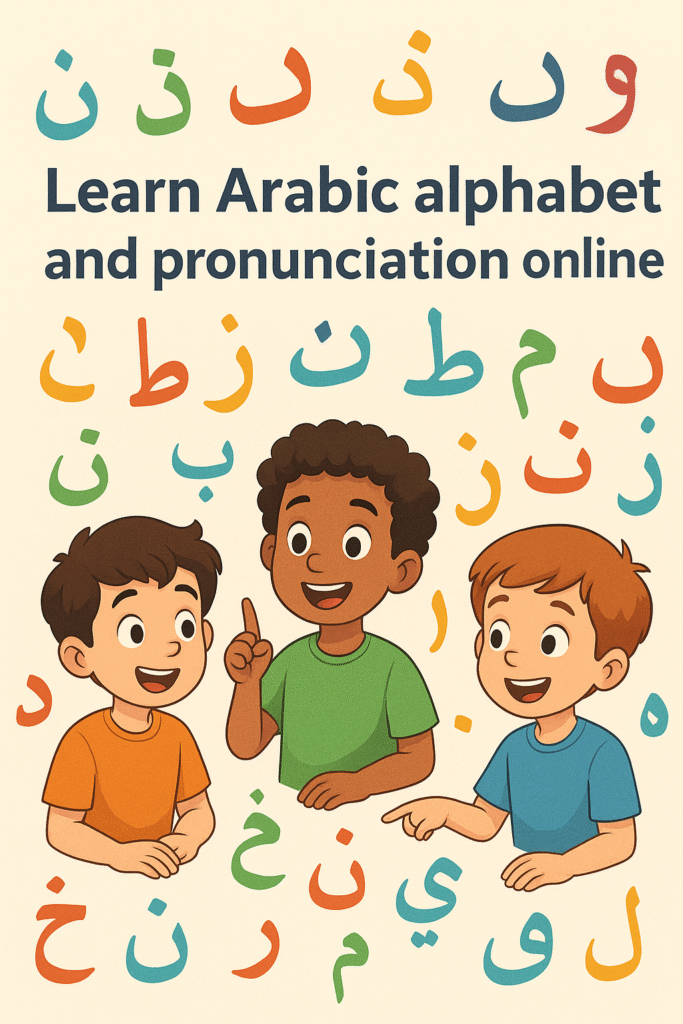
The Importance of Learning Arabic Alphabet and Pronunciation
You might be wondering, “With so many great translations available, why is it so crucial to learn the original Arabic?” It’s a fair question. This reflects the importance of learning Arabic in Islam. and the answer lies at the very heart of our faith. The Quran is not just a book of guidance; it is the literal word of Allah, revealed in a specific language for a reason. Allah (SWT) tells us in the Quran, “Indeed, We have sent it down as an Arabic Qur’an that you might understand.” (Surah Yusuf, 12:2).
Learning the Arabic alphabet and its correct pronunciation is the first step toward fulfilling that purpose. Here’s why it matters so much:
- A Deeper Connection in Salah: Imagine your child standing for prayer, not just reciting words, but understanding them. The powerful verses of Surah Al-Fatiha become a genuine conversation with their Creator. The peace of Tahajjud prayer deepens when the heart comprehends the words the tongue is uttering. This is the difference between performing a ritual and having a relationship.
- Preserving the True Meaning: Arabic is an incredibly precise language. A tiny shift in pronunciation can change the meaning of a word entirely. For example, the difference between a ‘seen’ (س) and a ‘saad’ (ص) can alter a word’s meaning from “perhaps” to something else entirely. Learning correct pronunciation through Tajweed ensures that the message your child recites and hears is the one Allah (SWT) intended. It protects the integrity of their prayer and their understanding.
- Unlocking the Beauty of the Quran: The Quran is a literary miracle. Its rhythm, eloquence, and phonetic beauty are lost in translation. When you learn Arabic alphabet and pronunciation online, you begin to appreciate this miracle. You start to feel the flow of the verses and the power in their sound. It’s like seeing a masterpiece in its original vibrant colors instead of a black-and-white photo.
- Building a Strong Islamic Identity: For our children growing up in the West, having a tangible connection to their heritage and faith is vital. Learning the language of the Quran is a powerful anchor. It connects them to over a billion Muslims worldwide, across every Islamic calendar year, and gives them confidence in their identity. When they can read the script that adorns mosques and Islamic art, they feel a sense of belonging.
From our experience at NoorPath Academy, we’ve seen firsthand the moment it ‘clicks’ for a child. The moment they sound out a word from the Quran for the first time, their face lights up. It’s a ‘Mashallah‘ moment that goes beyond academic achievement. It’s a spiritual awakening. That journey, that profound connection, all begins with mastering the ‘Alif, Baa, Taa’. It’s the foundational skill for any meaningful Arabic reading online experience.
Understanding the Arabic Alphabet
At first glance, the flowing, elegant script of Arabic can seem intimidating, especially when compared to the familiar block letters of the English alphabet. Many parents we talk to worry that it will be too difficult for their children to grasp. But the reality is, with the right approach, it’s a very logical and learnable system. Let’s break it down.
Overview of Arabic letters (28 letters)
The Arabic alphabet consists of 28 letters. Unlike English, it’s an “abjad,” which means it’s primarily made up of consonants. Short vowels are indicated by small marks, called ‘harakat’, written above or below the letters. Think of them like training wheels; they help beginners with pronunciation and are essential for reciting the Quran correctly, but they often aren’t used in everyday modern Arabic writing.
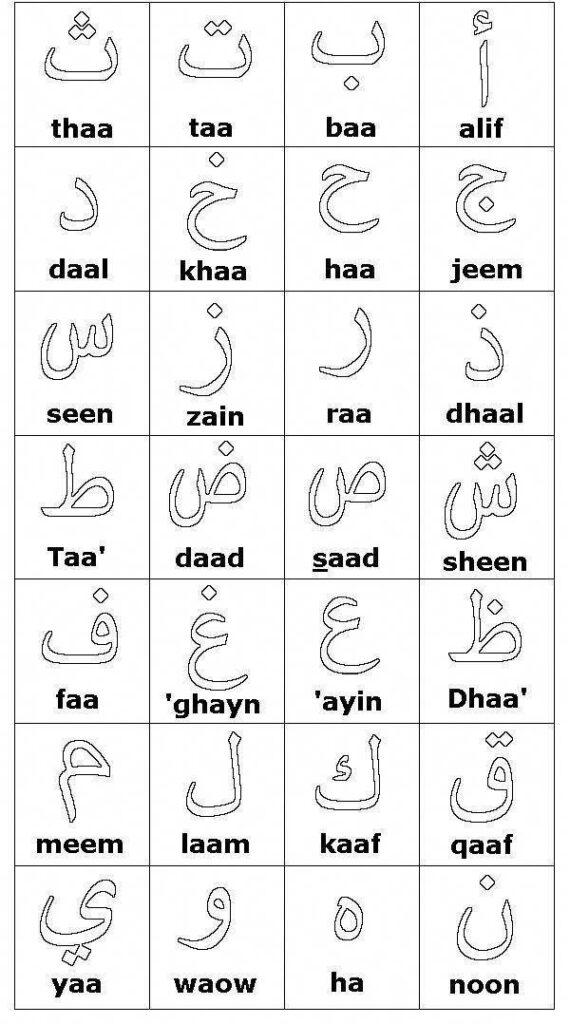
The letters themselves are beautiful and each has a unique name and sound, from the simple ‘Alif’ (ا) to the final ‘Yaa’ (ي). The journey to learn an online Arabic Course is a journey through these 28 foundational shapes and sounds.
How does Arabic script differ from English?
The most obvious difference is the direction. Arabic is written and read from right to left. This can feel strange for a day or two, but children, with their wonderfully flexible minds, adapt to it incredibly quickly. In our arabic language classes for beginners, we often turn this into a fun “rewind your brain” game, and they pick it up in no time.
Another key difference is that there are no capital letters in Arabic. The emphasis and structure of a sentence are conveyed through other grammatical means, which simplifies the writing process in some ways. You don’t have to worry about when to use a capital ‘A’ versus a lowercase ‘a’.
Writing direction and letter forms
Here’s a fascinating aspect of Arabic: most letters change their shape depending on their position in a word. A letter will have a different form if it comes at the beginning (initial), middle (medial), or end (final) of a word, or if it stands alone (isolated).
Now, you might be thinking, “That sounds complicated! It’s like learning four alphabets instead of one!” But here’s the secret: it’s not as complex as it sounds. The core shape of the letter usually remains the same; it just grows ‘arms’ to connect to the letters before or after it. It’s more like learning to write in cursive, where letters flow into one another to form a single, connected word.
Arabic Pronunciation Basics
Once your child gets familiar with the shapes of the letters, the next adventure is learning their sounds. This is where the magic really happens. Correct pronunciation is not just about sounding “authentic”; it’s about preserving the meaning of the Quranic text. At NoorPath academy, helping students learn Arabic alphabet and pronunciation online is our specialty, and we focus on building this skill with care and patience.
Unique sounds in Arabic
Arabic has some sounds that don’t have a direct equivalent in English. These are often the ones that new learners find most challenging, but also the most rewarding to master. These include:
- The “heavy” letters: Sounds like ‘Saad’ (ص), ‘Daad’ (ض), ‘Taa’ (ط), and ‘Zhaa’ (ظ). These have lighter counterparts (‘Seen’ س, ‘Daal’ د, ‘Taa’ ت, ‘Zhaal’ ذ), and the difference is in the way you shape your mouth and the back of your tongue. We teach students to feel the difference, making the sound deeper and more emphatic.
- The throat letters: Sounds like ‘Ayn’ (ع) and ‘Haa’ (ح). These are produced from further back in the throat than most English sounds. It takes practice, but our one-on-one tutors can listen closely and provide immediate feedback, guiding your child to find the right spot.
- The ‘Qaf’ (ق): This is a deep, back-of-the-throat ‘k’ sound, very different from the English ‘k’ or the Arabic ‘kaaf’ (ك). Mastering it is a milestone for every student!
Common pronunciation challenges for beginners
Based on our experience teaching hundreds of children, we know the common hurdles. It’s completely normal for beginners to struggle with a few things. The key is not to get discouraged!
One of the most frequent challenges is distinguishing between similar-sounding letters. For example, the light ‘s’ sound of ‘Seen’ (س) versus the heavy ‘s’ of ‘Saad’ (ص), or the light ‘t’ of ‘Taa’ (ت) versus the heavy ‘t’ of ‘Taa’ (ط). Another is the English speaker’s habit of substituting familiar sounds, like using an ‘f’ for the Arabic ‘faa’ (ف) but also for the ‘thaa’ (ث), which is actually a ‘th’ sound like in “think”.
Another common issue is the ‘p’ and ‘b’ confusion. The Arabic language doesn’t have a ‘p’ sound, so native Arabic speakers learning English often substitute it with ‘b’. Conversely, English speakers learning Arabic need to be mindful not to introduce a ‘p’ sound where it doesn’t belong. These are the subtle but important details that a trained tutor can help correct from day one.
Phonetic comparisons with English
To make learning easier, we often draw comparisons to English sounds, while also highlighting the differences. For instance:
- The Arabic letter ‘Baa’ (ب) is very similar to the English ‘B’. Easy win!
- ‘Jeem’ (ج) is like the ‘j’ in “jump”.
- ‘Zayn’ (ز) is just like the English ‘Z’.
However, we also carefully explain where the sounds differ. The Arabic ‘Raa’ (ر) is often rolled or trilled, unlike the smoother English ‘r’. We use live, one-on-one sessions to demonstrate these sounds visually and audibly, allowing students to mimic and practice until they get it right. This personalized feedback is something that pre-recorded videos or apps simply can’t offer, and it’s crucial when you want to truly learn Arabic alphabet and pronunciation online with accuracy.
The goal isn’t to achieve a perfect native accent overnight. The goal is to build a solid, correct foundation so that when your child recites the Quran, they are honoring the words as they were revealed. It’s a process that requires patience, practice, and expert guidance.
How to Learn Arabic Alphabet and Pronunciation Online?
In today’s digital world, the question is no longer if you can learn online, but how to do it effectively. For busy families, especially in the West, online learning has been a blessing. It removes the barriers of distance and rigid schedules, making high-quality Islamic education accessible right from your living room. But not all online learning is created equal. Let’s explore the best way to approach it.
The fact is, you have a few options. There are apps, pre-recorded video courses, and live online tutoring. While apps and videos can be great for supplementary practice, we’ve found that for foundational skills like the alphabet and pronunciation, nothing replaces the guidance of a live teacher. Here’s why:
- Immediate, Personalized Feedback: Pronunciation is a physical skill. Your child might be hearing a sound correctly but producing it incorrectly. An app can’t tell them to adjust their tongue position or open their mouth wider. A live tutor can see and hear them, providing instant, gentle corrections. This is the fastest and most effective way to build correct muscle memory.
- Structured, Step-by-Step Curriculum: A good online program isn’t just a collection of lessons; it’s a path. At NoorPath academy, we have a structured curriculum designed specifically for beginners. We start with the absolute basics and build upon them logically, ensuring no gaps are left in your child’s understanding. This prevents the overwhelm that can come from trying to piece together lessons from various sources.
- Flexibility for Real Life: We know that life is unpredictable. That’s why online tutoring offers unparalleled flexibility. You can schedule sessions that fit around school, extracurriculars, and family time. Whether it’s a weekday evening or a weekend morning, you can find a time that works for your family’s rhythm. This is a huge advantage over traditional madrasah schedules.
- A Safe and Comfortable Environment: Learning a new skill, especially one with unfamiliar sounds, can make a child feel self-conscious. Learning from the comfort of home, in a one-on-one setting with a friendly and patient tutor, removes that pressure. They can practice, make mistakes, and ask questions without fear of judgment.
When you choose to learn Arabic alphabet and pronunciation online with a dedicated platform, you’re not just getting lessons; you’re getting a partner in your child’s education. You’re getting an expert who can tailor the pace to your child’s needs, keep them motivated with engaging activities, and provide you with regular progress updates. This holistic approach is what turns a challenging task into a joyful and successful journey.
Tips for Mastering Arabic Sounds and Letters
Learning the Arabic alphabet is a marathon, not a sprint. Consistency and the right techniques are far more important than speed. Over the years, we’ve gathered some tried-and-true tips that help our students master these foundational skills effectively. Here are a few you can start using at home:
- Listen, Listen, Listen: Before you can produce a sound correctly, you need to hear it correctly. Expose your child to the sounds of the Arabic language. Listen to beautiful Quran recitation by qualified Qaris. Even if it’s just playing in the background while they do homework or play, their brain is absorbing the unique rhythm and phonetics of the language.
- Break It Down: Don’t try to learn all 28 letters in one week. That’s a recipe for burnout. We recommend focusing on just 2-3 letters per session. Learn their names, their sounds, and their different forms. Practice writing them. Once your child is confident with that small group, move on to the next. This steady, manageable pace builds confidence.
- Use Mnemonics and Associations: Connect the shape of a letter to something familiar. For example, the letter ‘Baa’ (ب) looks like a boat with one dot underneath. The letter ‘Noon’ (ن) looks like a bowl with a dot inside. These simple visual cues can make the letters much more memorable for young learners.
- Practice in Short, Frequent Bursts: A 15-20 minute practice session every day is far more effective than a two-hour session once a week. This consistency helps to transfer knowledge from short-term to long-term memory. You can make it a part of your daily routine, perhaps right after school or before bed.
- Record and Compare: This is a powerful technique. Have your child record themselves saying a letter or a word, and then play it back and compare it to a recording of their tutor or a professional Qari. This helps them self-diagnose and hear the subtle differences they need to work on.
- Make it Multi-Sensory: Engage more than just their eyes and ears. Use flashcards. Trace letters in sand or with finger paint. Form the letters out of play-doh. The more senses you involve, the stronger the neural pathways your child will build.
Remember, the most important tip is to keep it positive and encouraging. Celebrate small victories! When they finally master the ‘Ayn’ sound or correctly identify all the forms of ‘Haa’, make a big deal out of it. Your encouragement is the fuel that will keep them motivated on their journey to learn Arabic alphabet and pronunciation online.
Common Mistakes and How to Avoid Them
Every learner, no matter their age, will make mistakes along the way. It’s a natural and essential part of the learning process. The key is to identify these mistakes early and correct them before they become ingrained habits. Here are some of the most common mistakes we see when students begin their journey to learn Arabic alphabet and pronunciation online, and how a guided approach helps to avoid them.
Mistake 1: Rushing Through the Basics
The Problem: In the excitement to start reading words and sentences, many beginners rush through the alphabet. They might learn to recognize the letters but don’t spend enough time on their precise pronunciation or their different forms.
How to Avoid It: Patience is your best friend. A structured program, like the one at NoorPath academy, ensures that each letter is mastered before moving on. Our tutors will only proceed when they are confident that the student has a solid grasp of the current material. We emphasize quality over quantity, building a foundation that won’t crumble later on.
Mistake 2: Ignoring the “Heavy” and “Light” Distinction
The Problem: An English-speaking brain isn’t used to the concept of emphatic or “heavy” consonants. A common error is to pronounce ‘Saad’ (ص) exactly like ‘Seen’ (س), or ‘Taa’ (ط) like ‘Taa’ (ت). This can drastically change the meaning of Quranic words.
How to Avoid It: This is where a live tutor is invaluable. They can provide real-time feedback, using visual cues (like showing the shape of the mouth) and auditory examples to demonstrate the difference. They can give your child specific exercises, like saying “saw” versus “see,” to help them feel the physical difference in their mouth, which is a key part of our method for teaching Arabic reading online for adults and children alike.
Mistake 3: Mixing Up Similar-Looking Letters
The Problem: Several Arabic letters share the same basic shape and are only differentiated by the number and placement of dots. Think of ‘Baa’ (ب), ‘Taa’ (ت), ‘Thaa’ (ث), and ‘Noon’ (ن). Or ‘Jeem’ (ج), ‘Haa’ (ح), and ‘Khaa’ (خ). It’s very easy for a beginner’s eye to mix them up.
How to Avoid It: Repetition and focused practice are key. We use targeted drills and fun games to help students distinguish these letters. For example, a tutor might quickly show flashcards and have the student call out the letter name, turning it into a speed game. This active recall solidifies the differences in their mind much faster than passive reading.
Mistake 4: Learning in Isolation
The Problem: Trying to learn from an app or a book alone means there’s no one to correct your mistakes. You could practice a sound incorrectly for weeks without realizing it, making it much harder to unlearn later.
How to Avoid It: The solution is guided practice. Having a qualified teacher listen to you, provide encouragement, and offer gentle corrections is the most efficient way to learn. It ensures you’re on the right path from the very beginning. This is the core philosophy behind our arabic language classes for beginners.
Avoiding these common pitfalls is not about achieving perfection; it’s about building a strong, correct foundation. A little extra care and attention at the beginning of the journey will pay huge dividends as your child progresses in their Quranic education.
NoorPath academy: The Best Platform to Learn Arabic Alphabet and Pronunciation Online
So, you’re convinced of the importance of learning the Arabic alphabet, and you understand the benefits of an online approach. The next question is, “Where do I go?” With so many options out there, choosing the right platform can feel overwhelming. We want to share what makes NoorPath Academy a special place for families like yours.
We’re not just another online tutoring service. We are a community of passionate educators, parents, and students dedicated to making Quranic education accessible, engaging, and authentic. Our approach is built on a few core principles that we believe make all the difference.
One-on-One Classes with Expert Tutors
This is the cornerstone of our methodology. We believe that for foundational skills, personalized attention is non-negotiable. Your child won’t be lost in a virtual classroom of 20 other students. They will have the full, undivided attention of a qualified tutor for the entire session. Our tutors are not just fluent in Arabic; they are experienced in teaching children and are trained in the science of Tajweed. They know how to make learning fun, how to explain complex ideas simply, and how to build a warm, encouraging rapport with their students. This is essential when you want to effectively learn Arabic alphabet and pronunciation online.
A Curriculum Designed for Success
Our curriculum has been carefully crafted and refined over time, based on our experience with hundreds of students. It’s a step-by-step journey that starts with the very basics and builds logically. We combine letter recognition, phonetics, and basic writing skills in a seamless way. We also incorporate interactive tools and fun activities to keep your child engaged and excited to log in for their next class. It’s not just about learning; it’s about fostering a love for the language of the Quran.
Flexibility for Modern Families
We are parents too. We understand the reality of juggling work, school, and life in the West. That’s why our platform is built for maximum flexibility. You can schedule classes at times that suit your family’s unique schedule, including evenings and weekends. No more rushing to a physical location or trying to fit a rigid class time into an already packed day. This flexibility ensures that learning can be a consistent and stress-free part of your life.
A Supportive and Transparent Partnership
We see ourselves as your partners in your child’s Islamic education. We provide regular progress reports and are always available to discuss your child’s journey. You’ll know exactly what they’re learning, where they’re excelling, and where they might need a little extra support. This transparency builds trust and ensures we are all working together to help your child succeed. We even offer free arabic lessons online for beginners as a trial so you can experience our method firsthand before making a commitment.
In Conclusion
The journey of a thousand miles, they say, begins with a single step. For our children, the profound, lifelong journey of understanding the Quran begins with a single letter. It begins with ‘Alif’.
Teaching your child to learn Arabic alphabet and pronunciation online is one of the greatest gifts you can give them. It’s more than an academic skill; it’s the key to a deeper faith, a stronger identity, and a personal connection with the words of Allah (SWT). It can feel like a daunting task, but you don’t have to do it alone. With the right guidance, a patient approach, and a touch of joy, it is an achievable and incredibly rewarding goal.
At NoorPath Academy, we are honored to walk this path with families like yours. We’re here to provide the expert guidance and flexible support you need to make this journey a success. Let’s empower our children to not just recite the Quran, but to truly hear it, understand it, and love it.
FAQs
Many parents have similar questions when they start this journey. Here are answers to some of the most common ones we hear.
What are the hardest Arabic sounds for English speakers?
From our experience, the sounds that often require the most practice are the ones that originate from the throat. These include ‘Ayn (ع), ‘Ghayn’ (غ), ‘Haa’ (ح), and ‘Khaa’ (خ). The emphatic or heavy letters like ‘Qaf’ (ق) and ‘Daad’ (ض) also take some getting used to. The key is consistent practice with a tutor who can provide immediate feedback. It’s a matter of training new muscles in the mouth and throat, and it’s completely achievable with guidance.
Should I learn to write Arabic letters by hand or type them?
We strongly recommend learning to write by hand first. The physical act of writing helps to solidify the letter shapes and their different forms (initial, medial, final) in a child’s mind. It’s a crucial part of the multi-sensory learning process. Typing can come later, but the foundational knowledge gained from handwriting is invaluable for anyone starting an arabic grammar course online for beginners or any other advanced topic.
How can I tell the difference between similar Arabic letters?
This is a very common challenge! The key is to focus on the dots (‘nuqat’). For example, ‘Baa’ has one dot below, ‘Taa’ (ت) has two dots above, and ‘Thaa’ (ث) has three dots above. We use drills, flashcards, and memory games to make this process of differentiation quick and effective. Consistent, focused practice is the best way to train your eye to catch these crucial details instantly.
What is the best way to learn Arabic alphabet and pronunciation online?
While apps and videos can be useful for extra practice, the most effective method is through live, one-on-one tutoring. A live tutor can provide the immediate, personalized feedback on pronunciation that is impossible to get from pre-recorded content. They can tailor the pace to the student’s needs, answer questions in real-time, and provide the motivation and encouragement that keeps a child engaged. This is why we’ve built our entire program at NoorPath academy around this personalized approach.
How long does it take to learn the Arabic alphabet?
This varies depending on the student’s age and the consistency of practice. For a child between 7-12 years old, practicing consistently with a tutor for a couple of sessions a week, we typically see them master the alphabet in about 3 to 6 months. The goal is not speed, but a deep and accurate understanding that will serve them for life.