NoorPath Academy

NoorPath Academy Blog


Islamic History Course for Beginners: Learn Foundations

We’ve all been there. Your child comes home from school and asks, “Where are we really from?” Or maybe they hear something on the news and look to you for an explanation about Muslims and our place in the world.

November 16، 2025

We’ve all been there. Your child comes home from school and asks, “Where are we really from?” Or maybe they hear something on the news and look to you for an explanation about Muslims and our place in the world. It’s a question that can stop us in our tracks. We know the simple answers, but the deep, soul-satisfying ones—the ones that build unshakeable pride and identity—feel just out of reach. We tell them stories of the Prophet (PBUH), but what about the 1,400 years that followed? What about the civilization that shaped the world?

Let’s be honest, as parents juggling life in the West, finding the time to piece together this vast history feels overwhelming. Textbooks are dry, and online sources can be unreliable or biased. We worry about our children growing up with a fragmented understanding of their heritage, defined more by headlines than by history. The truth is, our history is a treasure chest, but for many of us, it’s been locked away.

What if you could unlock it, not just for your children, but for yourself? What if you could explore this incredible story in a way that was engaging, authentic, and designed for a busy life? This is precisely why a structured islamic history Course for beginners is so essential. It’s not about memorizing dates and dynasties; it’s about reclaiming our narrative, understanding our present, and building a confident Muslim identity for the next generation. It’s about discovering that our history is not a relic of the past, but a living source of inspiration for our future.

Islamic History Course for Beginners

Why does studying Islamic history matter?

Now, you might be wondering, “With so much to teach our kids—from Quran to prayer—is history really a priority?” It’s a fair question. In our experience at NoorPath academy, we’ve found that history isn’t a separate subject; it’s the thread that weaves everything else together. It provides the context for the Quran, the application of the Sunnah, and the foundation of our identity.

Think of our Deen as a magnificent tree. The Quran and Sunnah are the seeds, but Islamic history is the soil and the roots. It’s the story of how that seed grew, weathered storms, branched out across the globe, and produced incredible fruit. Without understanding the roots, we can’t fully appreciate the strength and beauty of the tree. Studying history answers the “why.” Why did the early Muslims succeed? Why did science and art flourish? Why do we face the challenges we do today? It moves our understanding from a set of abstract rules to a rich, dynamic, and human story.

For our children, this is critical. Growing up in the West, they are surrounded by other histories and narratives. An islamic history Course for beginners gives them their own. It provides them with heroes beyond athletes and celebrities—scholars, scientists, and leaders who were driven by faith. It replaces feelings of being “other” with a profound sense of belonging to a global civilization that has contributed immensely to humanity. This isn’t just an academic exercise; it’s an act of identity-building. It’s as fundamental as an islamic studies online course or a foundational aqeedah online course because it shows our beliefs in action across time.

Islamic History Course for Beginners

Main Topics Covered in the Course

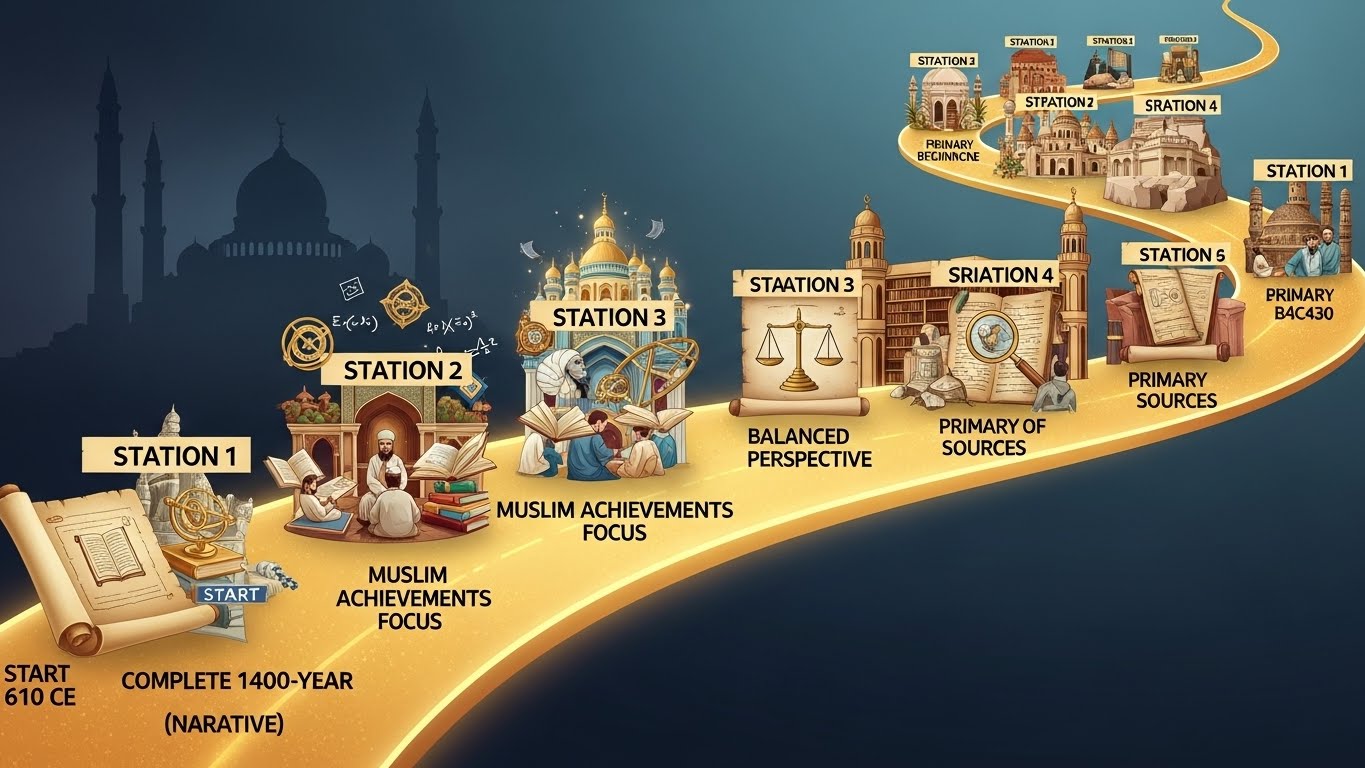
A great islamic history Course for beginners isn’t a whirlwind tour of 14 centuries. It’s a carefully guided journey that starts at the very beginning and builds a solid foundation, making the vastness of our past feel manageable and exciting. These are the pillars you’ll explore in well-structured islamic history classes.

The life of Prophet Muhammad (PBUH)

Everything begins here. This isn’t just a biography; it’s the study of the Seerah, the prophetic life, which is the ultimate blueprint for humanity. You’ll walk through his life step-by-step: his youth in Mecca, the first revelation, the years of patient struggle and persecution, the strategic migration (Hijrah) to Medina, and the establishment of the first Muslim community. You’ll see how he was a spiritual guide, a head of state, a general, a husband, and a father. Studying the Seerah provides the essential context for the Quran itself; you’ll understand when and why certain verses were revealed, bringing the divine word to life. This part of the course is deeply personal and faith-affirming, connecting your heart to the man Allah sent as a mercy to the worlds.

The Rashidun Caliphs and early Islamic expansion

After the Prophet’s (PBUH) passing, how were his teachings carried forward? This era of the “Rightly Guided Caliphs”—Abu Bakr, Umar, Uthman, and Ali (may Allah be pleased with them all)—is the answer. It’s a case study in leadership, justice, and community. You’ll learn how Abu Bakr held the fragile community together, how Umar ibn al-Khattab established groundbreaking systems of public administration and social welfare, how Uthman ibn Affan compiled the Quran into the book we hold today, and how Ali ibn Abi Talib navigated immense trials with wisdom. This period shows the practical application of Islamic principles on a societal scale. It’s a powerful lesson in governance and ethics that is a cornerstone of all credible islamic history courses.

The Umayyad and Abbasid dynasties

Here, the story goes global. The Umayyad dynasty saw the Muslim world expand to its farthest reaches, from the borders of China to the shores of southern France. You’ll explore the incredible story of Al-Andalus (Muslim Spain), a beacon of learning and tolerance in Europe for centuries. Then, the journey moves to the Abbasid dynasty and its legendary capital, Baghdad. This was the “Golden Age” of Islam. You’ll discover the House of Wisdom (Bayt al-Hikmah), an intellectual powerhouse where the world’s knowledge was gathered, translated, and expanded upon. This era demonstrates that Islam is not just a religion but a civilization-builder, fostering a culture of intellectual curiosity and discovery that is often overlooked in modern narratives.

Islamic culture, science, and art

This is where students’ eyes truly light up. This part of an islamic history Course for beginners is a journey into the incredible contributions of Muslim civilization. You’ll meet the scholars and scientists whose work laid the foundation for modern life. People like Al-Khwarizmi, the “father of algebra,” and Ibn Sina (Avicenna), whose medical encyclopedia was a standard text in Europe for 600 years. You’ll explore the breathtaking beauty of Islamic art—the intricate calligraphy, the mesmerizing geometric patterns, and the stunning architecture of mosques and palaces from Cordoba to Samarkand. This knowledge is a powerful antidote to Islamophobia. It equips you and your children with facts, showing that our heritage is one of light, knowledge, and beauty. It makes abstract history tangible and awe-inspiring.

Benefits of Studying Islamic History

The impact of joining high-quality best online islamic studies classes goes far beyond just knowing facts. It transforms your perspective, deepens your faith, and strengthens your family’s connection to the Ummah.

Understanding Islam’s global influence

You’ll begin to see the fingerprints of Islamic civilization everywhere. When you use words like ‘algebra,’ ‘algorithm,’ ‘coffee,’ or ‘cotton,’ you’re speaking a language influenced by Arabic. You’ll learn how Muslim scholars preserved and built upon the works of the ancient Greeks, paving the way for the European Renaissance. This understanding changes how you see the world. It dismantles the false wall between “East” and “West” and reveals a shared human history where Islam played a pivotal, positive role. It gives you the confidence to engage in conversations about Islam’s place in the world, backed by knowledge.

Strengthening faith and identity

History is a powerful tool for strengthening Iman (faith). You see Allah’s plan (Qadr) unfolding through the ages—in the victories and the defeats, the triumphs and the trials. It shows you that you are part of a 1.4-billion-strong family with a shared story that spans 1,400 years. For a child growing up feeling like a minority, this is a profound anchor. Knowing they descend from a tradition of brilliant scientists, profound philosophers, and righteous leaders builds a deep-seated pride and resilience. It complements their spiritual learning from Quran online courses and an Online Quran memorization course by showing them the worldly legacy of the people of the Quran.

Developing a historical perspective

Studying history teaches you how to think. It hones your critical thinking skills. You learn to analyze sources, understand cause and effect, and see events from multiple perspectives. This is an invaluable life skill. It helps you make sense of the complex political situations in the Muslim world today by understanding their historical roots. It teaches you the sunnah (pattern) of Allah in history: the consequences of unity and disunity, of justice and oppression, of holding firm to principles versus compromising them. An islamic history Course for beginners doesn’t just give you answers; it gives you the tools to find answers for yourself.

Islamic History Course for Beginners

NoorPath academy: The Top Platform Offering Islamic History Courses for Beginners

So, the big question is, where can you find an experience like this? Where can you find authentic, engaging, and accessible Islamic history courses online? While many options exist, the quality can vary dramatically. At NoorPath Academy, we’ve built our program around the specific needs of Western Muslim families.

We understand that you need more than just information; you need inspiration. Our islamic history Course for beginners is taught by qualified instructors, many from esteemed institutions like Al-Azhar University, who are not only experts in the subject matter but are also skilled at teaching Western students. They bring the stories to life in a way that is relatable and powerful.

Here’s what we’ve noticed works best, and what we’ve built our program on:

  • Live, Interactive Classes: This isn’t about watching pre-recorded videos. Our Online Islamic History Classes are live, allowing you to ask questions, engage in discussions, and connect with your teacher and fellow students.
  • Structured Curriculum: We don’t jump around. Our curriculum is designed to build your knowledge logically, from the Seerah outwards, ensuring you have a strong and unshakable foundation.
  • Flexibility for Your Life: We know you’re busy. That’s why we offer classes at various times, including evenings and weekends, to fit into your family’s schedule. You can learn from the comfort of your home, without the stress of a commute.
  • A Holistic Approach: We see history as part of a complete Islamic education. It connects beautifully with our other offerings, like our popular Quran Tajweed Online – Online Quran recitation program, creating a well-rounded learning experience for your entire family.

We believe that a proper islamic history Course for beginners should be an adventure, not a chore. It should be a journey that leaves you feeling more connected to your faith and more proud of your heritage.

Tips for Success in Learning Islamic History

Once you embark on this journey, how can you make the most of it? Here are some practical tips we share with our students at NoorPath academy:

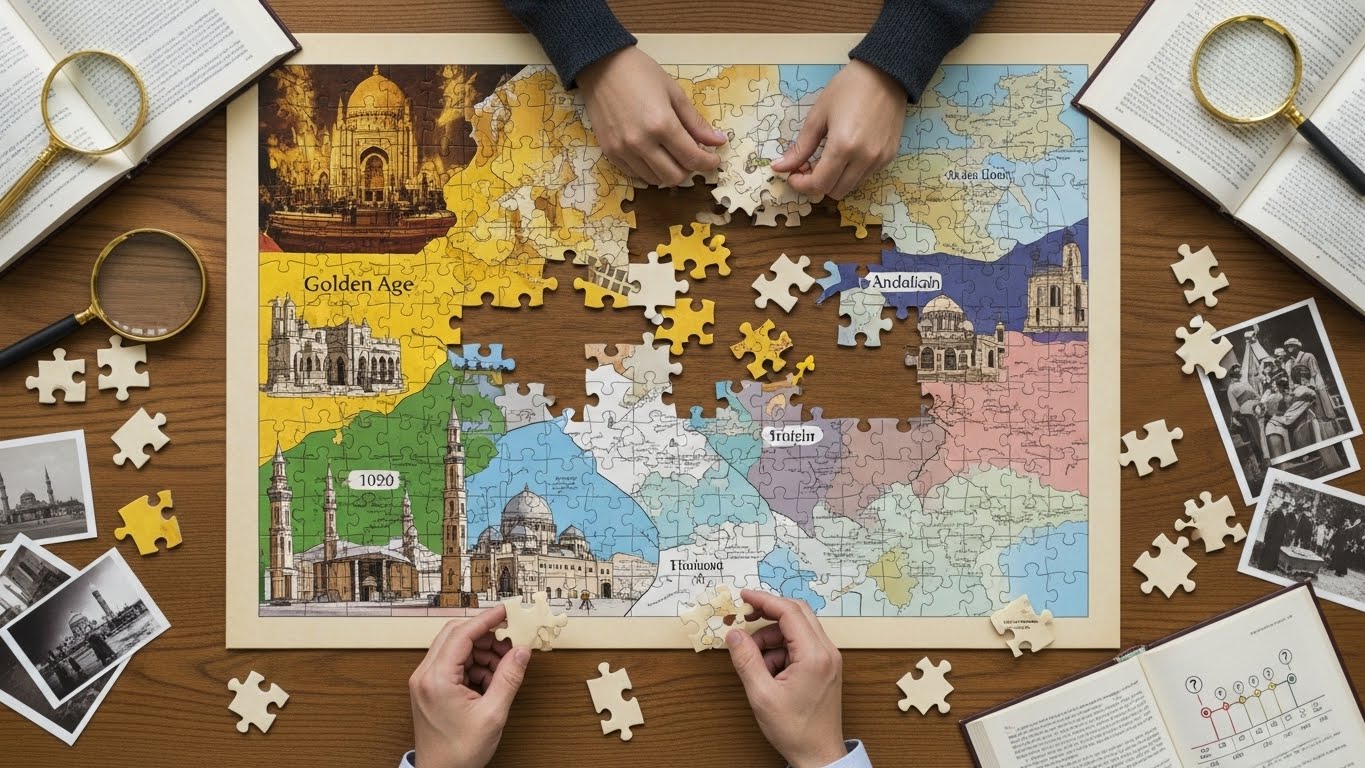
  • Keep a Map Handy: History is geographical. Tracing the spread of Islam, the routes of trade, and the locations of great cities on a map makes the story tangible.
  • Create a Timeline: Keep a running timeline in a notebook. Visually placing key figures and events helps you understand the sequence and flow of history.
  • Focus on the ‘Ibrah (Lesson): For every event, ask: “What is the lesson here for me today?” History is meant to be a source of guidance.
  • Discuss as a Family: Talk about what you’re learning at the dinner table. Ask your children what they found most interesting. This reinforces learning and makes it a shared family experience.
  • Connect to the Present: Look for connections between the history you’re studying and current events. This will make your understanding of the world much deeper and more nuanced.

In Conclusion

Our history is a trust (amanah). It’s a story of faith, resilience, struggle, and brilliance that belongs to every one of us. For too long, this story has felt distant, locked away in academic books. But it doesn’t have to be that way. The journey to reclaim this heritage is more accessible now than ever before.

A comprehensive islamic history Course for beginners is one of the greatest gifts you can give to yourself and your children. It’s an investment in their identity, their confidence, and their connection to the global Ummah. At NoorPath Academy, we are passionate about making this journey authentic, engaging, and transformative for your family.

Don’t let another day go by with this treasure chest remaining locked. Book a free evaluation with one of our expert instructors and see for yourself how learning our story can change your world.

FAQs

Who can enroll in an islamic history Course for beginners?

Anyone and everyone! These courses are specifically designed for those with little to no prior knowledge. They are perfect for young adults, new Muslims , parents who want to learn alongside their children, or any Muslim who wants to build a solid foundation in their heritage. The only prerequisite is curiosity and a desire to learn.

How long does it take to complete the course?

The duration varies depending on the program’s depth. An introductory module covering the Seerah and Rashidun Caliphs might take a few months. A more comprehensive course that delves into the major dynasties could be a year-long study. The beauty of islamic history courses online is that they offer different levels and paces to suit your schedule.

Are online islamic history courses certified?

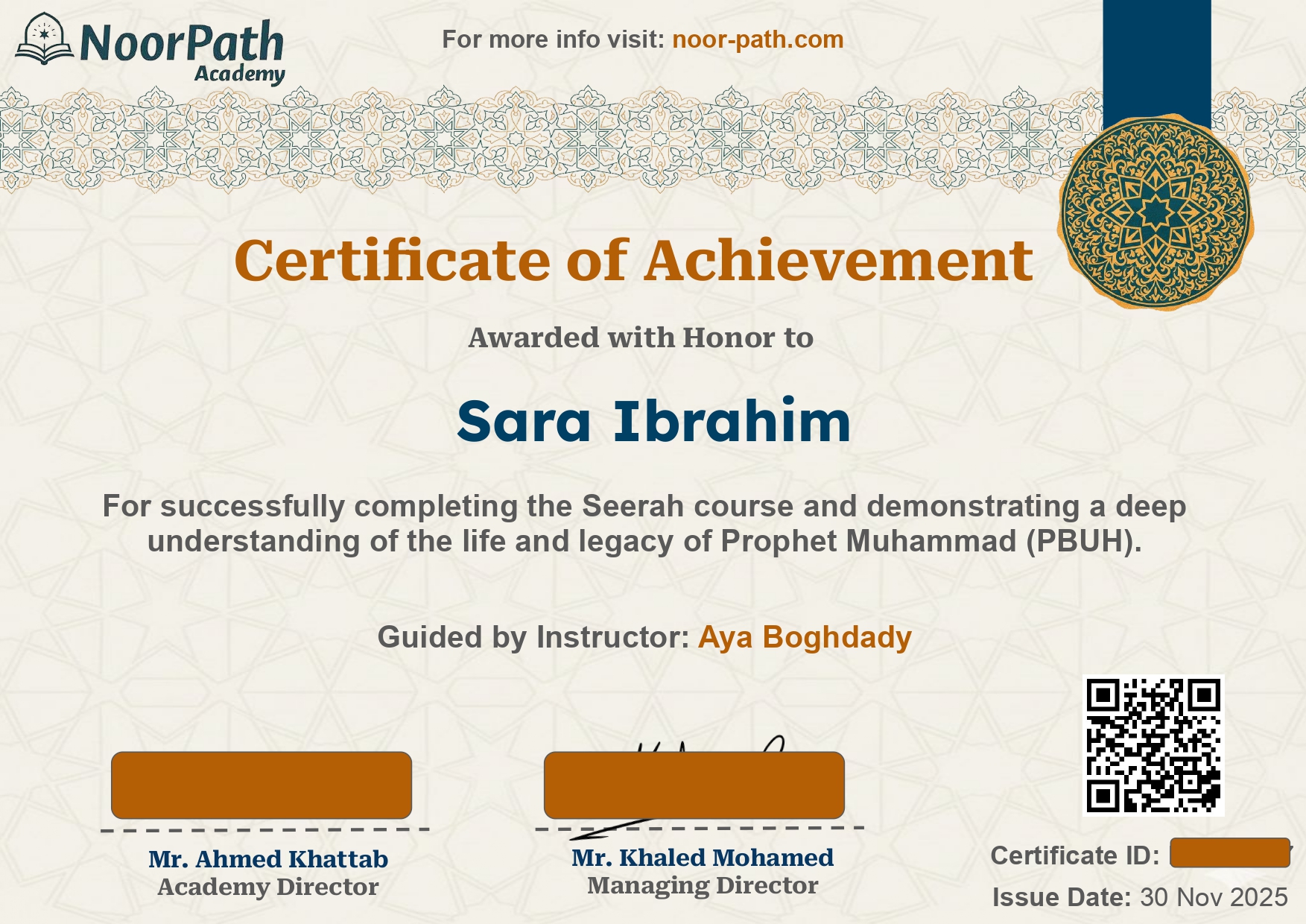
Yes, reputable platforms like NoorPath Academy provide certificates of completion. This serves as a wonderful recognition of your dedication and achievement. While the primary goal is knowledge for the sake of Allah, a certificate can be a great motivator and a valuable addition to your learning portfolio.

What are the main topics covered in islamic history courses?

A foundational course will always begin with the Seerah . From there, it will cover the era of the Rightly Guided Caliphs, the major dynasties like the Umayyads and Abbasids , the story of Al-Andalus , and the immense contributions of Muslims to science, art, and culture throughout history.

What historical sources are used in islamic history courses?

Instructors draw from primary sources written by the great Muslim historians like Al-Tabari, Ibn Kathir, and Ibn Khaldun. However, in an islamic history Course for beginners, you won’t be asked to read these dense academic texts directly. The teacher’s role is to distill this information, verify it, and present it in an accessible, story-like format that is easy to understand and digest.

Start Today

Ready to speak Arabic that brings you closer to Allah? Join NoorPath Academy’s Quranic Arabic courses, start today and feel the difference in your faith journey.

Recommended Course

NoorPath Academy’s Islamic Studies Track is your all-in-one pathway to mastering the core subjects every Muslim should know.