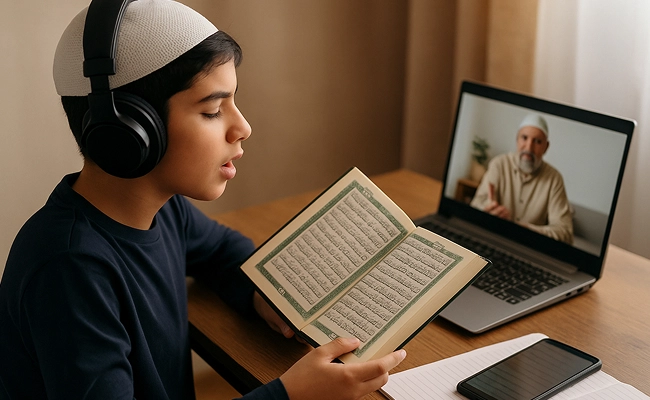
Ramadan is the ninth Islamic month, instituted in 624 CE to commemorate the first revelation of the Quran to Prophet Muhammad.
For over 1,400 years, this sacred month has transformed from a regional observance in the Arabian Peninsula into a global phenomenon observed by nearly 2 billion people. While most associate it strictly with fasting (Sawm), the history of Ramadan is a complex tapestry weaving together pre-Islamic traditions, decisive historical battles, celestial movements, and profound physiological science.
This guide explores the complete timeline of Ramadan, its etymological roots, and the science behind why this ancient practice remains vital in the modern world.

What Is the History of Ramadan?
Fasting during Ramadan became a mandatory Islamic obligation in 624 CE, two years after the Prophet’s migration (Hijra) to Medina.
While the initial revelation of the Quran occurred in 610 CE, the formal command to fast was not revealed until much later. The timing of this obligation is significant; it occurred shortly before the Battle of Badr, a pivotal moment in Islamic history. This context suggests that Ramadan was not merely about spiritual abstinence but about building the discipline and resilience required for a nascent community facing existential threats.
The Quranic command was revealed in Surah Al-Baqarah (2:183), establishing the continuity of faith: “You who believe, fasting is prescribed for you, as it was prescribed for those before you, so that you may be mindful of God.”
This verse indicates that the early Muslim community was not being introduced to a radically new concept, but rather a purified and codified version of an ancient practice.
| Year (CE) | Event | Significance |
| 610 CE | First Revelation (Laylat al-Qadr) | Prophet Muhammad receives first verses of Quran in Cave Hira. |
| 622 CE | The Hijra | Migration from Mecca to Medina; marks year 1 of Islamic calendar. |
| 624 CE | Fasting Obligated | The command to fast the full month is revealed (2 AH). |
| 624 CE | Battle of Badr | Occurred on the 17th of Ramadan; first major victory for Muslims. |
| 630 CE | Conquest of Mecca | Prophet returns to Mecca peacefully during Ramadan (20th of Ramadan). |
Did Fasting Exist Before Islam?
Pre-Islamic communities across the Middle East practiced various forms of fasting, often synchronized with lunar cycles.
The concept of abstaining from food and drink for spiritual purification predates Islam by centuries. Historical records suggest that the Sabian people of Harran (in modern-day Turkey) observed a 30-day fast in honor of the moon deity, Sin. This suggests that the 30-day lunar cycle was already a recognized period for spiritual observance in Semitic cultures.
Furthermore, the Jewish communities in Medina observed the fast of Ashura (the 10th of Muharram), commemorating the liberation of Moses and the Israelites from Pharaoh. When the Prophet Muhammad arrived in Medina, he initially fasted on this day and encouraged his followers to do so, linking the Islamic narrative to the Judeo-Christian tradition.
It was only later, with the revelation of the verses in Surah Al-Baqarah, that the Muslim community was given a distinct identity with a full month of fasting dedicated solely to Allah, replacing previous customs while acknowledging their validity.
What Does “Ramadan” Mean?
The word Ramadan comes from the Arabic root “Ramdh,” meaning “intensely hot” or “burning,” symbolizing the burning away of sins.
The etymology offers a profound insight into the month’s purpose. Historically, the names of the months in the pre-Islamic lunisolar calendar were linked to the seasons in which they fell. Ramadan likely originally fell during the height of the Arabian summer.
However, broadly speaking, the “burning” is metaphorical. Just as the scorching sun evaporates water from the earth, the intense spiritual discipline of Ramadan is meant to evaporate sins and impurities from the soul.
In Islamic theology, this “burning” process is essential for Taqwa (God-consciousness). The deprivation of physical needs (food, water, intimacy) creates a state of vulnerability and reliance on the Creator. This state is designed to:
- Reset Priorities: Detaching from worldly comforts to focus on the hereafter.
- Develop Empathy: Experiencing hunger to understand the plight of the poor.
- Strengthen Willpower: If one can control primal urges like hunger, they can control anger and greed.
Noor-path Insight: In a linguistic sense, “Ramadan” is also related to the term Ramdaa, which describes rocks heated by the sun. The metaphor extends to the heart of the believer, which should become soft and malleable through the “heat” of worship, just as heat shapes stone or metal.
How Does the Islamic Calendar Work?
The Islamic calendar is strictly lunar, causing Ramadan to shift 11 days earlier each solar year, cycling through all seasons every 33 years.
Unlike the Gregorian calendar (solar) or the Jewish calendar (lunisolar), the Islamic Hijri calendar does not employ intercalation (adding a “leap month”) to align with the seasons. This unique feature ensures that Ramadan is not fixed to a specific season.
Because the lunar year is roughly 354 days—11 days shorter than the solar year—Ramadan moves backwards through the Gregorian calendar.
- Universal Fairness: This rotation ensures that no single region of the world is permanently stuck with long, hot summer fasts. Over a 33-year lifetime, a Muslim will experience Ramadan in winter, spring, summer, and autumn.
- The Hijri Year: The calendar officially began in 622 CE, the year of the Prophet Muhammad’s migration (Hijra) to Medina. Thus, dates are denoted as AH (After Hijra).

How Does Fasting Develop Taqwa (God-Consciousness)?
Taqwa is the primary goal of Ramadan, achieved by training the will to resist lawful desires (like food) so it can easily resist unlawful ones.
The Quran explicitly links fasting to Taqwa in Surah Al-Baqarah (2:183): “so that you may become righteous (tattaqun).” Linguistically, Taqwa comes from a root meaning “to shield” or “to protect.” In this context, fasting acts as a shield, protecting the believer from their own lower desires (nafs) and the consequences of sin.
The Training Ground of the Will
Developing Taqwa through self-discipline works on a psychological principle known as “inhibitory control.”
- Constant Vigilance: Because God is the only witness to a person’s fast, maintaining it requires a heightened state of awareness that God is watching. This awareness is Taqwa.
- Impulse Regulation: By saying “no” to water during a hot day, the brain strengthens the neural pathways required to say “no” to anger, gossip, or dishonesty.
- Breaking Auto-Pilot: Fasting disrupts daily routines, forcing the believer to live intentionally rather than habitually.

What Is the Night of Power (Laylat al-Qadr)?
Laylat al-Qadr is the night the Quran was first revealed, described in scripture as being “better than one thousand months.”
This single night is the spiritual axis upon which the entire month spins. While fasting is the physical act of Ramadan, the commemoration of Laylat al-Qadr is its spiritual soul. It marks the moment in 610 CE when the Angel Jibril (Gabriel) appeared to Muhammad in the Cave of Hira and commanded him to “Read” (Iqra).
Identifying the Night
The exact date of Laylat al-Qadr is intentionally ambiguous in Islamic tradition. It is known to fall on one of the odd-numbered nights during the last ten days of Ramadan (21st, 23rd, 25th, 27th, or 29th). This ambiguity encourages constant worship throughout the final third of the month, rather than focusing efforts on a single scheduled event.
The “1,000 Months” Calculation
The Quranic statement that this night is “better than a thousand months” (Surah 97:3) implies that worship performed on this night carries the reward of 83 years of continuous devotion—essentially a human lifetime. This creates a massive incentive for Muslims to engage in I’tikaf (spiritual seclusion) and nightly prayers (Qiyam) during the closing days of the month.
Who Is Exempt from Fasting?
Islamic law exempts children, the elderly, travelers, the sick, and pregnant or nursing women from the obligation of fasting.
Islam places a high premium on the preservation of life and health. The Quran explicitly states, “God intends ease for you, not hardship” (2:185). As such, the rules of fasting are built with flexibility for human frailty.
Categories of Exemption
- Temporary Exemption (Qada): Those who are temporarily unable to fast due to travel, acute illness, or menstruation. They must make up the missed days later in the year.
- Permanent Exemption (Fidya): The elderly or those with chronic illnesses (e.g., severe diabetes) who cannot fast without harm. Instead of fasting, they pay Fidya—a charitable donation sufficient to feed one poor person for every day of fasting missed.
- Safety Exemption: Pregnant or breastfeeding women who fear for their health or their baby’s health are not required to fast, though opinions differ on whether they owe Qada (making up days) or Fidya.
What Breaks the Fast?
Fasting is invalidated by intentional eating, drinking, sexual intercourse, or the induction of vomiting between dawn and sunset.
It is crucial to distinguish between accidental and intentional acts. In Islamic jurisprudence, if a person forgets they are fasting and eats or drinks, their fast is still valid. The prophet Muhammad described this as “God feeding them.”
The “Invalidators” of the Fast
- Ingestion: Any substance reaching the stomach (food, water, medicine, smoking).
- Sexual Intimacy: Relations between spouses during fasting hours are strictly forbidden and carry a heavy penalty (Kaffarah—fasting 60 consecutive days).
- Intravenous Nutrition: IV fluids that provide nourishment invalidate the fast, whereas non-nutritive injections (like insulin or vaccines) generally do not, according to most modern scholars.
- Menstruation/Post-natal bleeding: Even if it begins moments before sunset, the fast for that day is invalid and must be made up.
What Are the Health Benefits of Fasting?
Ramadan fasting promotes health by improving insulin sensitivity, reducing inflammation, and triggering autophagy for cellular repair.
While the primary intent of Ramadan is spiritual, modern science has validated numerous physiological benefits of intermittent fasting. The “dry fast” (abstaining from water) practiced in Ramadan is distinct from Western intermittent fasting, but shares similar metabolic pathways.
One of the most significant discoveries in recent years is autophagy (Nobel Prize, 2016). After approximately 12-16 hours of fasting, the body runs out of external glucose and begins to “eat itself” at a cellular level. It hunts down old, damaged, or dysfunctional cells and recycles them for energy. This is essentially a deep-clean for the body, reducing the risk of cancer and neurodegenerative diseases.
Phases of the Body During Ramadan
- Days 1-3 (The Shock Phase): Blood sugar drops, leading to headaches and lethargy as the body transitions from glucose to fat burning.
- Days 3-10 (The Adaptation Phase): The digestive system rests. White blood cell activity increases, boosting immunity.
- Days 10-30 (The Detox/Repair Phase): The body is fully adapted. Colon, liver, and kidney function improves. Memory and concentration often sharpen due to higher levels of BDNF (Brain-Derived Neurotrophic Factor).
Noor-path Insight: A 2023 meta-analysis of intermittent fasting during Ramadan showed a significant reduction in LDL (bad) cholesterol and a stabilization of blood pressure in hypertensive patients, provided they did not overeat during Iftar.
How Is the Start of Ramadan Determined?
The start of Ramadan is determined by the visual sighting of the new crescent moon or by astronomical calculation if sighting is impossible.
This leads to the annual “Moon Wars,” where different countries or communities may start Ramadan on different days.
The Methodologies
- Local Sighting (Ru’yah): The traditional method. Authority figures (or citizens) scan the horizon on the 29th of Shaban. If the moon is seen, Ramadan begins. If not, Shaban completes 30 days.
- Global Sighting: Some follow the sighting of any credible Muslim authority worldwide (often Saudi Arabia).
- Astronomical Calculation (Hisab): Using scientific data to predict when the new moon is born and whether it is theoretically visible. This allows for planning calendars years in advance.
Currently, Turkey and much of Europe often follow calculation, while Saudi Arabia and South Asia strictly rely on optical sighting.
How Is Ramadan Celebrated Around the World?
Global Ramadan traditions vary widely, from the lanterns of Egypt to the drum-beaters of Turkey and the Nyekar rituals of Indonesia.
While the religious core (fasting and prayer) is identical everywhere, the cultural expressions of Ramadan are beautifully diverse.
Notable Cultural Traditions of Ramadan
- Egypt (The Fanous): The colorful Ramadan lantern is the most iconic symbol of the month. Legend says it originated when Egyptians held torches to welcome Caliph Al-Muizz to Cairo during Ramadan.
- Turkey (The Drummers): More than 2,000 drummers roam the streets of Istanbul before dawn, beating distinct rhythms to wake residents for Suhoor (the pre-dawn meal).
- Indonesia (Padusan): Muslims in Java bathe in holy springs to purify themselves physically and spiritually before the month begins.
- UAE & Gulf (Hag Al Laila): Similar to Halloween, children go door-to-door collecting sweets on the night before Ramadan starts (or mid-Shaban).
Global Fasting Hours (2026 Estimates)
Geography dictates difficulty. Muslims in the Northern Hemisphere during summer may fast up to 20 hours, while those in the Southern Hemisphere might fast only 11.
| City | Approx Fasting Hours |
| Reykjavik, Iceland | ~19-20 hours |
| London, UK | ~16-17 hours |
| Mecca, Saudi Arabia | ~14 hours |
| Sydney, Australia | ~12 hours |
| Santiago, Chile | ~11 hours |
What Is the Spiritual Impact of Fasting?
Fasting breaks the cycle of consumerism and instant gratification, training the soul to master physical impulses rather than be enslaved by them.
In our hyper-connected, dopamine-driven era, Ramadan offers a rare “digital detox” for the soul. The Arabic term for fasting, Sawm, literally means “to restrain.” It is not just restraint from food, but restraint of the tongue from gossip, the eyes from forbidden sights, and the heart from envy.
Psychologically, Ramadan utilizes “habit stacking.” By anchoring spiritual habits (extra prayers, reading Quran) to biological needs (hunger/thirst), the practitioner becomes hyper-aware of their actions. Every hunger pang serves as a mental notification to remember God.
Scholars often describe Ramadan as a “spiritual boot camp.” If a believer can adhere to strict discipline for 30 days, they prove to themselves that they possess the agency to change their lifestyle for the remaining 11 months.
Why Are the Last Ten Days Important?
The last ten days of Ramadan are the most spiritually charged, focused on seeking Laylat al-Qadr and engaging in seclusion (I’tikaf).
Prophet Muhammad would tighten his waist belt (a metaphor for exerting maximum effort) during this final stretch. It is a race to the finish line.
Many men and women retreat to the mosque for the final ten days, setting up small tents or designated areas. They disconnect entirely from the outside world—no work, no social media, no worldly conversation—to focus exclusively on prayer, Quranic recitation, and contemplation.
This practice is the ultimate expression of the “monastic” aspect of Islam, though it is temporary. It recharges the believer’s spiritual battery before they return to societal engagement on Eid al-Fitr.
Conclusion
The history of Ramadan demonstrates how ancient wisdom adapts across centuries while maintaining its transformative power. As Muslims welcome each Ramadan, they participate in a living tradition that connects them to Prophet Muhammad’s first revelation in that cave 1,400 years ago, to the pre-Islamic communities who understood fasting’s spiritual value, and to the future generations who will continue this sacred practice.
Whether observed in the heat of an Arabian summer or the chill of a Canadian winter, whether marked by Egyptian lanterns or Indonesian cemetery visits, Ramadan creates a shared rhythm of discipline, reflection, and renewal for the global Muslim community.
Frequently Asked Questions (FAQ)
Is water allowed during Ramadan fasting?
No, drinking water is strictly prohibited during fasting hours (dawn to sunset). Hydration must occur during the night hours between Iftar and Suhoor.
Do children have to fast?
No, fasting is not obligatory until a child reaches puberty. However, many children practice “half-days” to train gradually.
What is the difference between Ramadan and Eid?
Ramadan is the month of fasting. Eid al-Fitr is the three-day festival that marks the end of Ramadan, celebrating the accomplishment of the fast.