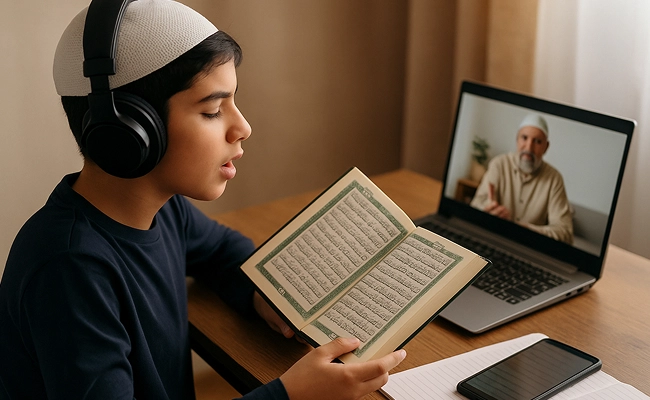
This guide presents 30 verified prophetic traditions (hadiths) structured across Ramadan’s three spiritual periods, each authenticated through rigorous Islamic scholarship.
These hadiths provide daily guidance for fasting, prayer, and spiritual growth, supported by primary Islamic sources and traditional transmission chains.
1. Sincere Faith and Seeking Reward
The Hadith (Arabic):
مَنْ صَامَ رَمَضَانَ إِيمَانًا وَاحْتِسَابًا غُفِرَ لَهُ مَا تَقَدَّمَ مِنْ ذَنْبِهِ
The Hadith (English):
“Whoever observes fasts during the month of Ramadan out of sincere faith, and hoping to attain Allah’s rewards, then all his past sins will be forgiven.”
Source: Sahih al-Bukhari 38
The core of this Hadith lies in the phrase Imanan wahtisaban. Iman refers to the internal conviction that this act is for God alone. Ihtisab means “anticipating the reward,” implying a proactive, positive mindset. You aren’t just “getting through” the day; you are “investing” the day.
Today, do not just count the hours until sunset. Every time you feel a hunger pang, say to yourself: “I am doing this for a reward that no eye has seen.”
If all your past sins were wiped clean tonight, how would you live differently tomorrow?
2. Fasting as a Divine Shield
The Hadith (Arabic):
الصِّيَامُ جُنَّةٌ يَسْتَجِنُّ بِهَا الْعَبْدُ مِنَ النَّارِ
The Hadith (English):
“Fasting is a shield with which a servant protects himself from the Fire.”
Source: Musnad Ahmad 8486
In Arabic, the word for shield is Junnah. A shield is not passive; it is a tool used by a warrior to deflect blows. Fasting acts as a barrier between your soul and the “heat” of anger, lust, and greed. If you are fasting but still engaging in backbiting or deception, your shield is broken.
Identify your “sharpest” vice—the one that usually gets you into trouble (e.g., losing your temper). Use the physical hunger of the fast as a reminder to keep that vice behind your shield today.
What are the “arrows” of modern life (distraction, consumerism, ego) that you need your shield to block?
3. The Opening of Heaven’s Gates
The Hadith (Arabic):
إِذَا جَاءَ رَمَضَانُ فُتِّحَتْ أَبْوَابُ الْجَنَّةِ وَغُلِّقَتْ أَبْوَابُ النَّارِ وَصُفِّدَتِ الشَّيَاطِينُ
The Hadith (English):
“When the month of Ramadan starts, the gates of heaven are opened and the gates of Hell are closed and the devils are chained.”
Source: Sahih al-Bukhari 1899
This Hadith describes a change in the spiritual atmosphere. The “chaining of devils” refers to the weakening of external temptations. While your own ego (Nafs) remains, the environmental pressure to do wrong is lessened. This makes Ramadan the perfect “incubator” for new, holy habits.
Take advantage of this “spiritual tailwind.” Attempt a good deed today that you usually find difficult, such as praying on time or giving up a specific bad habit.
If the doors of Paradise are wide open right now, why am I standing still?
4. The Unlimited Multiplier
The Hadith (Arabic):
كُلُّ عَمَلِ ابْنِ آدَمَ يُضَاعَفُ الْحَسَنَةُ عَشْرُ أَمْثَالِهَا إِلَى سَبْعِمِائَةِ ضِعْفٍ قَالَ اللَّهُ عَزَّ وَجَلَّ إِلاَّ الصَّوْمَ فَإِنَّهُ لِي وَأَنَا أَجْزِي بِهِ
The Hadith (English):
“Every action a son of Adam does shall be multiplied. A good action by 10 times its value, up to 700 times. Allah says: ‘With the exception of fasting, which belongs to Me, and I reward it…'”
Source: Sahih al-Bukhari 1904 (also Muslim 1151)
While most deeds have a calculated “exchange rate,” fasting is the blank check of the spiritual world. Because fasting involves a secret sacrifice between the creator and the created, its reward is governed by Divine Generosity rather than a fixed math.
Perform a small “hidden” act of kindness today—something no one else will ever know about. This mirrors the secret nature of fasting.
How does it feel to know that your effort today is being rewarded on a scale that defies human calculation?
5. The Intercession of the Quran and the Fast
The Hadith (Arabic):
الصِّيَامُ وَالْقُرْآنُ يَشْفَعَانِ لِلْعَبْدِ يَوْمَ الْقِيَامَةِ … يَقُولُ الصِّيَامُ أَيْ رَبِّ مَنَعْتُهُ الطَّعَامَ وَالشَّهَوَاتِ بِالنَّهَارِ فَشَفِّعْنِي فِيهِ
The Hadith (English):
“Fasting and the Quran will intercede for the servant on the Day of Resurrection… Fasting will say: ‘O Lord, I prevented him from food and desires during the day, so let me intercede for him.'”
Source: Musnad Ahmad 6626
On the Day of Judgment, we will all look for an advocate. This Hadith promises that your hunger and your recitation will take on a form and speak on your behalf. They are not just rituals; they are your future defense attorneys.
Spend at least 15 minutes with the Quran today. Think of it as “briefing” your future advocate.
If your fast were to speak for you today, what would it say about your patience and sincerity?
6. Defining Excellence in Deeds
The Hadith (Arabic):
خَيْرُ النَّاسِ مَنْ طَالَ عُمُرُهُ وَحَسُنَ عَمَلُهُ
The Hadith (English):
“The best of people is that person who lives long and excels in his deeds.”
Source: Jami at-Tirmidhi 2329
As we reach the end of the first week, fatigue often sets in. This Hadith refocuses us on Ihsan (excellence). It isn’t about how many chapters you read, but the quality of your presence during the reading.
Choose one specific prayer today—perhaps Dhuhr or Asr—and commit to performing it with perfect focus, slowing down every movement.
Where in your life are you choosing “quantity” over “quality,” and how is that affecting your spiritual growth?
7. The Beauty in the Unpleasant
The Hadith (Arabic):
وَلَخُلُوفُ فَمِ الصَّائِمِ أَطْيَبُ عِنْدَ اللَّهِ مِنْ رِيحِ الْمِسْكِ
The Hadith (English):
“The smell of the mouth of a fasting person is better to Allah than the smell of musk.”
Source: Sahih al-Bukhari 1894
This is a profound lesson in perspective. What society deems “unpleasant” (the physical toll of fasting), God deems “beautiful” because it is a sign of devotion. It teaches us that spiritual worth is often hidden beneath physical struggle.
When you feel exhausted or physically drained today, don’t complain. Internalize that this state is beloved to your Creator.
What other “unpleasant” sacrifices in your life might actually be beautiful in the eyes of God?
8. The Exponential Reward of Generosity
The Hadith (Arabic):
مَنْ فَطَّرَ صَائِمًا كَانَ لَهُ مِثْلُ أَجْرِهِ غَيْرَ أَنَّهُ لاَ يَنْقُصُ مِنْ أَجْرِ الصَّائِمِ شَيْئًا
The Hadith (English):
“Whoever gives food to a fasting person to break his fast, he will have a reward equal to his, without that detracting from the fasting person’s reward in the slightest.”
Source: Jami at-Tirmidhi 807
This is the ultimate spiritual “life hack.” By helping others fulfill their worship, you inherit the credit for their worship. It transforms the individual act of fasting into a collective movement of support.
Buy a box of dates or prepare a small meal for someone else’s Iftar. You are essentially “doubling” your Ramadan in one day.
How can we build a community where we are all invested in each other’s spiritual success?
9. The Moment of Answered Supplication
The Hadith (Arabic):
إِنَّ لِلصَّائِمِ عِنْدَ فِطْرِهِ لَدَعْوَةً مَا تُرَدُّ
The Hadith (English):
“Indeed, the fasting person has a supplication at the time of breaking his fast that is not rejected.”
Source: Ibn Majah 1753
The 10 minutes before sunset are the most spiritually charged. You are at your weakest physically, which often means you are at your strongest spiritually. Your ego is subdued, and your heart is open.
Five minutes before the Adhan of Maghrib, stop everything. Sit in silence and make a list of your deepest needs. Ask with the certainty that you are being heard.
What is the one thing you are too afraid to ask for, and why haven’t you asked the One who can grant it?
10. The Exclusive Gate of Ar-Rayyan
The Hadith (Arabic):
إِنَّ فِي الْجَنَّةِ بَابًا يُقَالُ لَهُ الرَّيَّانُ يَدْخُلُ مِنْهُ الصَّائِمُونَ يَوْمَ الْقِيَامَةِ لاَ يَدْخُلُ مِنْهُ أَحَدٌ غَيْرُهُمْ
The Hadith (English):
“There is a gate in Paradise called Ar-Rayyan, and those who observe fasts will enter through it on the Day of Resurrection and none except them will enter through it.”
Source: Sahih al-Bukhari 1896
As we conclude the first Ashra (Mercy), we are given a vision of our destination. Ar-Rayyan means “sated with drink” or “luxuriant.” It is the perfect poetic justice for those who endured thirst in this life.
Visualize this gate today. Every time you take a sip of water at Iftar, think of the first sip you will take upon entering that gate.
Is your current level of devotion worthy of an “exclusive” entrance to Paradise?
11. The Wind of Generosity
The Hadith (Arabic):
فَلَرَسُولُ اللَّهِ صلى الله عليه وسلم أَجْوَدُ بِالْخَيْرِ مِنَ الرِّيحِ الْمُرْسَلَةِ
The Hadith (English):
“The Messenger of Allah (ﷺ) was more generous in doing good than the blowing wind.”
Source: Sahih al-Bukhari 6
We enter the Second Ashra (Forgiveness). The “fast wind” brings rain to parched land, revitalizing everything it touches. Our generosity should be just as swift and widespread. In the middle of the month, our giving should reach its peak.
Give a small amount of money to a cause you usually ignore. Do it quickly, without overthinking, just like the wind.
If your charity was a wind, would it be a gentle breeze or a life-giving storm?
12. The Forgiveness Found in the Night
The Hadith (Arabic):
مَنْ قَامَ رَمَضَانَ إِيمَانًا وَاحْتِسَابًا غُفِرَ لَهُ مَا تَقَدَّمَ مِنْ ذَنْبِهِ
The Hadith (English):
“Whoever stands (in prayer) during Ramadan out of sincere faith and hoping to attain Allah’s rewards, then all his past sins will be forgiven.”
Source: Sahih al-Bukhari 37
While the day is for fasting, the night is for “standing” (Qiyam). This refers to Taraweeh and Tahajjud. The darkness of the night provides a privacy that the day lacks, allowing for a deeper emotional connection with Allah.
Even if you can’t go to the mosque, pray two extra units of prayer tonight in the quiet of your room.
What sins are you carrying that you are ready to leave behind in the prostration of the night?
13. The Barakah of the Pre-Dawn Meal
The Hadith (Arabic):
تَسَحَّرُوا فَإِنَّ فِي السُّحُورِ بَرَكَةً
The Hadith (English):
“Take Suhoor (pre-dawn meal) as there is a blessing (barakah) in it.”
Source: Sahih al-Bukhari 1923
Suhoor is often treated as a chore, but the Prophet (PBUH) called it a “blessing.” It is the fuel for your worship. Waking up for Suhoor is in itself an act of discipline that separates the fast of a believer from a mere hunger strike.
Wake up 20 minutes earlier than usual for Suhoor. Use that extra time for a few moments of quiet reflection or prayer before eating.
How does the way you start your morning dictate the spiritual “vibe” of your entire day?
14. Character Over Hunger
The Hadith (Arabic):
وَإِذَا كَانَ يَوْمُ صَوْمِ أَحَدِكُمْ فَلاَ يَرْفُثْ وَلاَ يَصْخَبْ، فَإِنْ سَابَّهُ أَحَدٌ أَوْ قَاتَلَهُ فَلْيَقُلْ إِنِّي امْرُؤٌ صَائِمٌ
The Hadith (English):
“When any one of you is fasting on a day, he should neither indulge in obscene language nor raise his voice; and if anyone reviles him or tries to quarrel with him, he should say: ‘I am a person fasting.'”
Source: Sahih al-Bukhari 1904
This Hadith provides a practical “script” for conflict. Fasting is a state of being, not just a state of the stomach. If someone provokes you, your identity as a “faster” should override your identity as an “ego.”
If you feel the urge to argue or speak harshly today, literally whisper the words “I am fasting” to yourself. Watch how the anger dissipates.
Are you fasting from food but “feasting” on the honor of others through gossip or anger?
15. Tasting the Sweetness of Faith
The Hadith (Arabic):
ثَلاَثٌ مَنْ كُنَّ فِيهِ وَجَدَ حَلاَوَةَ الإِيمَانِ … أَنْ يَكُونَ اللَّهُ وَرَسُولُهُ أَحَبَّ إِلَيْهِ مِمَّا سِوَاهُمَا
The Hadith (English):
“Whoever possesses these three qualities will taste the sweetness of faith: (The first is) to love Allah and His Messenger above all else…”
Source: Sahih al-Bukhari 16
Faith isn’t just a set of rules; it’s an experience. By the middle of Ramadan, we should begin to feel a “sweetness” in our worship—a sense of peace and joy that outweighs the physical difficulty.
Think of one blessing in your life that you often take for granted. Verbally thank Allah for it today, connecting that blessing back to His love.
When was the last time a prayer brought a tear to your eye or a smile to your face?
16. The Multiplication of the Sacred Space
The Hadith (Arabic):
صَلاَةٌ فِي مَسْجِدِي هَذَا خَيْرٌ مِنْ أَلْفِ صَلاَةٍ فِيمَا سِوَاهُ إِلاَّ الْمَسْجِدَ الْحَرَامَ
The Hadith (English):
“One prayer in my Mosque is better than 1,000 prayers in any other mosque excepting Al-Masjid Al-Haram.”
Source: Sahih al-Bukhari 1190
This Hadith reminds us of the importance of “Sacred Space.” While we may not be in Madinah, we can make our homes and local mosques sacred through our intentions. In the Second Ashra, we must treat our prayer mats as our own “mini-sanctuaries.”
Clean and scent your prayer area today. Treat it with the respect you would show a grand mosque.
If your prayer space was a physical reflection of your heart, would it be cluttered or serene?
17. Knowledge as a Form of Fasting
The Hadith (Arabic):
طَلَبُ الْعِلْمِ فَرِيضَةٌ عَلَى كُلِّ مُسْلِمٍ
The Hadith (English):
“Seeking knowledge is an obligation upon every Muslim.”
Source: Ibn Majah 224
Fasting without knowledge is like driving in the dark. To truly benefit from Ramadan, we must understand the “why” behind the “what.” The middle of the month is the perfect time to study the life of the Prophet or the meaning of the verses we hear in Taraweeh.
Read the translation and commentary of just five verses of the Quran today. Don’t just read the words; study the meaning.
How much of your religion do you practice out of habit, and how much out of genuine understanding?
18. The Power of Small, Consistent Acts
The Hadith (Arabic):
أَحَبُّ الأَعْمَالِ إِلَى اللَّهِ أَدْوَمُهَا وَإِنْ قَلَّ
The Hadith (English):
“The most beloved deeds to Allah are those done consistently, even if they are small.”
Source: Sahih al-Bukhari 6464
The “mid-Ramadan slump” is real. We start with fire and end with fire, but the middle can be lukewarm. This Hadith gives us permission to do “small” things, as long as we don’t stop doing them. Consistency is the secret to permanent change.
Choose a tiny act—like giving $1 to charity or saying SubhanAllah 33 times—and commit to doing it every single day for the rest of the year.
Are you a “sprinter” who burns out, or a “marathoner” who builds a legacy?
19. Respecting the Rights of the Body
The Hadith (Arabic):
إِنَّ لِجَسَدِكَ عَلَيْكَ حَقًّا … وَإِنَّ لِعَيْنِكَ عَلَيْكَ حَقًّا
The Hadith (English):
“Your body has a right over you… and your eyes have a right over you.”
Source: Sahih al-Bukhari 1975
Islam is a religion of balance (Mizan). Excessive worship that leads to total physical collapse or the neglect of family is not the Prophetic way. We must nourish our bodies so they can sustain our souls.
Prioritize 7 hours of sleep tonight, even if it means adjusting your schedule. Your worship will be more “present” tomorrow.
Is your “spirituality” making you a better family member, or is it making you irritable and distant?
20. The Master Key: Intention
The Hadith (Arabic):
إِنَّمَا الأَعْمَالُ بِالنِّيَّاتِ وَإِنَّمَا لِكُلِّ امْرِئٍ مَا نَوَى
The Hadith (English):
“Deeds are judged by intentions, and every person will get the reward according to what he has intended.”
Source: Sahih al-Bukhari 1
As we end the Second Ashra, we return to the very first Hadith of Bukhari. Why did you fast the last 20 days? Was it because everyone else was doing it? Was it for health? Re-purify your intention for the final 10 days.
Before you break your fast tonight, take 60 seconds to “re-set” your intention for the rest of the month.
If God looked only at your heart and ignored your actions, what would He see?
21. Tightening the Belt
The Hadith (Arabic):
كَانَ النَّبِيُّ صلى الله عليه وسلم إِذَا دَخَلَ الْعَشْرُ شَدَّ مِئْزَرَهُ، وَأَحْيَا لَيْلَهُ، وَأَيْقَظَ أَهْلَهُ
The Hadith (English):
“When the last ten days began, the Prophet (ﷺ) would tighten his waist belt (i.e., work hard), stay awake at night (in prayer), and wake his family.”
Source: Sahih al-Bukhari 2024
We enter the Third Ashra (Protection). “Tightening the belt” is an idiom for maximum effort. The Prophet (PBUH) didn’t just work harder; he involved his family. This is the “spiritual sprint” to the finish line.
Have a “family meeting” or a talk with friends. Encourage each other to put in 110% effort for these final nights.
If you knew this was your last Ramadan, how “tight” would your belt be?
22. The Hunt for the Night of Power
The Hadith (Arabic):
تَحَرَّوْا لَيْلَةَ الْقَدْرِ فِي الْوِتْرِ مِنَ الْعَشْرِ الأَوَاخِرِ مِنْ رَمَضَانَ
The Hadith (English):
“Search for Laylat al-Qadr in the odd nights of the last ten days of Ramadan.”
Source: Sahih al-Bukhari 2017
Why is the date hidden? To keep us in a state of constant worship. If we knew the exact night, we might ignore the others. The uncertainty is a mercy that forces us to remain “attached” to God for the entire final week.
Treat tonight (and every odd night) as if it is definitely the Night of Power. Don’t take any chances.
Is your love for Allah dependent on knowing the “shortcuts,” or are you willing to seek Him every night?
23. The 83-Year Opportunity
The Hadith (Arabic):
مَنْ قَامَ لَيْلَةَ الْقَدْرِ إِيمَانًا وَاحْتِسَابًا غُفِرَ لَهُ مَا تَقَدَّمَ مِنْ ذَنْبِهِ
The Hadith (English):
“Whoever stands in prayer during Laylat al-Qadr out of sincere faith and hoping to attain Allah’s rewards, then all his previous sins will be forgiven.”
Source: Sahih al-Bukhari 1901
One night is better than 1,000 months. That is roughly 83.3 years—a lifetime of worship compressed into a few hours. The “return on investment” here is infinite.
Dedicate at least one hour tonight to absolute solitude and prayer.
What would you do if you were handed a check for 83 years of life today? How would you spend that “time”?
24. The Ultimate Dua
The Hadith (Arabic):
قُلْتُ يَا رَسُولَ اللَّهِ أَرَأَيْتَ إِنْ عَلِمْتُ أَىُّ لَيْلَةٍ لَيْلَةُ الْقَدْرِ مَا أَقُولُ فِيهَا قَالَ قُولِي اللَّهُمَّ إِنَّكَ عَفُوٌّ تُحِبُّ الْعَفْوَ فَاعْفُ عَنِّي
The Hadith (English):
“Aisha asked: ‘O Messenger of Allah, if I know which night is Laylat al-Qadr, what should I say in it?’ He said: ‘Say: O Allah, You are Forgiving and love forgiveness, so forgive me.'”
Source: Jami at-Tirmidhi 3513
The word for forgiveness used here is ‘Afuww. Unlike Maghfirah (which means to cover a sin), ‘Afu means to “erase” it entirely, as if it never happened. We are asking for a clean slate.
Repeat the dua Allahumma innaka ‘afuwwun tuhibbul ‘afwa fa’fu ‘anni at least 100 times tonight.
What would it feel like to stand before God with your “record” completely blank?
25. The Serenity of the Night
The Hadith (Arabic):
لَيْلَةُ الْقَدْرِ لَيْلَةٌ سَمْحَةٌ طَلْقَةٌ لا حَارَّةٌ وَلا بَارِدَةٌ تُصْبِحُ الشَّمْسُ صَبِيحَتَهَا ضَعِيفَةً حَمْرَاءَ
The Hadith (English):
“The sign of Laylat al-Qadr is that it is a serene, tranquil night, neither hot nor cold, and the sun rises on the morning following it weak and reddish.”
Source: Musnad At-Tayalisi (Authenticated by Al-Albani in Sahih Al-Jami’ 5475)
While we look for signs, the greatest sign is internal peace. On this night, angels descend in such numbers that the earth becomes “crowded” with light. This results in a palpable sense of calm.
Step outside for a moment tonight. Breathe in the air. Look at the sky. Try to feel the “serenity” that the angels bring.
Is your heart calm enough to recognize the peace of the angels?
26. The Gift of Spiritual Seclusion (I’tikaf)
The Hadith (Arabic):
كَانَ النَّبِيُّ صلى الله عليه وسلم يَعْتَكِفُ الْعَشْرَ الأَوَاخِرَ مِنْ رَمَضَانَ حَتَّى تَوَفَّاهُ اللَّهُ
The Hadith (English):
“The Prophet (ﷺ) used to seclude himself in the mosque (I’tikaf) during the last ten days of Ramadan until Allah took him.”
Source: Sahih al-Bukhari 2026
I’tikaf is the ultimate “digital detox.” It is a complete withdrawal from the world to focus on the Creator. Even if you cannot stay in the mosque for 10 days, you can perform a “mini-I’tikaf.”
Turn off your phone for 3 hours tonight. No social media, no news. Just you, your prayer mat, and your Lord.
Who are you when the “noise” of the world is turned off?
27. The Peak of Probability
The Hadith (Arabic):
مَنْ كَانَ مُتَحَرِّيهَا فَلْيَتَحَرَّهَا فِي السَّبْعِ الأَوَاخِرِ
The Hadith (English):
“Whoever among you is seeking it (Laylat al-Qadr), let him seek it in the last seven nights.”
Source: Sahih Muslim 1165
Many traditions point toward the 27th night as a highly likely candidate for Laylat al-Qadr. While we strive for all nights, tonight is the night for a “total effort.” If you have been tired, find your second wind now.
Push through the fatigue. Stay up until Fajr tonight in worship, even if you have to work tomorrow.
If the “Night of Power” passed you by while you were sleeping, how would you feel on Eid morning?
28. The Decree of Freedom
The Hadith (Arabic):
وَلِلَّهِ عُتَقَاءُ مِنَ النَّارِ وَذَلِكَ كُلَّ لَيْلَةٍ
The Hadith (English):
“And Allah has people whom He frees from the Fire, and that happens every night (of Ramadan).”
Source: Jami at-Tirmidhi 682
This is the ultimate goal of the Third Ashra: Nijat (Salvation). Every night, names are written on the “list” of those who will never see the fire. We must beg to be on that list.
Make a specific dua tonight: “O Allah, do not let this month end except that my name is among those freed from the Fire.”
What habits are currently pulling you toward “fire,” and how can you break them tonight?
29. The Final Odd Night
The Hadith (Arabic):
الْتَمِسُوهَا فِي الْعَشْرِ الأَوَاخِرِ، فِي تِسْعٍ يَبْقَيْنَ، وَفِي سَبْعٍ يَبْقَيْنَ، وَفِي خَمْسٍ يَبْقَيْنَ
The Hadith (English):
“Seek it in the last ten days, on the ninth remaining night, the seventh remaining night, and the fifth remaining night.”
Source: Sahih al-Bukhari 2021
Often, people “give up” after the 27th night. But the 29th is just as likely. The Prophet (PBUH) taught us to finish strong. The race isn’t over until the new moon is sighted.
Do not slacken. Perform your night prayers tonight with the same intensity as the 27th.
Why do we often lose our focus right when the goal is within reach?
30. The Rejoicing of the Soul
The Hadith (Arabic):
وَيُنَادِي مُنَادٍ يَا بَاغِيَ الْخَيْرِ أَقْبِلْ وَيَا بَاغِيَ الشَّرِّ أَقْصِرْ
The Hadith (English):
“And a caller calls out: ‘O seeker of good, proceed! O seeker of evil, desist!'”
Source: Jami at-Tirmidhi 682 (also Ibn Majah 1642)
The month ends not with sadness, but with the “rejoicing” of a successful journey. If you have followed these 30 days, you are not the same person who started. You have built a new foundation.
Write down the three biggest spiritual lessons you learned this month. Keep this paper in your wallet or on your mirror for the rest of the year.
Ramadan is a “school.” Now that you are graduating, what will you do with your “degree”?
What Makes a Hadith Authentic?
Before we delve into the daily guide, it is essential to understand the “Science of Hadith” (Mustalah al-Hadith). In an era of digital misinformation, knowing how to verify religious guidance is a spiritual obligation. Islamic scholarship developed a verification system that predates modern peer-review processes by over a millennium. For a teaching to be included in this guide, it must meet five rigorous criteria.

1. Continuity of the Chain (Ittisal al-Sanad)
Every narrator in the chain must have met the person they are reporting from. If there is a single gap in the historical record, the Hadith’s reliability is questioned. It is a documented lineage of truth.
2. Integrity of the Narrator (‘Adalah)
Scholars investigated the biography of every individual in the chain. They looked for “upright character.” Did the narrator lie in their daily life? Were they known for piety? A single lapse in personal integrity could disqualify a narrator.
3. Precision of Memory (Dabt)
It was not enough to be a good person; one had to have an impeccable memory. Scholars compared one narrator’s report against others to see if they consistently relayed information accurately.
4. Absence of Hidden Flaws (‘Illah)
Even if the chain looked perfect, scholars looked for subtle discrepancies that only an expert could spot—such as a narrator misattributing a statement or mixing up two different events.
5. Lack of Irregularity (Shudhudh)
The content (Matn) must not contradict established principles of the Quran or more widely reported authentic Hadiths.
This guide relies on the “Gold Standard” collections: Sahih al-Bukhari and Sahih Muslim, supplemented by the Sunan of Tirmidhi and Ibn Majah, ensuring that every reflection you engage with is rooted in verified Prophetic wisdom.
Understanding Grading Systems of Hadith
When you see a hadith citation, you’ll notice a grade that tells you its reliability level:
- Sahih (Authentic): The highest grade, meeting all verification criteria
- Hasan (Good): Reliable and acceptable, with minor chain variations
- Daif (Weak): Contains transmission issues or fewer supporting chains
- Maudu (Fabricated): Clearly false or invented
This guide exclusively uses Sahih and Hasan graded hadiths from primary collections like Sahih al-Bukhari, Sahih Muslim, and other recognized compilations.

What is the Spiritual Roadmap of the Three Ashras in Ramadan?
Ramadan is traditionally divided into three ten-day periods, known as Ashras. This division helps the believer manage their energy and focus.
- Days 1–10: The Ashra of Mercy (Rahmah). This is the period of “thawing.” We seek Allah’s mercy to soften our hearts and prepare them for growth.
- Days 11–20: The Ashra of Forgiveness (Maghfirah). Once the heart is softened, we focus on scrubbing away the stains of past sins through sincere repentance.
- Days 21–30: The Ashra of Protection (Nijat). The spiritual climax, where we strive for Laylat al-Qadr and seek permanent safety from the consequences of our shortcomings.

What’s a Sustainable Ramadan Schedule for Spiritual Growth in 2026?
To turn these Hadiths into a reality, you need a structure. The “Prophetic Routine” was balanced and intentional.
- The Pre-Dawn Power Hour: 4:00 AM – 5:00 AM. Suhoor, Tahajjud, and Dua.
- The Morning Momentum: 5:30 AM – 7:00 AM. Post-Fajr Dhikr and Quran. This is when the mind is sharpest.
- The Mid-Day Mindfulness: 1:00 PM – 2:00 PM. Using the Dhuhr break for a short nap (Qailulah) to sustain energy for the night.
- The Sunset Supplication: 6:30 PM – 7:00 PM. The “unrejected” dua before Iftar.
- The Nightly Connection: 8:30 PM – 10:30 PM. Isha and Taraweeh. Focusing on “standing” with sincerity.
Beyond the 30 Days
Ramadan is a 30-day training camp for a 365-day life. The Hadiths we have explored are not just for this month; they are the blueprint for an authentic Islamic life. As the “fast wind” of Ramadan passes, let the seeds of mercy, forgiveness, and protection that you have planted continue to grow.
You have the tools. You have the verified guidance. Now, you have the choice: will this be just another month of hunger, or will it be the month that changed everything?
Frequently Asked Questions
Q: What if I accidentally eat during the day?
Allah has fed you and given you to drink” (Bukhari 1933). Your fast is perfectly valid. Simply stop and continue.
Is it better to read the Quran quickly or slowly?
A: The Prophet (PBUH) said “The best of you is he who learns the Quran and teaches it.” Scholarly consensus suggests that slow, meditative reading (Tadabbur) is superior to rapid completion without understanding.
Can I skip Suhoor if I am not hungry?
You should at least have a sip of water or a date. There is “blessing” in the act itself, regardless of your appetite.