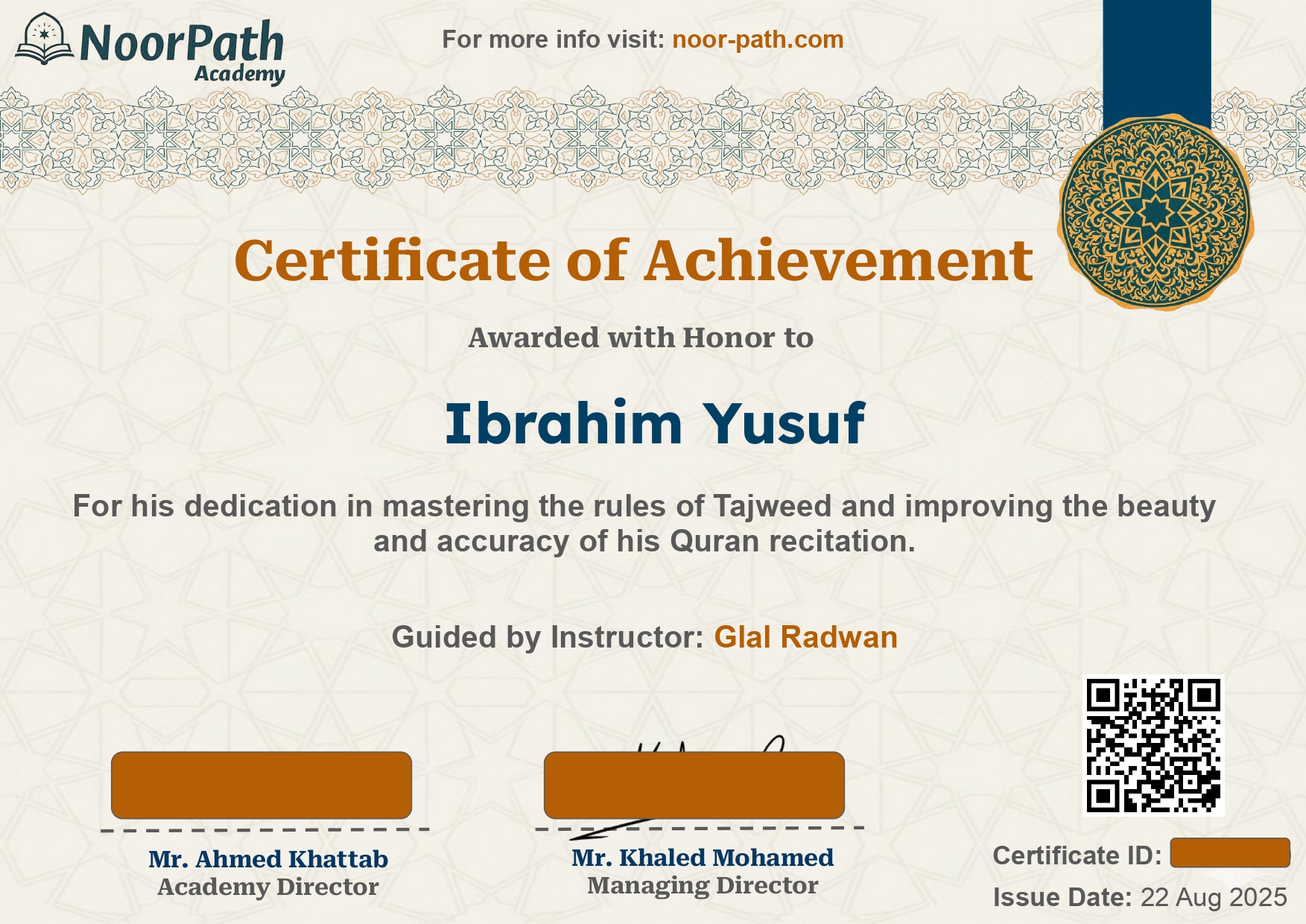
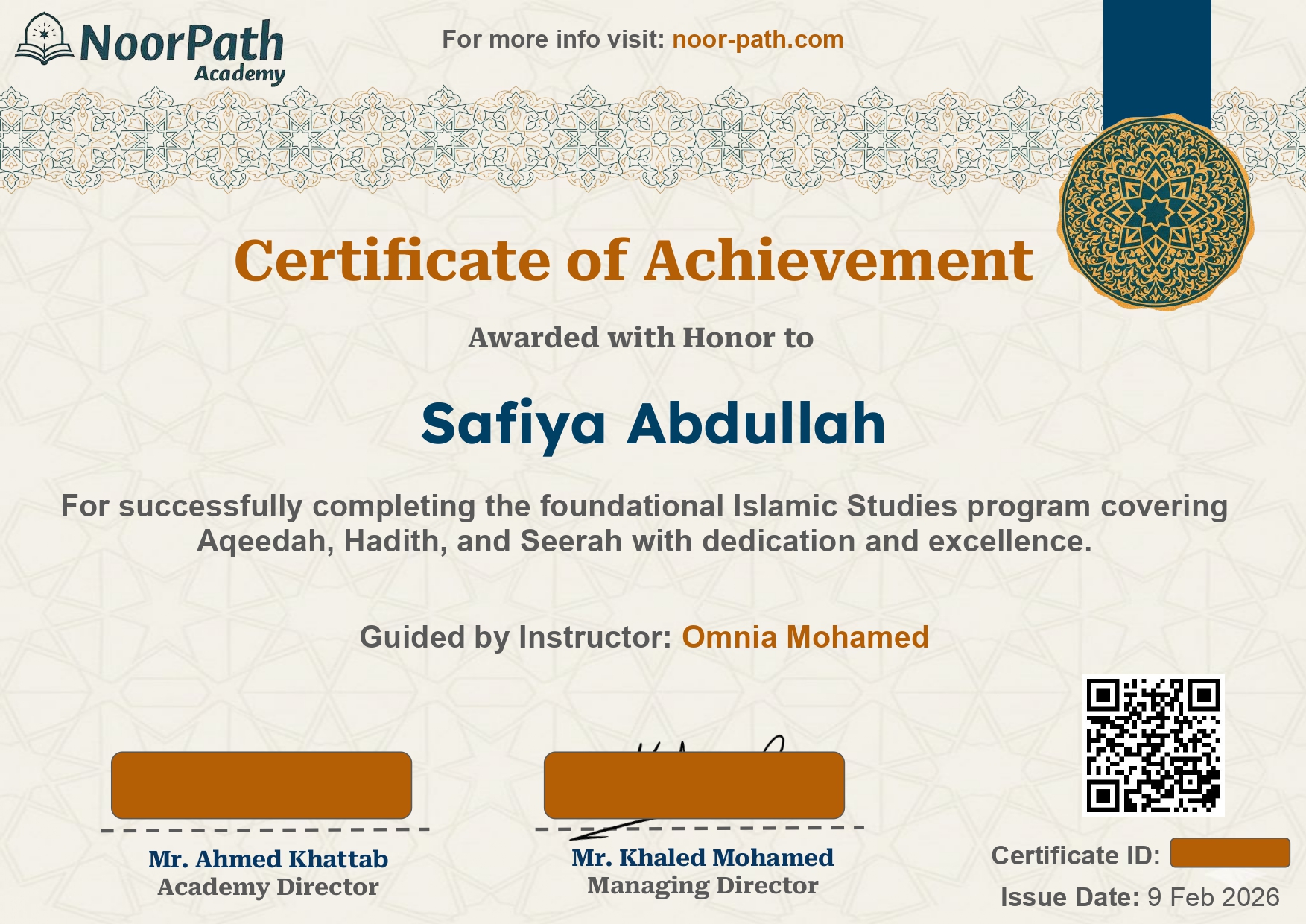
Islamic History – Course Details
Comprehensive Online Islamic History Course
From the rise of Islam to the modern Muslim world. master the complete narrative of Islamic empires, golden ages, scholarly achievements, and the profound impact Muslims have had on world history.
⭐️ 5-Star Rated by 500+ Students | 100% Satisfaction Guarantee
No credit card required. Setup takes 2 minutes
Trusted by Muslim Families Across The Globe
Featured In Muslim Mamas


Are You Disconnected from Your Islamic History?
You want to understand your heritage and educate your family, but where do you start?
- Time Scattered, Knowledge Fragmented: You've watched random YouTube videos, read Wikipedia articles, and still feel like you're missing the complete picture. Bits and pieces don't build the deep understanding you crave.
- Questions Without Authentic Answers: What really happened during the Islamic Golden Age? How did Muslims respond to the Crusades? Why did great empires rise and fall? You deserve answers grounded in authentic scholarship, not biased narratives.
- Lost in a Sea of Misinformation: Western sources often present one-sided views. Extremist narratives distort our heritage. You're left wondering: what is the true, balanced account of Islamic history?
Imagine understanding 1400 years of Islamic civilization, from the Prophet ﷺ to today, and confidently sharing this knowledge with your family.
How Our Islamic History Course Works?
Our methodology combines rigorous academic scholarship with spiritual depth, ensuring you gain both knowledge and wisdom from Islamic history.
Era 1: Foundation (7th-8th Century)
Master the origins of Islamic civilization, from the Prophet's ﷺ mission through the Rashidun Caliphate and early conquests that established the first Islamic empire spanning three continents.
Era 2: Golden Ages (8th-13th Century)
Explore the Umayyad and Abbasid empires' achievements, the House of Wisdom, scientific revolution, architectural marvels, and how Muslims preserved and advanced human knowledge during Europe's Dark Ages.
Era 3: Transformation (13th-20th Century)
Understand the Mongol invasions, rise of the Ottomans, Muslim presence in Spain and India, colonialism's impact, and how Islamic civilization adapted through centuries of dramatic change.
Era 4: Modern Era (20th Century-Present)
Analyze the end of the caliphate, colonial aftermath, independence movements, modern nation-states, and contemporary challenges facing the Muslim world in the 21st century.
Clear Path from Beginner to Master Islamic History
- Module 1:The Prophetic Foundation Begin where Islam began. Explore pre-Islamic Arabia, the Prophetic mission, and how the Rashidun Caliphs governed. This foundation is essential for understanding all that follows.
- Module 2: The Golden Dynasties Discover how Islam expanded across three continents within a century. Study the Umayyad dynasty and the Abbasid Golden Age, when Baghdad became the world's center of knowledge and Islamic civilization led in science, architecture, and learning.
- Module 3: Expansion and Diversity Explore Al-Andalus (Muslim Spain), the Crusades, and Mongol invasions. Learn about Salahuddin al-Ayyubi and the Mamluk state. Discover how Muslim societies adapted and thrived despite existential challenges.
- Module 4: The Great Empires Master the three great empires: Ottoman, Safavid, and Mughal. Study their legal innovations, artistic achievements, and architectural wonders like the Taj Mahal that continue to influence Muslim societies today.
- Module 5: Modern Challenges and Revival Examine colonialism's impact, Muslim reformers' responses, and the formation of modern nation-states. Connect historical patterns to current events and navigate today's challenges with historical wisdom.
What You'll Gain From Historical Fragments to Complete Understanding
Master 1400 Years of Islamic Civilization
Confidently discuss Islamic history from the Prophet's era through the Abbasid Golden Age, Ottoman Empire, colonialism, and modern times with comprehensive chronological understanding.
Respond to Historical Misconceptions
Counter false narratives about Islam's history with facts, understanding Muslim contributions to science, religious tolerance in Islamic empires, and the true causes of civilizational decline.
Discover Pride in Your Islamic Heritage
Connect emotionally with the achievements of your ancestors, from Andalusian architecture to Baghdad's House of Wisdom—reclaiming a legacy often hidden or distorted in Western education.
Extract Lessons for Today's Challenges
Apply historical patterns to modern issues, understanding how past Muslims navigated political turmoil, intellectual challenges, and cultural conflicts offers guidance for contemporary Muslim life.
Inside Our Islamic History Course
(Understanding the first Islamic dynasty and empire consolidation)
We begin at the very beginning, pre-Islamic Arabia through the establishment of the first Islamic state. You’ll understand the revolutionary changes Islam brought and how the early Muslim community laid foundations for world-changing civilization.
What You Will Learn:
- Pre-Islamic Arabia: tribal society, economics, religious landscape, and social conditions before Islam
- The Prophet’s mission: Meccan period challenges, Medinan state-building, and political-spiritual leadership model
- Rashidun Caliphate governance: election of caliphs, administrative systems, and expansion into Persian and Byzantine territories
- Early conquests’ causes and effects: military strategy, treatment of conquered peoples, and rapid empire-building factors
- Foundational institutions: establishment of treasury (Bayt al-Mal), judiciary system, and Islamic governance principles
You will understand how Islam transformed Arabian society and rapidly expanded into a major world empire within 30 years.
(Understanding the first Islamic dynasty and empire consolidation)
What You Will Learn:
- Umayyad rise to power: transition from elected to hereditary leadership and resulting conflicts
- Territorial expansion: conquest of Spain (Al-Andalus), North Africa, Central Asia, and reaching India’s borders
- Administrative innovations: Arabic as official language, coinage system, postal service, and provincial governance
- Cultural synthesis: blending Arab, Persian, Byzantine, and other traditions creating distinct Islamic civilization
- Architectural achievements: Great Mosque of Damascus, Dome of the Rock, and early Islamic architectural style
- Internal challenges: tribal tensions, Kharijite opposition, Shi’a movements, and factors leading to Umayyad decline
You will grasp how the Umayyads built history’s largest empire to that point while developing distinctly Islamic culture and governance.
(Exploring Islam’s intellectual and cultural zenith)
What You Will Learn:
- Abbasid revolution: how they overthrew Umayyads and shifted Islamic power from Damascus to Baghdad
- House of Wisdom (Bayt al-Hikma): translation movement preserving Greek, Persian, Indian knowledge and original research
- Scientific achievements: Al-Khwarizmi’s algebra, Ibn Sina’s medicine, Al-Haytham’s optics, and astronomical advances
- Philosophical developments: falsafa tradition, Al-Kindi, Al-Farabi, Ibn Rushd (Averroes) and dialogue with Greek philosophy
- Architectural marvels: Baghdad’s Round City, Samarra’s Great Mosque, and palatial architecture
- Cultural flourishing: poetry, literature, art, and the cosmopolitan character of Islamic civilization
- Fragmentation and decline: provincial dynasties (Fatimids, Seljuks), internal conflicts, and vulnerability to external threats
You will discover why this era is considered one of human history’s greatest intellectual achievements and understand Muslim contributions still impacting modern science.
(Understanding major challenges and civilizational resilience)
What You Will Learn:
- The Crusades: European invasions, Muslim response, Saladin’s leadership, and long-term impacts on Muslim-Christian relations
- Mongol invasions: Baghdad’s destruction in 1258, civilizational catastrophe, and eventual Mongol conversion to Islam
- Ottoman rise: from small principality to empire spanning Europe, Asia, Africa for 600 years
- Ottoman contributions: legal system (Kanun), military innovations (Janissaries), architectural masterpieces (Suleymaniye Mosque)
- Mughal India: Akbar’s tolerant governance, Taj Mahal’s construction, and Islamic-Hindu cultural synthesis
- Al-Andalus legacy: Islamic Spain’s 800-year history, Cordoba’s greatness, Granada’s fall in 1492, and lasting influence
- Safavid Persia: Shi’a state formation, Persian Islamic culture, and rivalry with Ottomans
You will understand how Islamic civilization survived catastrophic challenges and continued flourishing through adaptation and resilience.
(Analyzing modern history and contemporary Muslim world)
What You Will Learn:
- Colonial encounter: European expansion, technological gap, military defeats, and loss of Muslim political independence
- Ottoman decline: 19th-century reform attempts, Tanzimat period, and empire’s dismantling after WWI
- End of the Caliphate: Ottoman abolition in 1924 and debates about Islamic political authority in modern era
- Independence movements: Muslim nations gaining sovereignty, Jinnah’s Pakistan, Nasser’s Egypt, and post-colonial states
- Modern challenges: nation-state system vs. ummah concept, authoritarianism, economic development, and identity questions
- Islamic revival movements: 20th-century reformers, diverse responses to modernity, and contemporary Islamic thought
- Current landscape: Muslim-majority nations today, diaspora communities, geopolitical issues, and future trajectories
You will analyze how historical patterns inform current challenges and gain perspective on contemporary Muslim world dynamics.
Learn From Expert Islamic Historians & Scholars

Dr. Yusuf Al-Mahdi
25 Years Experience | Specialization: Early Islamic Period & Hadith Studies
My goal is to help students see Divine wisdom in our collective journey. When you study the Companions' sacrifices and scholars' dedication, you transform your relationship with Islam.
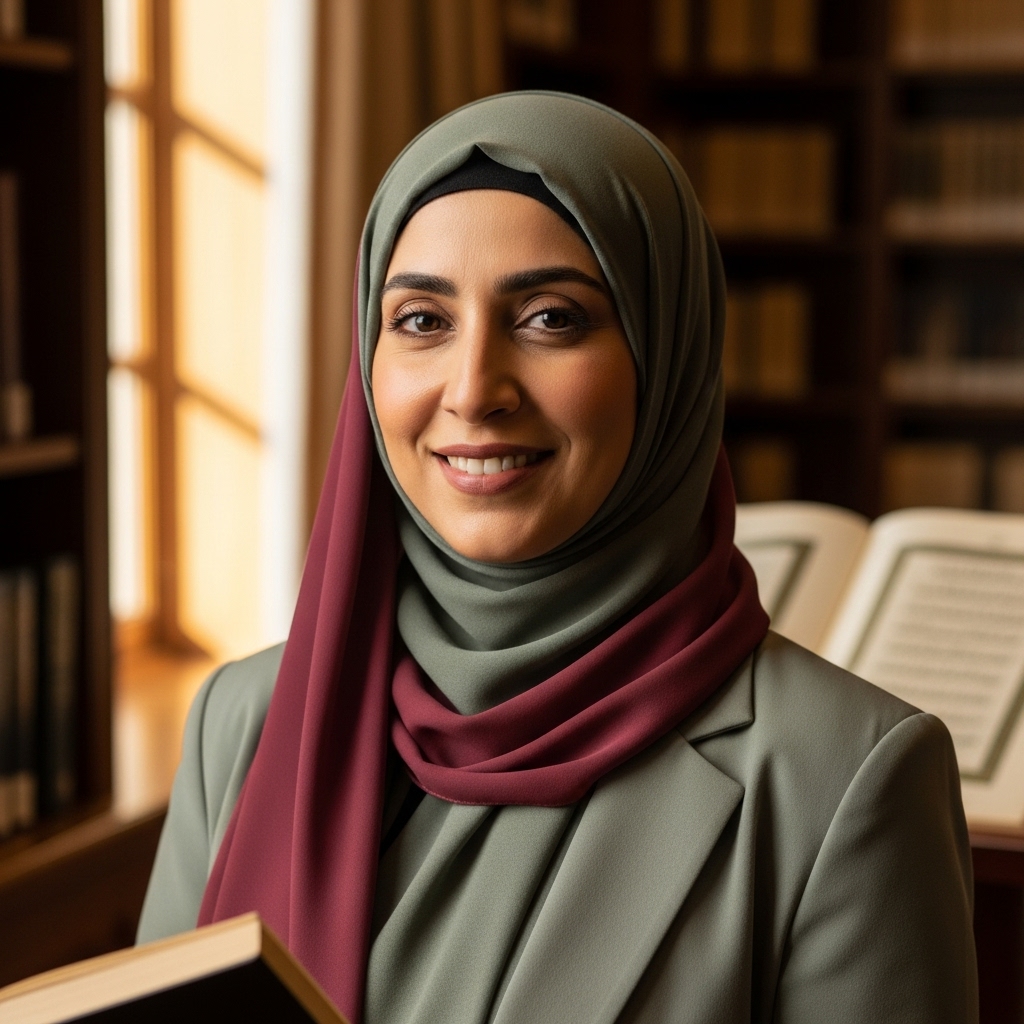
Fatima Hassan
18 Years Experience | Specialization: Islamic Golden Age & Women in Islamic History
I'm passionate about highlighting Muslim women, scholars, poets, warriors, and leaders, who shaped our civilization. History should empower us to achieve more, grounded in authentic models from our past.
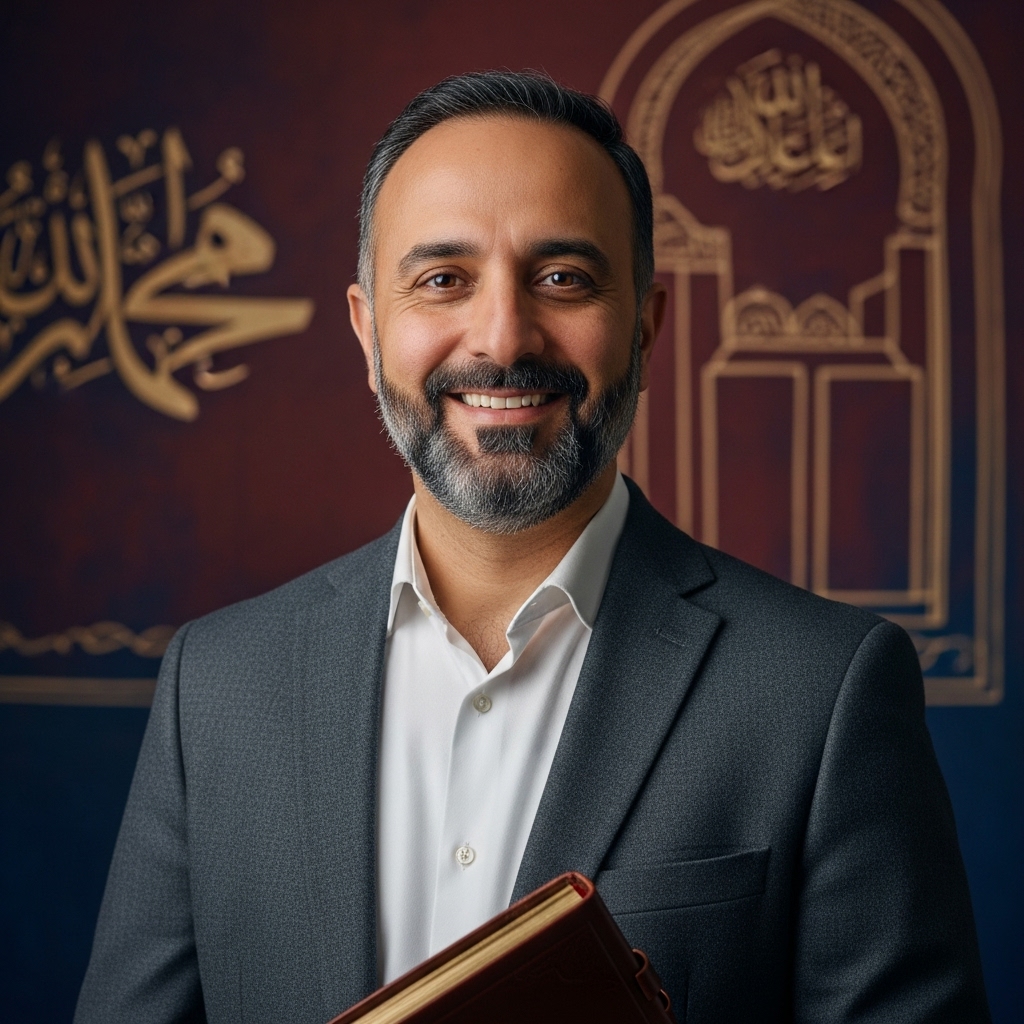
Ibrahim Malik
20 Years Experience | Specialization: Ottoman, Safavid & Mughal Empires
The later Islamic empires offer profound lessons in cultural sophistication and political complexity. When you understand how Ottomans governed a multicultural empire for 600 years, you gain insights relevant to today's pluralistic societies.
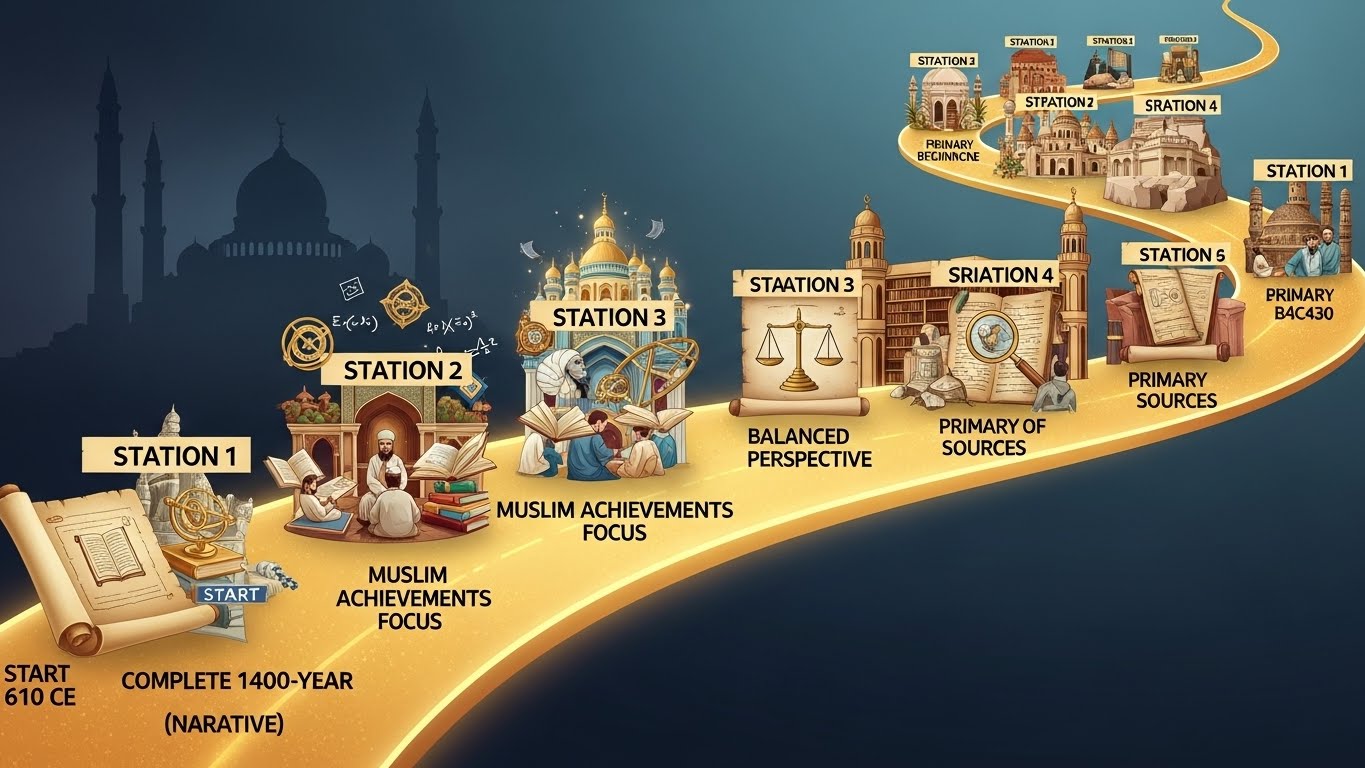
Why Choose NoorPath for Your Islamic History Course?
- Complete 1400-year chronological narrative from Islam's origins through modern times with clear connections between eras and civilizations.
- Focus on Muslim achievements in science, mathematics, medicine, philosophy, art, and architecture often omitted from mainstream history education.
- Balanced historical perspective examining both triumphs and challenges, avoiding romanticization while celebrating genuine achievements and legacy.
- Primary source integration including historical texts, original manuscripts, and archaeological evidence supporting authentic historical understanding.
- Expert historians with advanced degrees in Islamic Studies, Middle Eastern History, and Medieval Studies from recognized universities worldwide.

How Our Students Transformed Their Historical Understanding

I grew up hearing about the Islamic Golden Age but never understood what made it 'golden.' This course showed me Muslim scientists invented algorithms, preserved Greek knowledge, and advanced medicine 500 years before Europe's Renaissance. Now when my kids study 'world history' that ignores Muslim contributions, I can fill in what their textbooks leave out.

As a revert, I felt disconnected from Islamic history, like I was joining something halfway through. This islamic history course gave me the complete story. Understanding how Islam went from 13 people in Mecca to a world civilization in decades, then created the greatest intellectual movement in human history, made me incredibly proud to be Muslim.

My non-Muslim colleagues would make ignorant comments about Islam being 'anti-science' or 'always violent.' After this course, I could cite specific examples: Al-Khwarizmi inventing algebra, Ibn Sina's medical encyclopedia used in Europe for 600 years, Cordoba's libraries when Europe was illiterate. Facts shut down stereotypes. This course armed me with knowledge to defend my heritage.
Common Questions About Learning Hadith Sciences Online
What makes this islamic history course different from general world history classes?
While world history courses briefly mention Islamic civilization, our course dedicates comprehensive study to Muslim history, from internal perspective, using primary sources, and covering achievements mainstream education often overlooks. You’ll gain insider understanding, not outsider summaries.
Is this course suitable for non-Muslims interested in Islamic history?
Yes. While designed for Muslims seeking to understand their heritage, anyone interested in medieval history, Islamic civilization, or Middle Eastern studies will find comprehensive, academically rigorous content presented accessibly.
Do I need background knowledge in history to take this course?
No prerequisites required. Module 1 starts with pre-Islamic Arabia basics, building knowledge progressively. Whether you’re a complete beginner or have some background, the curriculum accommodates all levels.
How is Islamic history different from Seerah (Prophet's biography)?
Seerah focuses specifically on Prophet Muhammad’s ﷺ life and teachings. Islamic history course covers 1400 years, from the Prophet’s era through caliphates, empires, golden ages, colonialism, and modern times. Seerah is one component within the larger historical narrative.
Our 100% Satisfaction Promise
If you are not happy after your first week of paid classes, we will refund your money with no questions asked.
Your Heritage Awaits Begin Your Islamic History Journey Today