As parents raising Muslim children in the West, we carry a beautiful and profound responsibility. We want to give our kids the world, but more than anything, we want to give them the Deen. We dream of them holding the Quran, not just as a sacred object, but as a book whose words speak directly to their hearts. We yearn for their Salah to be a true conversation with their Creator. And at the center of this beautiful dream is the Arabic language. But let’s be honest, the path to getting there can feel overwhelming. Where do you even start? The good news is, you start at the beginning. This guide is dedicated to exploring the essential basic arabic skills for beginners, the foundational blocks that make the entire journey possible, rewarding, and, yes, even joyful. Alhamdulillah.
Importance of Arabic in Today’s World
You might be thinking, “With English being the global language, why focus so much on Arabic?” It’s a fair question many parents in our community ask. The truth is, for a Muslim, Arabic isn’t just another language; it’s a lifeline. It’s the key that unlocks a direct, unfiltered connection to our faith.
The importance of learning arabic in islam cannot be overstated. It is the language of the Quran. Imagine your child, or even yourself, reading a verse and feeling the full weight and beauty of its meaning without waiting for a translation. Translations are wonderful tools, but they are, by nature, an interpretation. The original Arabic holds nuances, poetry, and a divine rhythm that can get lost in translation. When we recite Surah Al-Fatiha in our prayers, we are speaking the exact words Allah chose. Learning Arabic transforms this recitation from a ritual of the tongue to a conversation of the soul.
But the connection goes beyond the Quran. It’s the language of our beloved Prophet Muhammad (peace be upon him), his companions, and centuries of Islamic scholarship. To truly appreciate the depth of our history, from the wisdom in the Hadith to the incredible stories in an online seerah course, a grasp of Arabic is invaluable. It connects our children to a legacy of knowledge, a 1,400-year-old conversation that they are a part of.
Beyond the spiritual, learning Arabic connects our children to a vibrant, global culture. It’s the official language in over 20 countries and is spoken by more than 400 million people. It opens doors to understanding a rich tapestry of art, literature, and history, fostering a sense of global citizenship and pride in their heritage. It’s a bridge connecting their Western identity with their Muslim roots, creating a confident, well-rounded individual. This is a gift of connection that lasts a lifetime.
Why Should Beginners Start with Foundational Skills?
Here’s the thing. In our excitement to see our children read the Quran, we sometimes rush the process. We might push them to memorize long surahs or try to piece together words without understanding the building blocks. We’ve seen it happen time and again: this approach often leads to frustration and burnout. The child might be able to phonetically “read” the words, but they have no idea what they mean. It’s like being given a key to a treasure chest but not knowing how to turn it.
Think of it like building a house. You wouldn’t start putting up the walls and decorating the rooms before you’ve laid a solid, deep foundation. It just wouldn’t work. The structure would be weak and would eventually crumble. The same is true for language learning. The fundamentals—the alphabet, the sounds, the basic sentence structure—are the concrete foundation. Mastering these basic arabic skills for beginners is the single most important step in the entire process.
When a student has a rock-solid foundation, everything that comes later is easier. Advanced grammar becomes a logical puzzle, not an impossible mystery. Vocabulary sticks. Reading comprehension blossoms. This is why at NoorPath academy, our entire approach is built on mastering the fundamentals first. We believe in building the foundation so strong that the rest of the structure can reach for the sky. It’s about creating a love for learning, not a fear of failure. It’s the difference between a child who can merely pronounce Arabic and a child who can truly begin to understand it.
Basic Arabic Skills for Beginners
So, what does this “foundation” actually look like? Let’s break down the core components. These are the non-negotiable, absolutely essential basic arabic skills for beginners that every learner, young or old, needs to master. This is the starting point of the adventure.
Arabic Letters and Sounds (The Alif-Baa)
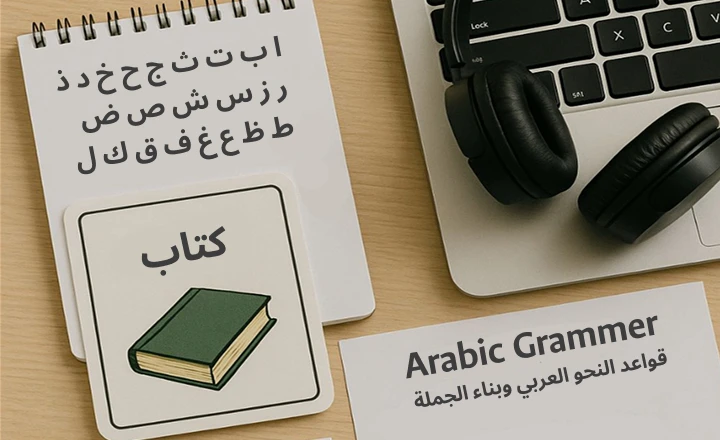
The journey begins with the 28 letters of the Arabic alphabet, the Alif-Baa. The first thing you’ll notice is that it’s written from right to left, which is a fun and fascinating shift for the brain! Instead of seeing this as a hurdle, we present it to our students as their first step into a new world. It’s exciting!
Now, you might be wondering about the sounds. Many letters, like Baa (ب), Taa (ت), and Meem (م), have very close English equivalents (B, T, M). Easy wins! But Arabic also has a set of beautiful, unique sounds that don’t exist in English. Think of the deep, throaty ‘Ayn (ع) or the emphatic Haa (ح). Getting these right is crucial. This is where it’s so important to learn arabic alphabet and pronunciation online with a live teacher who can provide immediate feedback. An app or a video can’t tell your child, “You’re close, but try making the sound from a little deeper in your throat.” That human touch is everything.
Tips for Pronunciation and Writing Practice
Mastering pronunciation is all about listening and mimicking. At NoorPath academy, our small, live classes are perfect for this. Students hear the teacher, they repeat, and the teacher gently corrects them. We encourage parents to help their kids with this at home, too. Record your child saying the letters and compare it to the teacher’s pronunciation. Make it a game! Who can make the best ‘Ayn sound? It turns practice from a chore into a fun challenge.
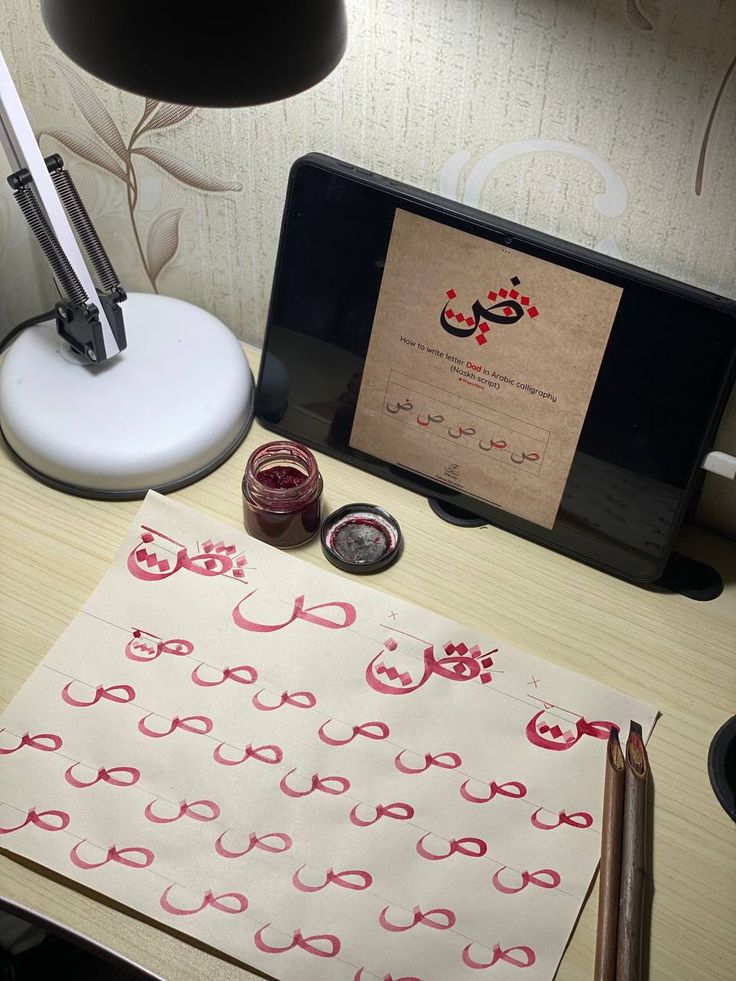
For writing, the key is to understand that most Arabic letters change shape depending on where they are in a word—initial, middle, or final. This sounds complicated, but it’s actually very logical, much like cursive writing in English. We teach this concept visually, showing how the letters “hold hands” to form words. We recommend starting with large, traceable worksheets and then moving to a whiteboard or notebook. Consistent, short bursts of practice (10-15 minutes a day) are far more effective than one long, tiring session a week.
Common Greetings and Everyday Words
Language is for communication! That’s why we immediately introduce practical, high-frequency words. This gives students an instant sense of accomplishment. They’re not just learning abstract symbols; they’re learning to communicate. Here are a few essentials we start with:
- As-salamu ‘alaykum (السلام عليكم) – Peace be upon you. (The universal greeting)
- Wa ‘alaykum as-salam (وعليكم السلام) – And upon you be peace. (The reply)
- Marhaban (مرحباً) – Hello/Welcome
- Shukran (شكراً) – Thank you
- ‘Afwan (عفواً) – You’re welcome
- Na’am (نعم) – Yes
- La (لا) – No
- Ismi… (اسمي…) – My name is…
Using these words around the house makes the language come alive. It’s one of the most effective basic arabic skills for beginners to develop. When your child says “Shukran” at the dinner table, they’re not just practicing Arabic; they’re living it.
Numbers, Days, and Basic Phrases
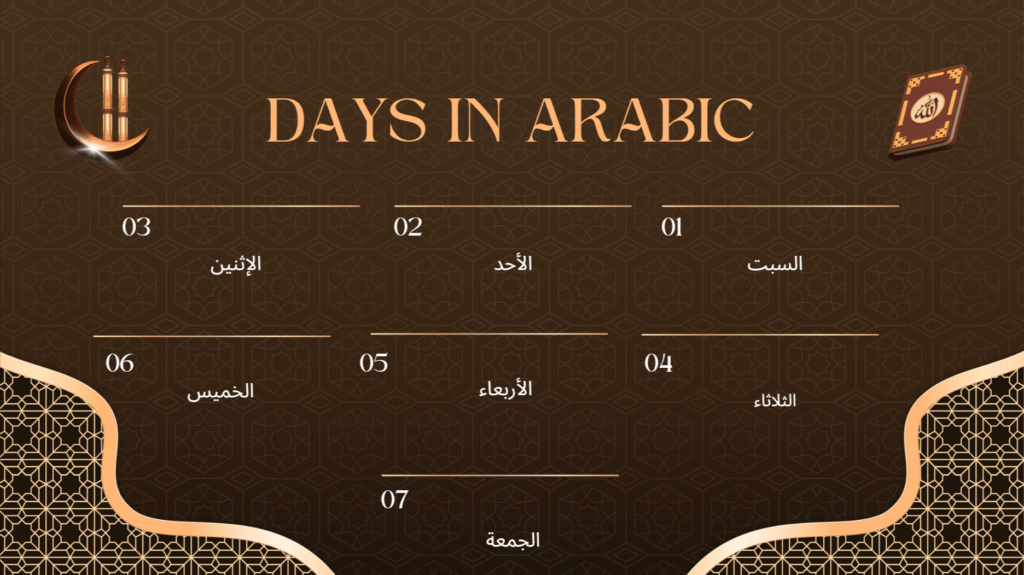
Once greetings are down, we expand the toolkit. Numbers and days of the week are incredibly useful. They pop up in daily life all the time, making them easy to practice.
- Numbers 1-10: Wahid (١), Ithnan (٢), Thalatha (٣), Arba’a (٤), Khamsa (٥), Sitta (٦), Sab’a (٧), Thamaniyah (٨), Tis’a (٩), ‘Ashara (١٠).
- Days of the Week: Al-Ahad (Sunday), Al-Ithnayn (Monday), Ath-Thulatha (Tuesday), etc.
- Basic Phrases: “Kayfa haluk?” (How are you?), “Ana bikhayr, shukran.” (I am fine, thank you.), “Min ayna ant?” (Where are you from?).
These phrases are the building blocks of real conversation. They empower a beginner to engage in a simple, predictable exchange, which is a huge confidence booster.
Developing Listening and Speaking Skills
You can’t learn a language just by reading a book. You have to hear it and speak it. This is a core part of developing basic arabic skills for beginners. We encourage parents to play Arabic children’s songs or simple cartoons in the background. Even passive listening helps the brain get used to the rhythm and flow of the language. For speaking, the key is not to be afraid of making mistakes. We tell our students, “If you’re not making mistakes, you’re not trying!” Every mistake is a learning opportunity. When a student mispronounces a word in our class, we don’t just say “wrong.” We say, “Great try! Let’s break that sound down together.” It’s about creating a safe space to practice. Sometimes, we say astaghfirullah for our own shortcomings, and it teaches children that it’s okay to seek forgiveness and try again.
Techniques for Improving Pronunciation
Beyond simple mimicry, we use specific techniques. We use diagrams of the mouth and throat to show students where a sound is made. Is it at the front with the lips, like ‘Baa’? Or in the back of the throat, like ‘Qaf’? This technical understanding helps demystify the difficult sounds. Another technique is minimal pairs—practicing two words that sound similar but have one different letter, like kalb (dog) and qalb (heart). This trains the ear and the tongue to notice and produce subtle but critical differences in sound. This is a focus in our arabic language classes for beginners.
Reading and Writing Practice
This is where the magic starts to happen. As students master the letters, we move on to the short vowels (fatha, kasra, damma), which tell you which vowel sound to make after a consonant. Then, we combine them. B + fatha = “Ba”. T + kasra = “Ti”. K + damma = “Ku”. Suddenly, letters become syllables, and syllables become words. The first time a child reads a three-letter word they’ve never seen before, their eyes light up. It’s a moment of pure discovery.
For writing, we practice connecting the letters. We show them how a ‘Baa’ at the beginning of a word looks different from a ‘Baa’ at the end. It’s a system of logic and beauty. This is a crucial part of Arabic reading online, and our interactive whiteboards allow teachers to demonstrate this live and correct students’ attempts in real time.
Understanding Basic Arabic Script
The script itself is a work of art. We take time to appreciate its beauty. We explain that unlike print, which is static, Arabic script is flowing and dynamic. We introduce the concept of sukoon (which means no vowel) and shadda (which means you double the consonant). These are not extra letters, but symbols that provide crucial pronunciation information. Understanding these symbols is fundamental to accurate reading. It’s a key part of the basic arabic skills for beginners that transforms choppy reading into smooth, confident recitation. Many parents looking for reading arabic online for adults find that going back to these basics is the key to unlocking their own progress, too.
Basic Grammar Rules
Grammar. The word alone can sound intimidating, right? But it doesn’t have to be. We believe in introducing grammar gently and naturally, not with dry, complex charts. Think of it as learning the simple “rules of the road” so you can start driving. Our arabic grammar course online for beginners is designed with this philosophy in mind.
Sentence Structure and Word Order
The most common sentence structure in Arabic is Verb-Subject-Object (VSO). This is different from English, which is typically Subject-Verb-Object (SVO). For example, in English we say, “The boy ate the apple.” In Arabic, you’d more commonly say, “Ate the boy the apple” (أكل الولد التفاحة – akala al-waladu al-tuffaha). We introduce this concept with simple, clear examples. We don’t just state the rule; we show it in action with sentences they can already understand. This hands-on approach makes the new structure feel natural, not strange.
Gender, Plural Forms, and Simple Verb Conjugations
Here’s an interesting feature of Arabic: everything has a gender. Nouns, adjectives, and even verbs are either masculine or feminine. A book kitab) is masculine, but a car (sayara) is feminine. We teach students to recognize the most common sign of a feminine word: the taa marbuta (ة) at the end. It’s a simple pattern to spot.
Then, we show how adjectives must “agree” with the noun’s gender. So you’d say a “big book” (kitab kabir) but a “big car” (sayara kabira). Again, we make it a matching game. This is a fun, interactive way to learn a core grammatical concept.
Finally, we introduce the most basic verb conjugations. We start with the past tense of a simple, common verb like “to write” (kataba). We show them: “He wrote” (kataba), “She wrote” (katabat), “I wrote” (katabtu), “You (masc.) wrote” (katabta). By focusing on just a few pronouns at a time, we make the pattern clear and manageable. This is a foundational step towards being able to express themselves and understand texts like the Quran or stories from our online Islamic History Course.
Common Mistakes to Avoid
On any learning journey, there are common bumps in the road. Knowing what they are ahead of time can save a lot of frustration. In our experience teaching hundreds of children and adults to learn arabic online, here are the most common mistakes we see:
- Rushing the Alphabet: This is the biggest one. In the excitement to start reading, students (and parents!) often rush through the 28 letters. But if you can’t instantly recognize each letter and its sound, you’ll be stumbling over every single word. Slow down. Master the alphabet until it’s second nature. It’s the best investment of time you can make.
- Ignoring Pronunciation: It’s tempting to pronounce Arabic letters with the closest English sound. For example, saying ‘ha’ for the deep ‘Haa’ (ح) or ‘sa’ for the emphatic ‘Saad’ (ص). This can actually change the meaning of words. Qalb means heart, but kalb means dog. A small sound difference, a huge meaning difference! This is why live feedback from a teacher is so critical.
- Focusing Only on Reading, Not Listening: Many learners spend all their time with their eyes on a book. But language is sound. You must train your ear. Listen to the language being spoken by native speakers. This will improve your pronunciation and your ability to understand spoken Arabic.
- Fear of Making Mistakes: We mentioned this before, but it’s worth repeating. Perfectionism is the enemy of progress. You will make mistakes. Everyone does. Embrace them! Each mistake is a sign that you’re pushing your boundaries. We say Alhamdulillah for the opportunity to learn from them.
- Inconsistent Practice: Studying for three hours one Saturday and then not looking at it again until the next Saturday is not effective. The brain learns through repetition. Short, consistent practice sessions (20-30 minutes, 4-5 times a week) are far more powerful for building and retaining basic arabic skills for beginners. We know life is busy with work, school pickups, and everything else. That’s why our flexible scheduling, with weekend and evening options, is designed to help families build that consistency.
In Conclusion
Embarking on the journey to learn Arabic is one of the greatest gifts you can give your child and yourself. It’s a journey back to the heart of our Deen, a connection to our global Ummah, and a beautiful exercise for the mind. The key, as we’ve explored, is to honor the process and start with a strong, unshakeable foundation of basic arabic skills for beginners.
Don’t rush. Embrace the beauty of the letters and their sounds. Celebrate the small victories, like reading your first word or having your first simple conversation. Create a supportive, encouraging environment where mistakes are seen as stepping stones, not stumbling blocks. We know it can feel like a huge mountain to climb, but every journey begins with a single step. And you don’t have to walk it alone.
At NoorPath Academy, we’re not just teachers; we’re fellow parents and educators on this path with you. We’ve designed our entire program, from our online arabic course to our Quranic studies, to be warm, engaging, and authentic. We believe we offer the best online course to improve Arabic skills because we focus on building that solid foundation in a live, interactive setting that feels like a community. We’re here to guide your family, every step of the way. May Allah make this journey easy and fruitful for all of us. Ameen.
FAQs
What are the basics in Arabic?
The basics of Arabic include essential phrases like Hello Marhaba, Thank you Shukran, and Yes Na’am/Aiwa. You’ll also need to learn greetings like Good morning Sabah al-khayr and Good evening Masa’ al-khayr, along with key words for basic communication, such as Please Min fadlik and No La. It’s also helpful to know how to ask What is your name? Ma ismuka/ismuki and introduce yourself
How do I start learning Arabic?
To begin learning Arabic, start with the basics, such as the alphabet, sentences, and essential vocabulary. Then gradually move on to grammar and conversation, utilizing diverse resources like educational courses, apps, watching films, and listening to Arabic music. It’s also recommended to set a specific goal, such as traveling or reading the Quran, to guide the learning process.
What is the hardest part of learning Arabic?
The hardest parts of learning Arabic for English speakers are its complex grammar, including intricate verb conjugations and a case system, the unfamiliar pronunciation of certain sounds, and a writing system that is different from English, with letters that change shape and short vowels often omitted in writing. The vast number of dialects can also present a significant challenge, as can the different forms of plurals, such as broken plurals that change word patterns.