NoorPath Academy Blog
Start Arabic language classes for beginners
Embarking on the journey to learn a new language is a profound decision, one that opens doors to new cultures, deepens understanding, and forges connections worldwide.
October 22, 2025
NoorPath Blog
Start arabic language classes for beginners
Embarking on the journey to learn a new language is a profound decision, one that opens doors to new cultures, deepens understanding, and forges connections worldwide.
October 22, 2025
Embarking on the journey to learn a new language is a profound decision, one that opens doors to new cultures, deepens understanding, and forges connections worldwide. Among the world’s most influential languages, Arabic stands out for its rich history, poetic beauty, and spiritual significance. For centuries, its intricate script and resonant sounds have captivated scholars, poets, and believers. Yet, for many beginners, the path to fluency can seem daunting. The unique alphabet, right-to-left script, and complex grammar often present significant hurdles. Fortunately, the digital age has revolutionized language education, making it more accessible than ever. With platforms like NoorPath Academy, high-quality Arabic language classes for beginners are now just a click away, offering a structured, supportive, and engaging environment to master this beautiful language.
Why is learning Arabic valuable?
The value and importance of learning Arabic extends far beyond simple communication. It is a language that serves as a gateway to a civilization that has shaped history and a faith that guides over a billion people. For Muslims, learning Arabic is a spiritual imperative. It is the language of the Holy Quran, and to learn Arabic and Quran online is to unlock a direct, unfiltered connection to the divine message. Understanding the Quran in its original form allows for a deeper appreciation of its nuances, eloquence, and profound wisdom, transforming the act of recitation into a meaningful conversation with the Creator.
Beyond its spiritual dimension, Arabic offers immense cultural and professional rewards. It is the official language of over 20 countries and a key player on the global stage. Proficiency in Arabic opens up a world of opportunities in fields such as diplomacy, international business, journalism, and academia. It allows you to immerse yourself in a rich tapestry of literature, art, and music that spans centuries, from the timeless poetry of Al-Mutanabbi to the vibrant contemporary culture of the modern Middle East. Learning Arabic is not just about acquiring a new skill; it is about broadening your perspective and enriching your soul.
Benefits of starting with beginner classes
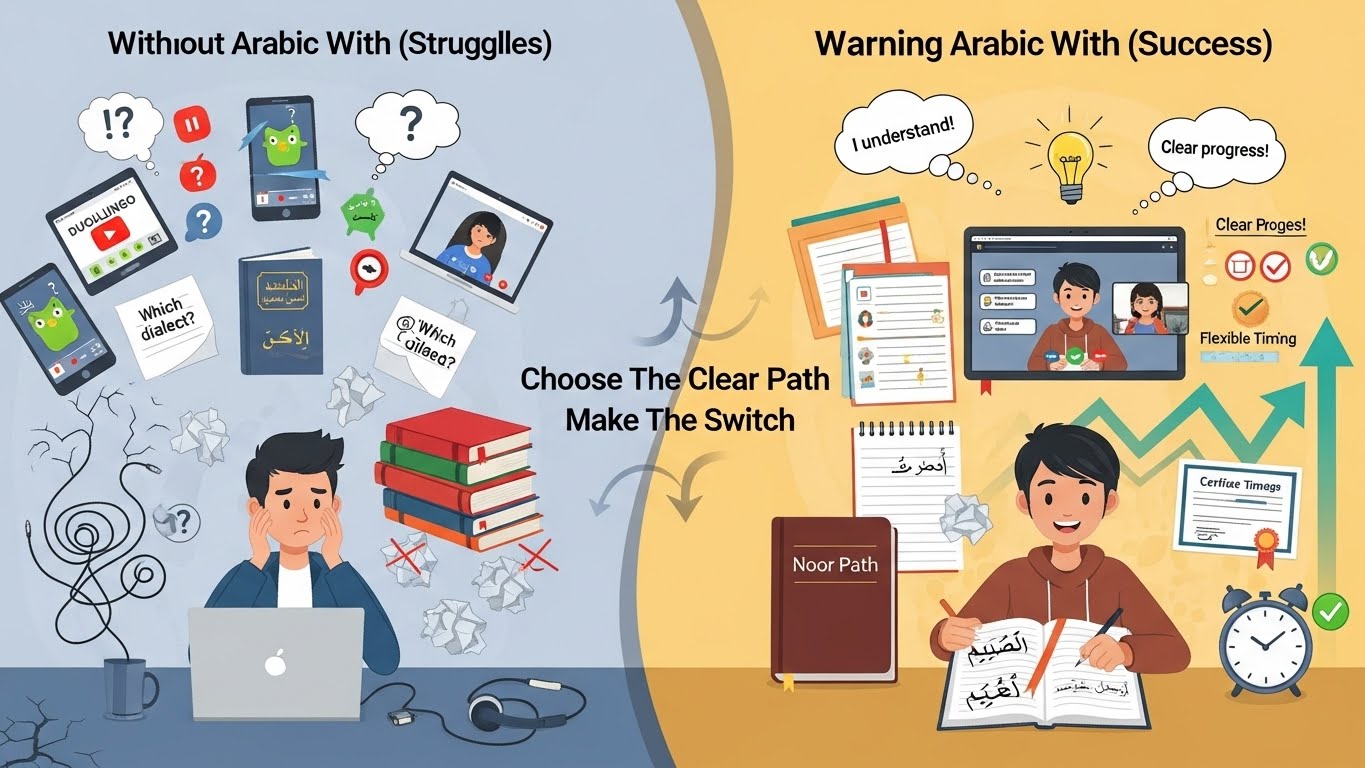
While the internet is filled with free resources, diving into Arabic without a clear plan can lead to frustration and the development of bad habits that are difficult to correct later. This is why starting with structured beginner classes is the best way to learn the Arabic language. A well-designed beginner’s course provides a solid foundation, ensuring you master the fundamentals before moving on to more complex topics. It’s akin to building a house—without a strong foundation, the entire structure is at risk.
Beginner classes methodically introduce the Arabic alphabet, correct pronunciation (Makharij), and basic grammar, preventing the common pitfalls that self-learners often encounter. This structured approach builds confidence and creates a clear pathway to fluency. Platforms that offer a learn Quran reading basics online course alongside language instruction provide a holistic educational experience, ensuring that students not only learn to speak but also to read the most sacred text with accuracy and reverence. A proper start is not just beneficial; it is essential for long-term success.
Benefits of Arabic Language Classes for Beginners
Enrolling in dedicated Arabic language classes for beginners offers a multitude of advantages that accelerate learning and ensure a comprehensive understanding of the language. These benefits go beyond simply memorizing vocabulary, creating a rich and supportive educational ecosystem.
Structured learning path
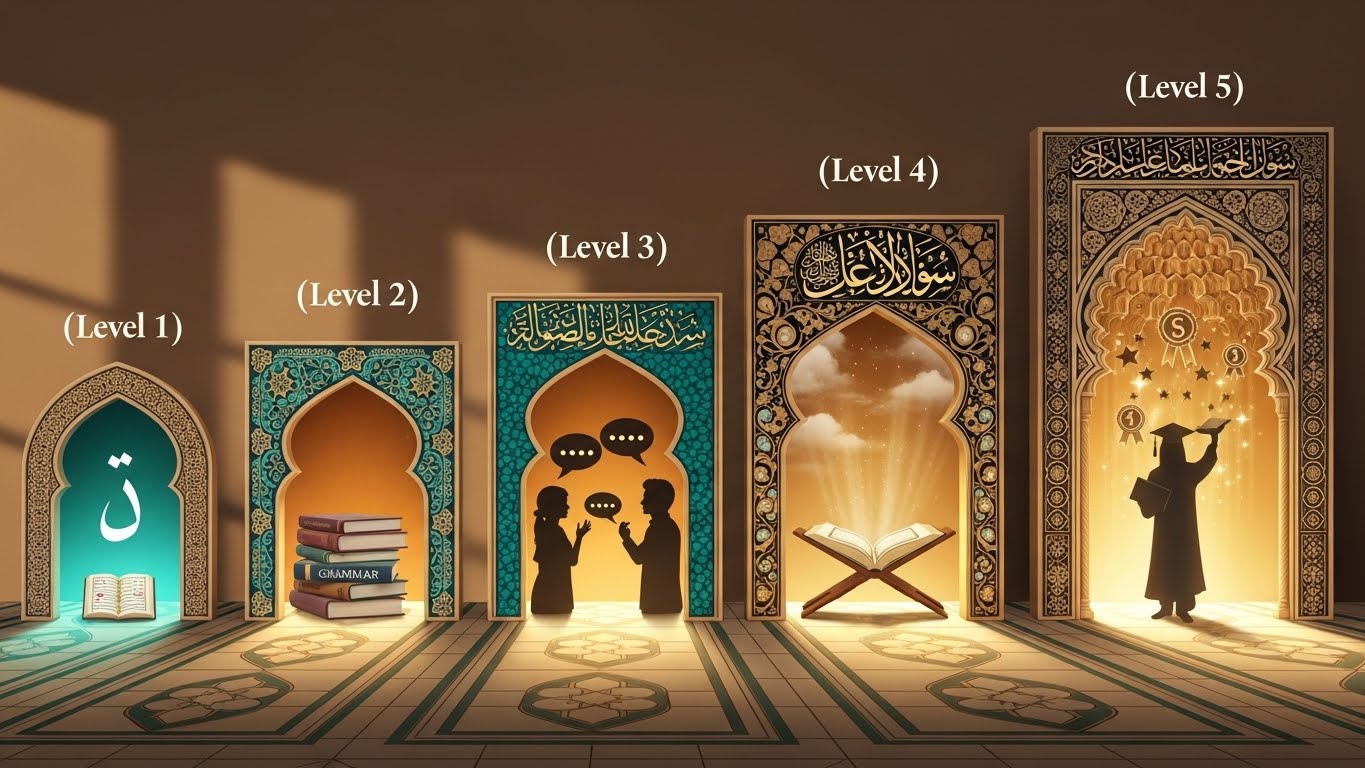
One of the most significant benefits of a formal class is the structured learning path it provides. At NoorPath Academy, our curriculum is meticulously designed by expert educators to guide students logically from one concept to the next. You begin with the absolute basics—the alphabet and their sounds—and progressively build upon that knowledge. Each lesson is a stepping stone, introducing new vocabulary, grammar rules, and conversational skills in a manageable and coherent sequence. This eliminates the guesswork and confusion often associated with self-study, ensuring that you are always learning the right thing at the right time. This systematic progression is crucial for building a robust and lasting understanding of Arabic.
Support from teachers and peers
Language learning is an interactive process, and feedback is vital for growth. In an online class, you receive personalized guidance from qualified, native-speaking teachers who can correct your pronunciation, explain complex grammar, and answer your questions in real-time. This one-on-one attention is invaluable and something that pre-recorded videos or apps cannot replicate. Furthermore, learning within a community of peers provides motivation and encouragement. Sharing challenges and celebrating progress with fellow learners creates a supportive network that makes the journey less isolating and more enjoyable. At NoorPath Academy, our instructors are not just teachers; they are mentors dedicated to your success.
Cultural understanding alongside language
Language and culture are inextricably linked. To truly master a language, one must also understand the cultural context in which it is spoken. A high-quality Arabic course does more than teach words and rules; it immerses you in the rich cultural heritage of the Arab world. Lessons often include insights into social customs, traditions, history, and etiquette. This cultural dimension makes the learning experience more vibrant and meaningful, allowing you to not only speak the language but also to appreciate the perspectives and values of its people. This holistic approach fosters a deeper, more authentic connection to the Arabic-speaking world.
Core Topics Covered in Beginner Arabic Classes
A comprehensive beginner’s course lays a strong groundwork by focusing on the essential pillars of the language. These core topics are the building blocks upon which all future learning rests.
Arabic alphabet and pronunciation
The first and most crucial step is mastering the Arabic alphabet. Unlike the Latin alphabet, Arabic consists of 28 letters, and its script is written from right to left. Many letters change their shape depending on their position in a word (initial, medial, or final). A key focus of Arabic language classes for beginners is mastering these forms and, most importantly, their unique sounds. Arabic contains several phonetic sounds that do not exist in English, such as the guttural ‘ayn (ع) and the emphatic ‘qaf’ (ق). Expert instructors provide detailed guidance on the articulation points (Makharij) of each letter, ensuring you develop clear and authentic pronunciation from day one.
Basic vocabulary and greetings
Once you are comfortable with the alphabet, the next step is to build a foundational vocabulary. Beginner courses focus on high-frequency words and essential phrases used in daily life. You will learn how to introduce yourself, greet others (e.g., “As-salamu alaykum”), ask simple questions, and talk about your family, hobbies, and routine. This practical vocabulary allows you to start communicating immediately, which is a powerful motivator. Learning phrases like “Kayfa haluk?” (How are you?) and “Shukran” (Thank you) provides an instant sense of accomplishment and a tangible connection to the language.
Simple grammar and sentence formation
While Arabic grammar can be complex, a good beginner’s course introduces it in a simplified, digestible manner. An arabic grammar course online for beginners will focus on the core principles needed to form basic sentences. This includes understanding the difference between masculine and feminine nouns, subject-pronoun agreement, and the structure of simple nominal (non-verbal) and verbal sentences. The goal is not to overwhelm you with rules but to provide the essential tools to start constructing your own sentences, transforming passive knowledge into active language production.
Listening and speaking practice
Language is a living, breathing entity that must be spoken and heard. Passive learning through books alone is insufficient. Effective Arabic language classes for beginners heavily emphasize listening and speaking practice. This is often done through interactive exercises, dialogues, and direct conversation with native-speaking instructors. These sessions train your ear to recognize the sounds and rhythms of authentic Arabic speech and build your confidence in speaking. Regular practice is the only way to bridge the gap between knowing the language and using it fluently.

Types of Arabic Classes Available
The modern educational landscape offers a variety of formats for learning Arabic, each with its own set of advantages. Choosing the right type of class depends on your learning style, schedule, and goals.
Online classes vs. in-person classes
The debate between online and in-person learning is a central one for modern students. Traditional in-person classes offer face-to-face interaction and a fixed schedule, which can be beneficial for those who thrive on routine. However, the rise of digital education has highlighted the immense benefits of online learning. To learn Arabic online offers unparalleled flexibility, allowing you to schedule classes around your work or family commitments. It also provides global access to the best teachers, connecting you with certified, native-speaking instructors from anywhere in the world. For many, the convenience and accessibility of online classes make them the superior choice.
Group classes vs. private tutoring
Within the online format, you can often choose between group classes and private, one-on-one tutoring. Group classes foster a collaborative environment where you can practice with peers, learn from their questions, and build a sense of community. They are often more affordable as well. On the other hand, private tutoring offers a completely personalized learning experience. The instructor can tailor the curriculum, pace, and teaching style specifically to your individual needs and goals. This focused attention can lead to faster progress, especially for learners who need to address specific weaknesses or have ambitious goals.
Self-paced learning platforms
Self-paced platforms, which rely on pre-recorded videos and automated exercises, offer the ultimate flexibility. You can learn anytime, anywhere, without being tied to a schedule. This format is ideal for highly disciplined and self-motivated individuals. However, the primary drawback is the lack of real-time interaction and personalized feedback from a live teacher. Without a guide to correct your pronunciation or answer your unique questions, it’s easy to develop incorrect habits or lose motivation. For this reason, many learners find that a blended approach, combining self-study with live instruction, offers the best of both worlds.
Who Should Take Arabic Language Classes for Beginners?
The appeal of Arabic is broad, attracting learners from all walks of life. Whether your motivation is spiritual, professional, or personal, Arabic language classes for beginners provide the perfect starting point.
Students interested in academic growth
For students of Islamic studies, Middle Eastern history, or linguistics, proficiency in Arabic is not just an asset—it is often a necessity. Learning the language provides direct access to primary source texts, from the Quran and Hadith to historical chronicles and classical literature. This allows for a more nuanced and authentic understanding of the subject matter, free from the potential biases or inaccuracies of translation. It opens up advanced research opportunities and is a prerequisite for many graduate programs in these fields.
Travelers to Arabic-speaking countries
If you plan to travel to the Middle East or North Africa, even a basic grasp of Arabic can transform your experience. Being able to greet locals, ask for directions, order food, and engage in simple conversations shows respect for the culture and opens doors to more authentic interactions. It moves you from being a mere tourist to a welcome guest, allowing you to connect with people on a deeper level and gain a richer appreciation for the places you visit.
Professionals working in the Middle East
In our globalized world, the Middle East is a vital hub for business, finance, and diplomacy. For professionals working in or with the region, Arabic language skills are a significant competitive advantage. It facilitates smoother negotiations, builds stronger relationships with clients and partners, and demonstrates a serious commitment to the region. Knowing the language can be the key that unlocks career advancement and success in this dynamic and influential part of the world.
Anyone curious about learning a new language
You don’t need a professional or academic reason to learn Arabic. The act of learning a new language is, in itself, a deeply rewarding pursuit. It challenges your mind, improves cognitive functions like memory and problem-solving, and broadens your worldview. If you are simply curious about the world and passionate about personal growth, embarking on the journey to learn Arabic easily through a structured course can be a fulfilling and life-enriching experience.
Tips for Beginners Learning Arabic
Success in language learning is a marathon, not a sprint. It requires dedication, consistency, and the right strategies. Here are some essential tips for learning Arabic that can help you on your path to fluency.
Daily practice techniques
Consistency is the single most important factor in language acquisition. It is far more effective to practice for 15-30 minutes every day than to cram for several hours once a week. Make Arabic a part of your daily routine. Use flashcards to review vocabulary, practice writing the alphabet, and try to speak the phrases you’ve learned out loud. This constant exposure and repetition will transfer knowledge from your short-term to your long-term memory, making recall more automatic. This also applies to spiritual learning, where consistent memorization revision online is key to retaining Quranic verses.
Using apps and study materials
Supplement your formal classes with a variety of study materials. There are many excellent language-learning apps that can make practicing vocabulary and grammar fun and engaging. Listen to Arabic podcasts or music to train your ear. Watch children’s shows or movies with subtitles to improve your listening comprehension. Using a color-coded Quran can also be a great visual aid for applying Tajweed rules as you learn to read. These supplementary resources provide diverse forms of exposure to the language, reinforcing what you learn in class.
Staying motivated and consistent
Every language learner faces moments of frustration or waning motivation. To stay on track, it’s crucial to remember your “why.” Keep your ultimate goal in mind, whether it’s reading the Quran without translation or conversing with a friend in their native tongue. Set small, achievable milestones and celebrate them. Find a study partner to keep each other accountable. Most importantly, be patient with yourself. Progress is not always linear. There will be plateaus, but with persistence, you will break through them. Embrace the journey and trust the process.
Why Choose NoorPath Academy Arabic Language Classes for Beginners?
With countless options available, choosing the right platform is crucial. NoorPath Academy stands out as a premier destination for those seeking to learn Arabic online. Our mission is to make sacred knowledge accessible, practical, and spiritually enriching for Muslims worldwide. We offer more than just lessons; we provide a clear path to connecting with the Quran and the Arabic language.
Our Arabic language classes for beginners are designed by expert educators and Al-Azhar scholars, specifically for non-native speakers. We understand the unique challenges you face and have built a structured curriculum that guides you step-by-step, from the Arabic alphabet to fluent conversation. Our certified, native-speaking instructors provide personalized, one-on-one attention, ensuring you receive the feedback and support you need to succeed. We also offer specialized programs like our arabic language kids course, which uses interactive tools and storytelling to make learning fun and engaging for young minds.
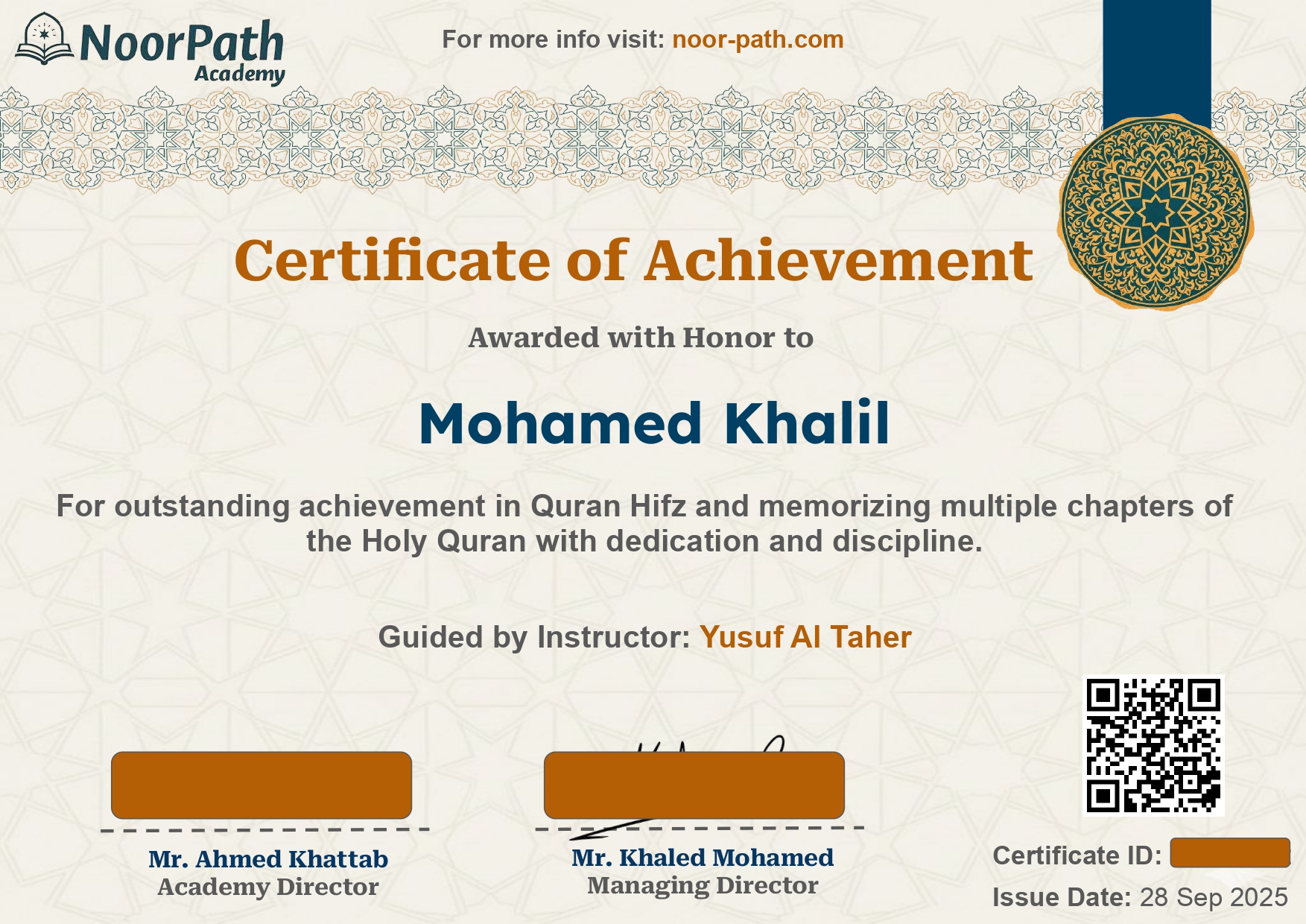
At NoorPath Academy, we believe in flexibility. You can choose a schedule that fits your lifestyle, and even pause your subscription when life gets busy. We offer a free evaluation session to help you find the perfect course and provide a digital certificate upon completion to recognize your achievement. Whether your goal is to understand the Quran, master Tajweed, or simply learn a new language, NoorPath Academy provides the tools, expertise, and supportive community to help you achieve it. Our comprehensive approach, which integrates Quranic studies like our quran recitation online course for kids, ensures a holistic and deeply meaningful learning experience.
In Conclusion
Learning Arabic is a transformative journey that enriches the mind and nourishes the soul. It is a bridge to a vibrant culture and a direct line to the divine message of the Quran. While the path may have its challenges, starting with structured, expert-led Arabic language classes for beginners is the most effective way to ensure success. These classes provide the foundational knowledge, personalized guidance, and motivational support needed to navigate the complexities of the language with confidence.
NoorPath Academy is committed to being your trusted partner on this sacred journey. Our flexible, comprehensive, and student-centered programs are designed to empower you to achieve your linguistic and spiritual goals. We invite you to take the first step today. Explore our courses, book a free evaluation, and discover how we can help you unlock the timeless beauty of the Arabic language.
FAQs
How to start learning Arabic for beginners?
The best way to start is by focusing on the fundamentals. Begin by mastering the Arabic alphabet and the correct pronunciation of each letter. Use a foundational guide like the Noorani Qaida. Simultaneously, learn basic greetings and essential vocabulary. Most importantly, find a qualified teacher or enroll in structured Arabic language classes for beginners, like those at NoorPath Academy, to receive proper guidance and feedback from the very beginning.
Can I learn Arabic by myself?
While it is possible to learn some vocabulary and basic phrases on your own using apps and books, achieving fluency without a teacher is extremely difficult. A qualified instructor is essential for correcting pronunciation, explaining grammatical nuances, and providing conversational practice. Without this guidance, you risk developing incorrect habits that are hard to break. A blended approach of self-study and guided lessons is often the most effective.
How to learn Arabic in 30 days?
It is important to set realistic expectations. Becoming fluent in Arabic in 30 days is not possible. However, in one month of intensive study, you can achieve significant progress. You could realistically master the alphabet, learn 100-200 essential vocabulary words, and be able to form simple sentences and engage in basic greetings. This would require a dedicated daily study schedule and consistent practice.
What is the hardest part of learning Arabic?
For most English speakers, the most challenging aspects are pronunciation and grammar. Arabic has several sounds that don’t exist in English, which require practice to master. The grammar is also quite different, with concepts like the root system for verbs, complex plural forms, and grammatical gender. Additionally, the existence of numerous spoken dialects alongside Modern Standard Arabic (MSA) can be a point of confusion for beginners. However, with a structured course and a good teacher, these challenges are entirely surmountable.
Start Today
Ready to speak Arabic that brings you closer to Allah? Join NoorPath Academy’s Quranic Arabic courses, start today and feel the difference in your faith journey.
Recommended Course
Mastering Arabic unlocks access to the Qur’an, Hadith, and centuries of Islamic scholarship.